

Introduction
Choosing the right bookkeeping service rates matters for cash flow, compliance, and growth. This guide explains typical pricing models, what drives cost, and how rates vary for services like BAS lodgement, payroll, cloud accounting, and reconciliations, written in clear Australian English for small business owners and sole traders.
Typical pricing models for bookkeeping service rates
Bookkeepers commonly charge in three main ways. Each model suits different business needs and budgets.
- Hourly rates: You pay for the actual time spent on tasks. Good for ad‑hoc work or when hours vary. Hourly rates in Australia typically range from $40 to $ 120 per hour, depending on experience, location, and whether the bookkeeper is BAS-registered.
- Fixed monthly fees: A predictable recurring cost covering a set scope (e.g., X transactions, monthly reconciliations, BAS, and payroll). Monthly packages often suit regular, ongoing bookkeeping needs and can range from $200 to $ 1,500 or more per month, depending on the transaction volume and services included.
- Project‑based fees: One‑off charges for defined projects such as cleanup, end‑of‑year preparation, or system migration. Project fees are quoted based on scope and can be a flat price or a capped range.
Factors that affect bookkeeping service rates
Rates vary widely because of business complexity and the bookkeeper’s skills. Key factors include:
- Volume of transactions: More invoices, receipts, and payments mean more time and higher costs.
- Complexity of accounts: Multiple revenue streams, cost centres, inventory, or projects increase complexity.
- Payroll frequency and size: Weekly payroll for many employees takes more time than monthly payroll for a sole trader.
- Compliance requirements, including BAS lodgement, Single Touch Payroll (STP), and GST reporting, require additional knowledge and responsibility.
- Cloud accounting setup and integrations: Setting up Xero, QuickBooks, or MYOB and connecting bank feeds or apps can increase upfront fees but often reduce ongoing costs.
- Quality and qualifications: BAS agents or bookkeepers with accounting qualifications typically charge more, but they bring expertise and compliance assurance.
- Turnaround times: Urgent work or short deadlines typically attract premium charges.
How rates vary by service
BAS lodgement
BAS lodgement involves preparing GST, PAYG instalments, and other obligations. For simple sole traders, monthly or quarterly BAS preparation might be included in a fixed monthly package ($150–$400+). For more complex businesses or BAS agents providing reviews and lodgements, costs can be higher, especially if reconciliation and remediation are required before lodgement.
Payroll
Pay rates depend on employee numbers and pay frequency. Simple payroll for a single director/owner might be $20–$60 per pay run, whereas payroll for multiple staff with superannuation, STP reporting, and leave calculations often attracts a per‑employee fee or a higher monthly package ($200–$800+ per month for small businesses).
Cloud accounting
Cloud accounting setup fees (one-off) for platforms like Xero, MYOB, B, or QuickBooks can range from $100 to $1,000+, depending on complexity and training requirements. Ongoing cloud bookkeeping, which includes bank feeds, reconciliations, and monthly reporting, is typically part of a fixed monthly rate and can reduce hourly labour compared to desktop or manual systems.
Reconciliations
Bank and supplier reconciliations are labour-intensive if not done regularly. Monthly reconciliations are typically included in monthly packages, but catch‑up or cleanup reconciliations after periods of neglect are usually charged at hourly or project rates and can be considerable depending on how far behind the accounts are.
Comparing hourly, fixed monthly, and project‑based fees
Choosing the right pricing model depends on predictability, volume, and the need for ongoing support.
- Hourly Pros: flexible, only pay for time used. Cons: unpredictable costs, can be expensive if tasks expand. Best for irregular or one‑off tasks.
- Fixed monthly: Pros include predictable budgeting, encouraging regular maintenance, and timely BAS lodgments. Cons: may include services you don’t fully use or require renegotiation as business grows. Best for ongoing bookkeeping and sole traders wanting stability.
- Project‑based Pros: clear scope and cost for defined work (migration, cleanup). Cons: Scope creep can increase costs; it is not suited for recurring tasks. Best for migrations, cleanups, and end‑of‑year projects.
Example comparisons: a sole trader with low transaction volume might be best on a $200–$350 monthly plan, while a small cafe with daily transactions and payroll could pay $800+ monthly or an hourly rate for part‑time in‑house bookkeeping.
Tips for evaluating value, not just price
- Define your needs: list tasks you want included (BAS, payroll, reconciliations, management reports) before comparing quotes.
- Ask about experience with your industry and accounting software (Xero, MYOB, QuickBooks).
- Check qualifications and registration: BAS agents, registered tax agents, or memberships with bookkeeping associations can be a quality signal.
- Understand inclusions and exclusions: how many transactions, payroll runs, and support hours are covered.
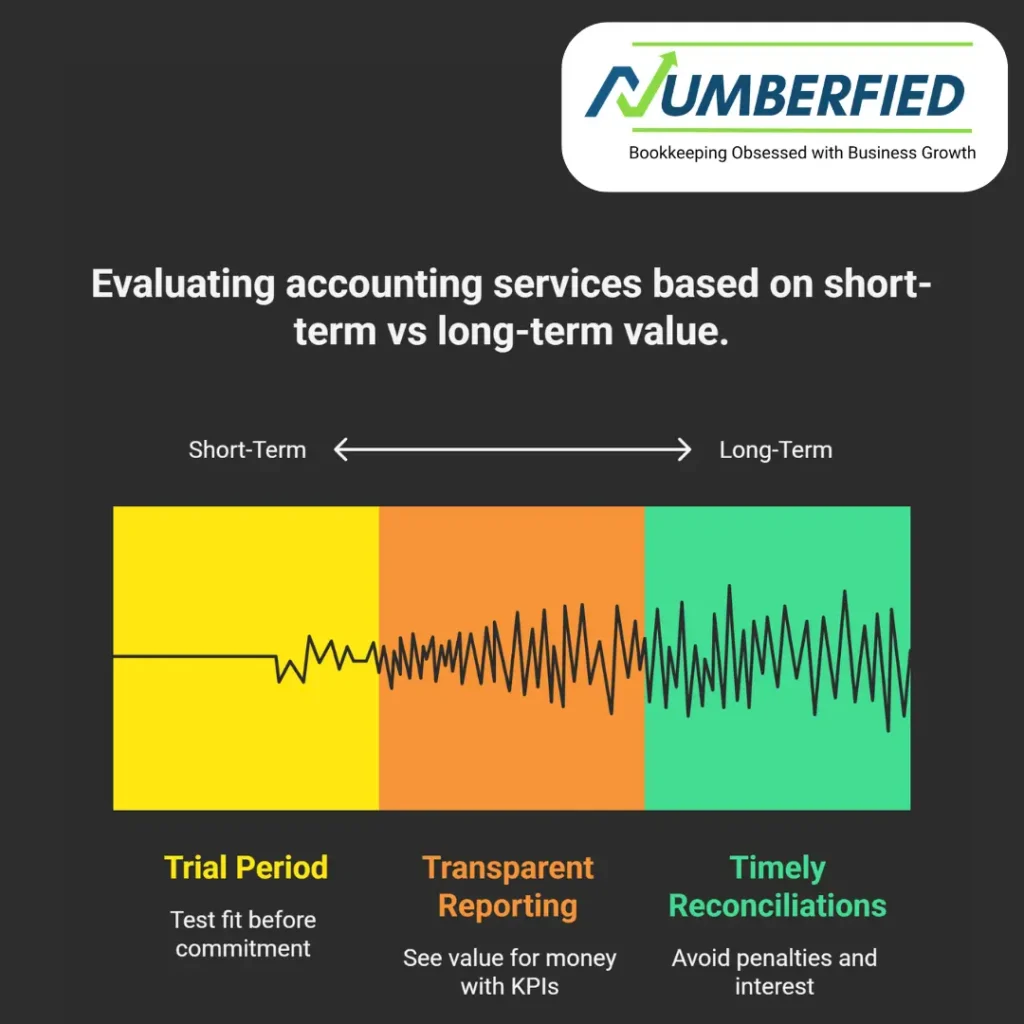
- Request a trial period or a monthly contract with a notice period to test fit without a long commitment.
- Consider the long‑term value of timely reconciliations and accurate BAS lodgements, avoiding penalties and interest, often justifies higher fees.
- Seek transparent reporting and KPIs: regular cashflow reports and simple dashboards help you see value for money.
How to negotiate and manage costs
- Bundle services: Combining BAS, payroll, and reconciliations in one package often lowers costs compared to separate hourly charges.
- Automate routine tasks, such as bank feeds and receipt capture apps, and standard integrations, to reduce labour and, consequently, fees.
- Keep records organised: provide digital receipts and timely documentation to reduce time spent on reconciliation.
- Review pricing annually: as your business grows, renegotiate to match changed transaction volumes and complexity.
Conclusion
Summary: bookkeeping service rates depend on model (hourly, monthly, project), transaction volume, payroll and compliance needs. Evaluate value by defining your needs, checking qualifications and comparing clear scopes. Proper bookkeeping is an investment that protects cash flow and keeps your business compliant.
Also Read: Bookkeeping Service Rates in Australia: What You Should Really Be Paying
FAQ
What are typical bookkeeping service rates in Australia?
Bookkeeping service rates in Australia vary depending on the complexity of tasks, transaction volume, and the level of ongoing support required. Typical rates include hourly fees for ad-hoc work, fixed monthly packages for regular bookkeeping services, and project-based fees for one-time setups or clean-ups. Small businesses often pay for affordable monthly packages, while larger businesses or those requiring advisory services may incur higher costs.
How much do online bookkeeping services cost for small businesses?
Online bookkeeping services for small businesses generally offer flexible and cost-effective packages. Monthly fees cover transaction recording, bank reconciliations, BAS preparation, payroll, and financial reporting. Some providers charge hourly rates for specific tasks or utilise subscription models based on the frequency of transactions, payroll runs, or the complexity of reporting.
Which bookkeeping companies offer fixed-rate packages?
Many Australian bookkeeping firms provide fixed monthly packages tailored to small businesses and sole traders. These packages typically include regular bookkeeping, BAS lodgement preparation, payroll processing, and cloud accounting support. Fixed-rate packages give predictable costs and are ideal for business owners seeking a consistent monthly fee without surprises.
How do bookkeeping service rates vary by business size?
Bookkeeping rates often scale with business size, transaction volume, and service complexity. Sole traders and startups typically pay lower rates due to fewer transactions and simpler payroll requirements. Growing SMEs or multi-entity businesses require more comprehensive services, including advanced reporting, multiple payrolls, and cloud accounting integrations, resulting in higher fees.
How much should I pay for bookkeeping services?
Payment for bookkeeping services in Australia depends on your business size, transaction volume, and services needed. Small businesses and sole traders often pay affordable monthly packages, while more complex businesses with multiple payrolls, cloud accounting integrations, and financial reporting requirements may pay higher fees. Packages can cover bookkeeping, BAS lodgement, payroll, and reporting.
What do bookkeepers charge per hour in Australia?
Hourly rates for Australian bookkeepers typically range from approximately AUD 30 to AUD 80 per hour, depending on experience, qualifications, and service complexity. Rates may vary for basic transaction recording versus advisory, payroll, or BAS preparation tasks.
How much should you charge as a bookkeeper?
Bookkeepers should set rates based on their expertise, the types of clients served, and the services offered. Beginners may charge lower rates (AUD 30–50/hour), while experienced bookkeepers handling full-service bookkeeping, cloud accounting, payroll, and reporting may charge AUD 60–80/hour or more. Offering fixed-rate monthly packages is also common.
What is a bookkeeper’s hourly rate?
A bookkeeper’s hourly rate in Australia generally ranges between AUD 30 and 80 per hour. Rates depend on experience, qualifications, and whether the work involves standard bookkeeping tasks, payroll, BAS lodgement, or advisory support. Small businesses often combine hourly work with monthly package arrangements for predictable costs.
How can I compare quotes effectively?
Compare scope, included hours, software expertise, frequency of reporting and additional fees. Ask for a written service agreement that clarifies inclusions and out‑of‑scope rates.
Can I reduce bookkeeping costs without compromising quality?
Yes, automate receipt capture and bank feeds, keep records organised, choose the right pricing model, and bundle services. Investing in a good cloud accounting setup often reduces long‑term costs while improving accuracy.