

Introduction
Understanding Accountant Fees is essential for Australian businesses and individuals seeking transparent, cost-effective accounting. This comprehensive article explains the types of accounting services, common pricing models, bookkeeping and tax compliance, business advisory and financial planning, plus practical strategies to optimise costs while maintaining high-quality advice. Whether you are a sole trader, small business owner, or CFO of a growing company, this guide provides actionable information to make informed decisions about Accountant Fees.
Takeaways: How to Control Accountant Fees While Maximising Value
- Understand what is included in Accountant Fees and request detailed scopes to avoid hidden costs.
- Use technology and automation to reduce transaction processing time and lower ongoing Accountant Fees.
- Choose pricing models that suit your cash flow fixed fees and subscription plans give predictability.
- Negotiate performance-based arrangements where possible to align fees with outcomes.
- Prioritise accountants that combine compliance reliability with proactive advisory to ensure Accountant Fees deliver long-term value.
Intent and How This Guide Helps
Informational Intent
This guide addresses the informational intent by explaining what Accountant Fees cover, how fees are calculated, national benchmarks in Australia, and the services included in typical engagements. It gives clarity on hourly rates, fixed-fee packages, subscription models, and how to evaluate value for money.
Commercial Intent
For commercial purposes, the article shows how to choose an accountant, negotiate fixed-fee arrangements, assess accounting firm proposals, and select packages that align with business needs. It includes criteria to compare accounting services and tips to reduce unnecessary expenditure without compromising compliance or advisory quality.
How to Use This Guide
Read sections relevant to your role, bookkeeping, tax, advisory or planning and use the checklists and takeaways to compare quotes. Use the FAQ to answer specific questions about Accountant Fees and engagements with firms such as Numberfied.
Understanding What Accountant Fees Usually Cover
Core Services Included
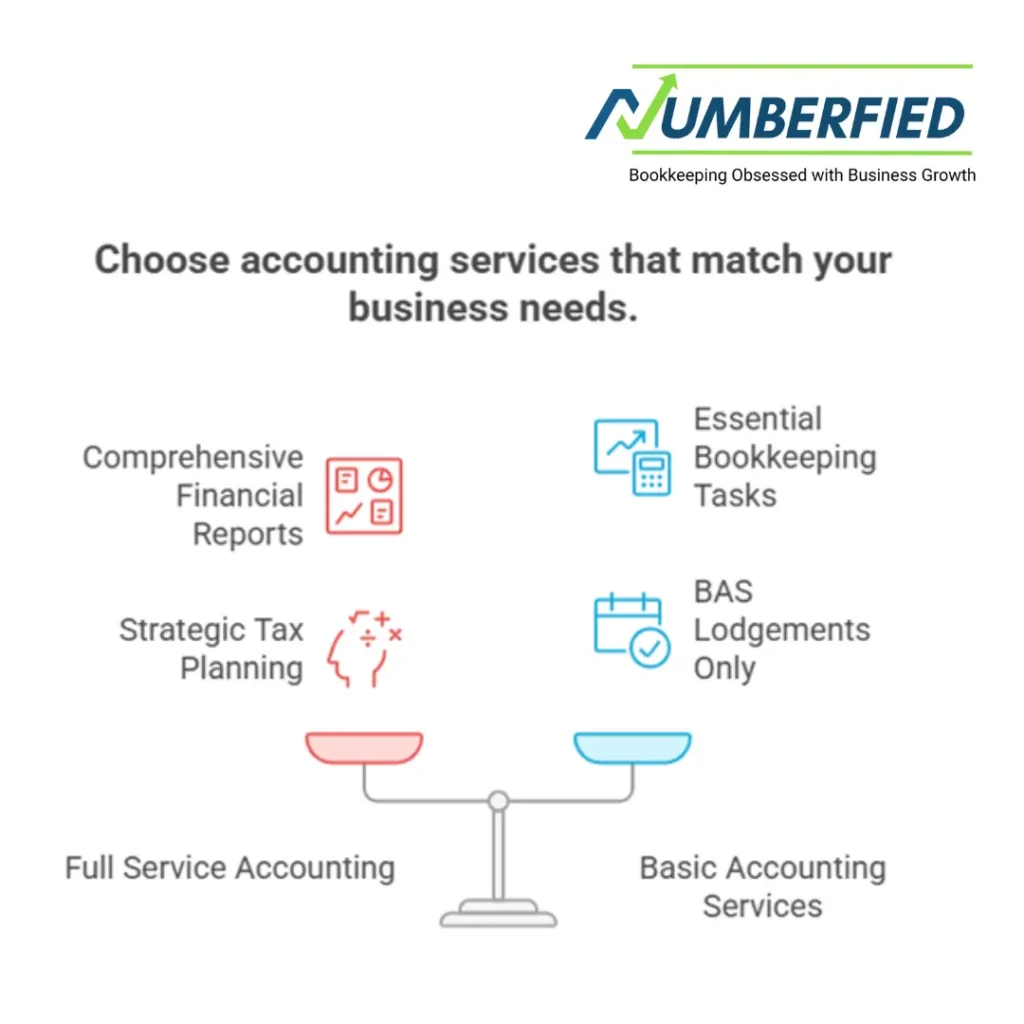
Accountant Fees commonly cover bookkeeping, preparation and lodgement of tax returns, BAS and GST reporting, payroll and superannuation administration, and year-end financial statements. For many small businesses, these services form the basis of a monthly or annual fee.
Advisory and Strategic Services
Fees also account for advisory services such as cash flow forecasting, business structure advice, tax planning, and strategic growth planning. Advisory work is typically billed at higher rates because it requires senior expertise and a deeper understanding of business dynamics.
Compliance and Risk Management
Compliance tasks including lodgements, managing ATO audits, and responding to notices are core to Accountant Fees. Accounting firms take on the responsibility and potential liability for ensuring returns are accurate and timely.
Common Pricing Models for Accountant Fees
Hourly Rates
Hourly billing is transparent and common for ad hoc or short-term tasks. Hourly rates for accountants in Australia vary by experience and location. Junior bookkeepers attract lower rates; registered tax agents and partners charge premium rates for specialised advice.
Fixed-Fee Packages
Fixed-fee packages suit predictable work such as monthly bookkeeping and BAS lodgements. A fixed fee provides certainty for budgeting and can be structured to include a defined scope of services, response times and deliverables.
Subscription or Retainer Models
Subscription models combine ongoing bookkeeping, payroll, and advisory check-ins for a single monthly payment. This model aligns interests and often creates better cost predictability for businesses that require continuous support.
Benchmarks and Typical Rates in Australia
Small Business Benchmarks
For small Australian businesses, Accountant Fees for basic bookkeeping and quarterly BAS lodgement can range from modest monthly subscriptions to several thousand dollars annually, depending on transaction volume and payroll complexity.
Mid-Sized Businesses
Mid-sized businesses with more complex reporting and advisory needs should expect higher Accountant Fees due to increased staff time, financial reporting complexity and integrated tax planning requirements.
High-Complexity and Specialist Services
Specialist services for example, international tax structuring, litigation support, or complex R&D tax claims typically incur premium Accountant Fees reflecting senior specialist time and greater professional risk.
Breaking Down the Components of Accountant Fees
Transaction Volume and Complexity
Transaction volume directly impacts Accountant Fees because more transactions require more processing time. Complexity, such as multi-entity consolidations or foreign currency transactions, further increases fees.
Payroll and Superannuation
Payroll services contribute significantly to ongoing Accountant Fees. The frequency of payroll runs, the number of employees, and superannuation compliance requirements affect pricing.
Software Integration and Automation
The extent of software automation influences Fees. Well-integrated systems with automated bank feeds and receipt capture reduce manual workload and can lower fees over time.
How to Compare and Evaluate Quotes
Scope and Deliverables
When comparing quotes for Fees, ensure each proposal specifies the scope, deliverables, timelines, and exclusions. A low fee can be misleading if critical services are omitted.
Experience and Qualifications
Compare the qualifications of the team providing the services. Registered tax agents and experienced partners add value through reliable compliance and strategic advice, reflected in Fees.
Client Support and Communication
Evaluate the level of client support. Fast response times, proactive advice, and dedicated points of contact justify higher Fees for businesses that need regular guidance.
Bookkeeping: Reducing Cost Without Sacrificing Quality
Outsourcing vs In-House
Decide whether to outsource bookkeeping or employ in-house staff. Outsourcing often reduces Fees overall due to shared resources and access to experienced teams. In-house staff may be preferable when real-time control is critical.
Use of Cloud Accounting Software
Cloud software reduces Fees by automating reconciliations, streamlining BAS preparation and enabling remote collaboration. Well-configured automation decreases manual intervention and errors.
Regular Clean-Ups and Monthly Reconciliations
Regular reconciliations prevent backlog and reduce the time (and therefore Fees) needed for year-end clean-up. A proactive approach avoids costly catch-up work.
Tax Compliance and Minimising Unexpected Fees
Proactive Record-Keeping
Timely and accurate record-keeping reduces Fees by minimising the time accountants spend on reconstruction and corrections. Provide source documents and use standardised processes.
Tax Planning Throughout the Year
Ongoing tax planning prevents last-minute issues that spike Fees. Regular review of tax positions, income timing and deductible expenses helps manage liabilities efficiently.
Audit Preparedness
Being audit-ready reduces the risk of intensive fee engagements if the ATO reviews returns. Maintain clear records and ensure compliance processes are documented to lower potential Accountant Fees associated with audits.
Business Advisory: Value-Added Services and Their Fees
Strategic Planning and Cash Flow Management
Advisory services such as cash flow modelling and strategic planning typically sit in the higher Accountant Fees tier because they require senior expertise and long-term value creation.
Funding and Capital Structure Advice
Advice on capital raising, debt structuring and grants can justify higher Fees when they improve access to finance or significantly enhance business profitability.
Performance Reporting and KPIs
Developing tailored KPI dashboards and performance reporting is an advisory deliverable that supports decision-making. These services may be offered as part of a premium package or billed separately within Fees.
Financial Planning and Personal Accounting Services
Individual Tax Planning
For individuals, Fees cover tax return preparation and ongoing tax minimisation strategies. High-net-worth individuals often pay higher fees for complex tax structuring and investment advice.
Retirement and Superannuation Advice
Superannuation and retirement planning involve regulatory knowledge and careful structuring. Specialist advice increases Fees but provides important long-term benefits.
Estate Planning and Succession
Estate and succession planning require coordination with legal advisers and can incur higher Fees due to the complexity and cross-disciplinary nature of the work.
Cost Optimisation Strategies for Accountant Fees
Bundle Services into Fixed Fees
Bundling routine services into a fixed-fee arrangement reduces variability in Accountant Fees and improves budgeting. Negotiate clear service levels and include regular reviews.
Automate Repetitive Tasks
Invest in automation and standard processes to reduce manual effort. Automation lowers Accountant Fees over time by reducing the hours required for routine tasks.
Train Internal Staff for Basic Tasks
Training internal staff to handle low-risk administrative tasks reduces the volume of work passed to accountants and lowers Accountant Fees for higher-value advisory services.
Red Flags and How to Avoid Unnecessary Accountant Fees
Vague Proposals and Hidden Charges
Avoid proposals that lack detail on inclusions and exclusions. Hidden charges can unexpectedly inflate Accountant Fees. Require detailed quotes.
Unclear Communication and Response Delays
Slow or poor communication increases time spent resolving issues and can raise Accountant Fees. Ensure a clear communication protocol is included in engagement letters.
No Clear Escalation Path
Ensure there is an escalation path for disputes or complex queries. Ambiguity can lead to unplanned Accountant Fees when senior input is required.
Choosing the Right Accountant for Your Budget
Match Experience to Needs
Choose accountants whose expertise matches your needs. Overqualified advisors might command high Accountant Fees without delivering proportional value for routine tasks.
Seek Transparency and Fixed Pricing
Prioritise firms that offer transparent pricing and fixed-fee options. Transparency reduces the risk of unpredictable Fees and fosters trust.
Request References and Case Studies
Ask for references and case studies that demonstrate outcomes and typical Fees for similar clients. Evidence of proven results is a strong indicator of value.
How Numberfied Approaches Accountant Fees
Transparent Pricing Models
Numberfied offers clear, modern pricing structures that reflect the scope of services, automation efficiencies and dedicated support. This approach keeps Fees predictable and aligned with client outcomes.
Technology-Enabled Services
By leveraging cloud accounting and automation, Numberfied reduces manual work and passes efficiency gains to clients, helping to manage Fees while improving service quality.
Client-Centred Advisory
Numberfied focuses on delivering practical advice and regular business check-ins that add strategic value. The firm balances compliance work with forward-looking advisory to ensure Accountant Fees generate measurable outcomes.
Negotiating and Reviewing Your Accountant Fees
Request a Detailed Scope
Ask for a written scope and fee schedule that outlines services, frequency of deliverables and any additional charges. A clear scope is the foundation of fair Fees.
Build in Periodic Reviews
Include periodic fee reviews to ensure Fees continue to match your business needs as circumstances evolve. Reviews can capture efficiencies or changes in scope.
Negotiate Performance-Based Elements
Consider linking part of the fee to performance outcomes or efficiencies delivered, thereby aligning interests and reducing overall Fees when goals are met.
Practical Checklists: Before You Engage an Accountant
Documents to Prepare
- Current financial statements and prior tax returns
- Bank statements and payroll records
- Contracts, loan documents and relevant legal agreements
Questions to Ask Prospective Accountants
- What is included in your standard Fees?
- How do you price ad hoc advisory work?
- Who will be responsible for day-to-day communication?
Red Flags to Avoid
- Unclear engagement letters
- Non-disclosure of typical additional charges
- Lack of industry experience relevant to your business
Conclusion
Accountant Fees are a significant component of business operating costs in Australia, but with the right approach, you can control expenditure while maximising value. Understand what services are included, choose pricing models that suit your needs, use automation to reduce manual work and prioritise accountants who offer both compliance and advisory excellence. By taking these steps, you can turn Fees from a cost centre into an investment in better financial outcomes.
For transparent pricing, practical guidance and technology-enabled accounting tailored to Australian businesses, contact Numberfied and start optimising your Accountant Fees today.
Also Read: Why Bookkeeping Services Small Business Owners Love Can Transform Your Success
Frequently Asked Questions
What determines the cost of Accountant Fees in Australia?
Key determinants include transaction volume, complexity of reporting, payroll and superannuation requirements, the accountant’s qualifications, geographic location and whether advisory services are included. Specialist tasks and ATO audit support also increase Accountant Fees.
Are fixed-fee packages better than hourly rates?
Fixed-fee packages offer budgeting certainty and work well for predictable, recurring tasks. Hourly rates are suitable for irregular or specialised tasks. The better option depends on the predictability and scope of your accounting needs, as well as your preference for certainty versus flexibility in Accountant Fees.
How can small businesses reduce Accountant Fees without sacrificing compliance?
Adopt cloud accounting, keep records current, train staff on basic tasks and bundle services into a fixed-fee agreement. Regular reconciliations reduce costly catch-ups and help manage Accountant Fees effectively.
What should be included in an engagement letter concerning Accountant Fees?
The engagement letter should detail the services included, the fee structure, billing frequency, estimated timeframes, the responsibilities of both parties, and procedures for handling additional work or disputes to avoid unexpected Accountant Fees.
How often should I review my Accountant Fees?
Review fees annually or whenever your business experiences a significant change, such as higher transaction volumes, new revenue streams, expansion to multiple entities, or increased payroll complexity that could materially affect Accountant Fees.
Can Accountant Fees be tax-deductible?
Certain Accountant Fees related to producing assessable income or managing business affairs are tax-deductible. Personal advisory fees unrelated to income production may not be deductible. Seek specific advice to confirm eligibility and impact on Accountant Fees net of tax effects.
Are all accountants registered tax agents in Australia?
Not all accountants are registered tax agents. Registered tax agents have formal credentials and professional obligations that influence the quality of tax services and typically the level of Accountant Fees. Check registration status when evaluating proposals.
How do automation and software investments affect Accountant Fees?
While there is an initial cost for software, automation reduces manual workload and long-term Accountant Fees by streamlining reconciliations, invoicing and reporting. The net effect is often a reduction in recurring Accountant Fees and improved accuracy.
What should I do if my Accountant Fees unexpectedly increase?
Request a detailed explanation of the increase, an itemised breakdown, and compare it with the original scope. Negotiate caps on increases or move to a fixed-fee structure, if appropriate, to stabilise Accountant Fees.
How can Numberfied help manage and optimise Accountant Fees?
Numberfied provides transparent pricing, technology-enabled bookkeeping and proactive advisory, helping clients control recurring Accountant Fees while improving financial reporting and strategic outcomes. Their approach blends compliance with practical business advice to deliver measurable value.