
Introduction
Good bookkeeping is the foundation of a healthy business. Bookkeeping services help small businesses and sole traders stay compliant, understand cash flow, and make smarter financial decisions. Whether you’re just starting or scaling up, reliable bookkeeping frees you to focus on customers while ensuring your records are accurate and up to date.
What are bookkeeping services?
Bookkeeping services involve the day-to-day recording and organisation of your business’s financial transactions. A professional bookkeeper manages your sales, expenses, receipts, invoices, bank reconciliations, and other routine financial tasks. The goal is to produce reliable records that support accurate reporting, tax compliance, and practical decision-making.
Core tasks included in bookkeeping services
Bookkeeping covers a wide range of tasks tailored to your business size and needs. Typical services include:
- Recording sales, purchases, and expenses
- Bank and credit card reconciliation
- Accounts receivable and accounts payable management
- Payroll processing and superannuation calculations
- Preparation for BAS lodgement and GST tracking
- Regular financial statements and reports
- Maintaining a tidy chart of accounts
These tasks reduce the risk of errors and ensure you have timely figures for decision-making and compliance.
How bookkeeping services help with compliance
Compliance is a major concern for Australian businesses. Bookkeeping services ensure your records meet the requirements of the ATO and other regulators. A compliant bookkeeping process includes:
- Accurate GST tracking so BAS lodgements reflect correct figures
- Proper documentation of business expenses for tax deductions
- Timely payroll and superannuation reporting to meet legal obligations
- Retention of records in line with Australian record-keeping rules
By keeping books accurate and organised, you reduce audit risk and make the year-end tax process much smoother.
BAS lodgement and GST support
Bookkeepers play a central role in BAS preparation and lodgement. They collate GST on sales and purchases, adjust for GST-free or input-taxed supplies, and prepare the necessary schedules for your BAS. Services commonly include:
- Monthly or quarterly BAS preparation
- Review of GST classifications and adjustments
- Lodgement or preparation-ready files for your tax agent
Good bookkeeping ensures BAS figures are accurate and lodged on time, avoiding penalties and interest.
Payroll: paying staff correctly
Payroll is an area where errors can be costly. Bookkeeping services typically provide pay run processing and payslip generation, superannuation calculations and reporting, payroll tax calculations and state-based compliance support, and management of PAYG withholding. Whether you employ one person or a small team, accurate payroll services protect you from compliance problems and help maintain staff trust.
Cash flow management
Cash flow is the lifeblood of small businesses. Bookkeepers help by providing timely insights and practical controls:
- Regular cash flow reports and forecasts
- Monitoring overdue invoices and debtor management
- Advice on payment terms and creditor scheduling
With clear cash flow reporting, you can plan for seasonal changes, investments, and business growth without surprises.
Accurate financial reporting
Bookkeeping services produce the reports you need to run your business, including profit and loss statements, balance sheets, and customised management reports. Accurate reports allow you to:
- Track profitability by product, service, or project
- Measure key performance indicators (KPIs)
- Support loan applications or investor reporting
Reliable reporting helps you identify opportunities to reduce costs and increase revenue.
Cloud accounting support: Xero, MYOB, and QuickBooks
More small businesses are using cloud accounting platforms. Bookkeepers experienced with cloud software provide valuable setup, support, and ongoing management. Key benefits include real-time data, secure access, and automated workflows.
Common platforms supported:
- Xero is popular with Australian small businesses for easy bank feeds, invoicing, and BAS codes
- MYOB is widely used for payroll and multi-entity businesses
- QuickBooks is straightforward for invoicing, bank reconciliation, and reporting
Bookkeepers can migrate your records to cloud systems, set up bank feeds, configure GST and BAS settings, and train you or your team. They also implement automation like recurring invoices, expense capture, and receipt scanning to reduce manual work.
Why choose a professional bookkeeper?
Hiring a professional bookkeeper brings expertise and consistency. For small business owners and sole traders, the right bookkeeper will save you time by handling routine tasks, reducing errors that could lead to penalties, providing clearer financial visibility, and freeing you to focus on customers and growth. Many bookkeepers specialise in particular industries and can advise on industry-specific reporting and compliance needs.
How bookkeeping services are delivered
Services can be delivered in several ways to suit your business model. These include remote cloud-based bookkeeping, which is ideal for flexible, real-time access; onsite bookkeeping, which is suitable for businesses with physical records or specialised workflows; and a hybrid approach that combines remote and onsite support. Most small businesses benefit from cloud-based services that integrate with Xero, MYOB, and QuickBooks.
Pricing models
Bookkeeping fees vary by complexity and volume of transactions. Common pricing structures include:
- Hourly rates for ad hoc tasks
- Fixed monthly packages for ongoing services
- Project fees for one-off setups or clean-ups
Ask potential providers about what’s included and any additional costs for BAS lodgement, payroll, or year-end reporting.
Choosing the right bookkeeper
When selecting bookkeeping services, consider:
- Experience with Australian tax rules and BAS requirements
- Familiarity with your industry and accounting software
- Communication style and availability
- Professional memberships or certifications
Request references and examples of work to ensure they can meet your needs.
Real benefits for small businesses and sole traders
Effective bookkeeping services deliver tangible benefits:
- Less time on paperwork and more time on the business
- Reduced risk of fines and penalties
- Improved cash flow visibility and control
- Accurate, timely reports to support decisions
For sole traders, bookkeeping is especially valuable in separating personal and business finances and ensuring correct tax treatment.
Onboarding process
Typical onboarding for bookkeeping services includes an initial consultation to understand your business, migration or setup in cloud accounting software, cleaning up historical data if needed, and establishing reporting cadence and access permissions. A good onboarding process minimises disruption and sets expectations from the start.
Data security and record-keeping
Protecting financial data is essential. Reputable bookkeeping services use secure cloud platforms, controlled access, and backup routines. They also follow Australia’s record-keeping requirements, so documents are retained for the appropriate period.
Common misconceptions
Some business owners think bookkeeping is only for tax time. In reality, ongoing bookkeeping delivers continuous value through better cash flow control, fewer surprises at year-end, and easier BAS lodgements. Investing in good bookkeeping is an investment in smoother operations and better decisions.
When to outsource bookkeeping
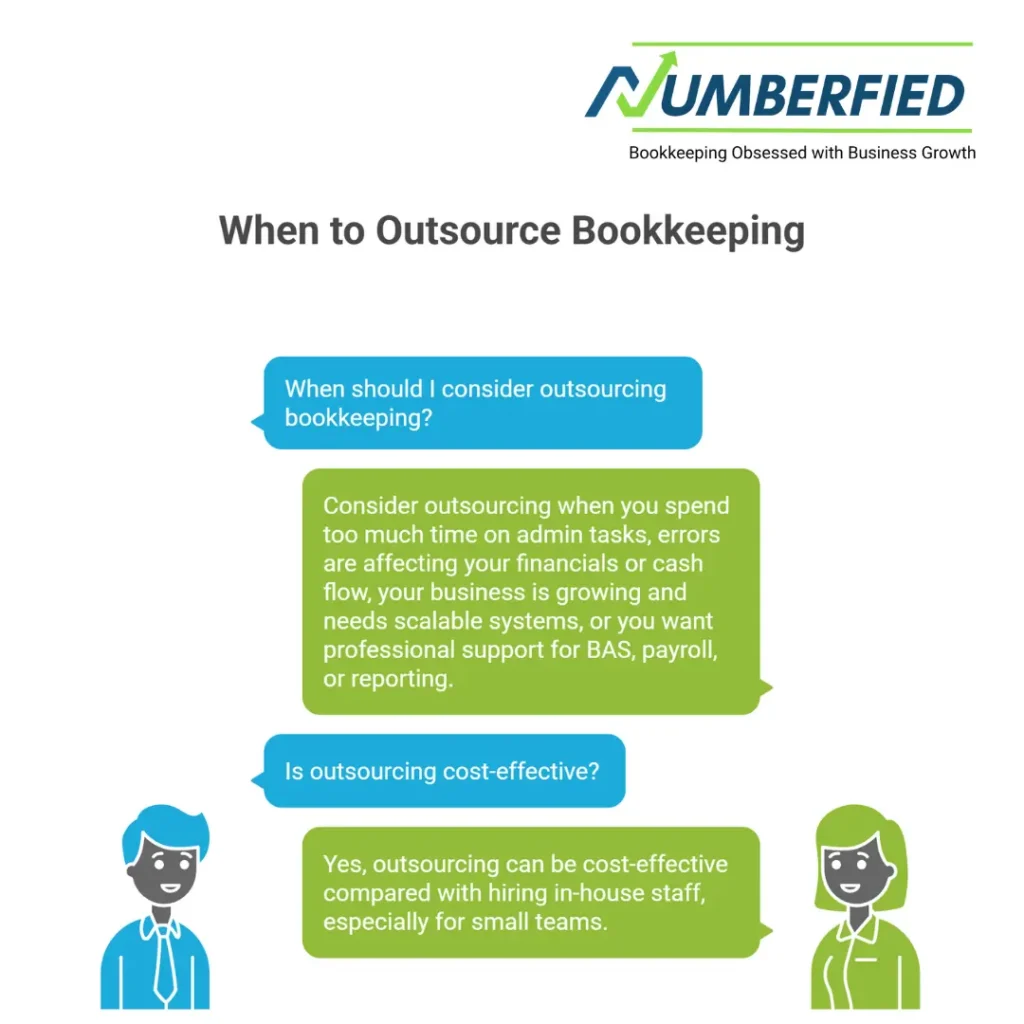
Consider outsourcing when:
- You spend too much time on admin tasks
- Errors are affecting your financials or cash flow
- Your business is growing and needs scalable systems
- You want professional support for BAS, payroll, or reporting
Outsourcing can be cost-effective compared with hiring in-house staff, especially for small teams.
Getting started
To get started, list your transaction volumes, payroll needs, current software, and any immediate compliance deadlines. Contact a bookkeeper who understands Xero, MYOB, or QuickBooks and can provide a clear plan for transition and ongoing support.
Conclusion
Bookkeeping services are essential for Australian small businesses and sole traders who want accurate financial records, compliant BAS lodgements, reliable payroll, and strong cash flow management. With cloud accounting support for Xero, MYOB, and QuickBooks, bookkeepers can automate processes and deliver real-time insights. Choosing the right bookkeeper gives you peace of mind, more time to grow your business, and the financial visibility needed to make confident decisions.
Frequently Asked Questions
What are the best online bookkeeping services for small businesses in Australia?
The best online bookkeeping services for Australian small businesses are those that use cloud accounting platforms such as Xero, MYOB, or QuickBooks and provide ongoing transaction recording, bank reconciliation, BAS preparation, payroll support, and regular financial reporting. Reliable providers offer secure remote access, real-time data visibility, and compliance with ATO requirements, making them suitable for sole traders and growing businesses.
How can I choose a reliable bookkeeping company near me?
To choose a reliable bookkeeping company, look for experience with Australian tax rules, BAS requirements, and GST reporting. Check whether the bookkeeper works with your preferred software (Xero, MYO, B, or QuickBooks), offers transparent pricing, communicates clearly, and provides references from similar businesses. A good provider should explain their onboarding process and compliance approach.
Which bookkeeping software is recommended for Australian freelancers?
Xero, MYOB, and QuickBooks are commonly recommended for Australian freelancers. These cloud-based platforms support invoicing, bank reconciliation, GST tracking, and BAS preparation. Bookkeepers experienced with these systems can help freelancers set up automation, maintain accurate records, and separate personal and business finances.
Can I outsource bookkeeping services for my startup?
Yes, outsourcing bookkeeping services is suitable for startups. Outsourcing allows startups to access professional support for transaction recording, BAS preparation, payroll, and reporting without hiring in-house staff. It also provides scalable systems that grow with the business while ensuring compliance from the beginning.
What are the costs of professional bookkeeping services in Australia?
Bookkeeping costs vary depending on transaction volume, payroll complexity, and service scope. Pricing is commonly structured as hourly rates, fixed monthly packages, or project-based fees for setup or clean-up work. Small businesses and sole traders can often choose affordable monthly packages tailored to their needs.
Where can I find bookkeeping services that integrate with my accounting software?
Many Australian bookkeeping services specialise in cloud accounting and integrate directly with Xero, MYOB, and QuickBooks. Look for bookkeepers who clearly state their software expertise and offer setup, migration, and ongoing management for your existing accounting system.
Are there bookkeeping services offering cloud-based solutions for Australian businesses?
Yes, many bookkeeping services in Australia deliver cloud-based solutions. These services provide real-time access to financial data, automated bank feeds, secure document storage, and remote collaboration, making them ideal for small businesses, sole traders, and teams working across locations.
What features should I look for in bookkeeping services for e-commerce stores?
E-commerce businesses should look for bookkeeping services that handle high transaction volumes, reconcile payment gateways, manage GST correctly, and produce regular cash flow and profitability reports. Experience with cloud accounting software and automation is important to reduce manual data entry and errors.
How do I switch bookkeeping service providers with minimal disruption?
Switching providers typically involves a review of current records, secure transfer of data, and confirming access to your accounting software. A smooth transition includes cleaning up historical data if needed, setting reporting schedules, and ensuring continuity for BAS and payroll obligations.
What are the benefits of using automated bookkeeping services?
Automated bookkeeping services reduce manual work, improve accuracy, and provide up-to-date financial information. Automation through cloud accounting helps with bank reconciliations, invoicing, receipt capture, and reporting, resulting in better cash flow control, fewer errors, and easier compliance with ATO requirements.
Also Read: How Accounting Services Bookkeeping Can Transform Your Australian Business