

Introduction
Running a small business, startup, or freelance operation means every minute and dollar counts. The top bookkeeping service can transform chaotic receipts and spreadsheets into clear, actionable financial data, saving you hours, reducing stress, and helping you make confident decisions. Whether you’re a solo entrepreneur or leading a growing team, the right bookkeeping partner delivers accuracy, compliance, and visibility without the overhead of a full-time hire. In this guide, we examine what separates the top bookkeeping service from average options, compare in-house and outsourced models, highlight must-have features, share common pitfalls, and walk you through the selection so you can choose with confidence.
Key Benefits of Choosing the Top Bookkeeping Service
The best bookkeeping services do far more than record numbers; they become a strategic asset for your business.
Unmatched Accuracy & Error Reduction
Manual entry invites mistakes that cascade through reports and tax filings. The top bookkeeping service uses automation, bank feeds, and duplicate-detection rules to keep records precize. Accurate books mean reliable profit & loss statements, cleaner tax returns, and fewer ATO or IRS surprises.
Significant Time Savings
Business owners often spend 10–20 hours monthly on bookkeeping tasks. Outsourcing to the top bookkeeping service eliminates that burden, freeing you to focus on sales, product development, or client work. Automation handles categorization and reconciliation, so you review rather than create data.
Built-in Compliance & Peace of Mind
Staying compliant with tax laws, payroll rules, and reporting deadlines is non-negotiable. Leading providers stay current with 2026 regulations (STP Phase 2, instant asset write-offs, single-touch payroll updates) and deliver accurate BAS/IAS lodgements and tax-ready files. You gain confidence knowing your books are audit-ready.
Actionable Financial Insights
The top bookkeeping service doesn’t just track history; it provides real-time dashboards, cash-flow forecasts, expense trends, and profitability analysis by product or client. These insights help you spot cost leaks, adjust pricing, or decide when to hire, turning numbers into growth opportunities.
In-House vs Outsourced: Which Delivers the Top Bookkeeping Service?
The choice between in-house staff and outsourced solutions shapes cost, control, and capability.
Cost Comparison
Hiring an in-house bookkeeper costs $60,000–$90,000 annually (salary + super + training + software). Outsourced options start at $400–$2,500 per month ($4,800–$30,000 yearly), with no employment overheads. For most SMBs, outsourcing delivers the top bookkeeping service at 40–70% lower cost.
Expertize & Up-to-Date Knowledge
In-house staff may struggle to keep pace with frequent ATO changes. Outsourced teams specialize in compliance and use certified professionals who track updates daily. This depth often makes outsourced providers the stronger choice for the top bookkeeping service.
Scalability During Growth
An in-house role is fixed: you pay the same whether you have 50 or 500 transactions per month. The top bookkeeping service scales instantly: add payroll during hiring peaks or reduce scope in quiet months without redundancy costs.
Control & Real-Time Access
Some owners fear losing visibility with outsourcing. Modern platforms provide live dashboards, mobile apps, and approval workflows so you see every transaction and authorize payments instantly. Dedicated account managers maintain personal support while automation handles routine work.
Essential Features of the Top Bookkeeping Service
The leading services share features that separate good from exceptional.
Automatic Bank Feeds & Reconciliation
Bank feeds pull transactions directly from your accounts, reducing manual entry. Smart matching and rule-based reconciliation catch discrepancies instantly, keeping books current with minimal effort.
AI-Powered Categorization
Artificial intelligence learns your spending patterns and auto-codes most transactions. Custom rules ensure consistency (e.g., all software subscriptions go to “Office Expenses”). This cuts review time while maintaining accuracy.
Mobile Apps & Receipt Capture
Top providers offer intuitive mobile apps for snapping receipts, approving bills, viewing cash flow, and checking BAS status on the go. Receipt scanning with OCR pulls data automatically, eliminating lost paper trails.
Seamless BAS, STP & Payroll Integration
Australian-compliant software calculates GST, prepares BAS statements, submits Single Touch Payroll data, and manages superannuation. This removes deadline stress and ensures correct PAYG withholding and super payments.
Secure Client Portal & Collaboration Tools
A secure portal lets you share documents, view reports, and communicate in one place. Real-time collaboration replaces scattered emails and version confusion, making teamwork effortless.
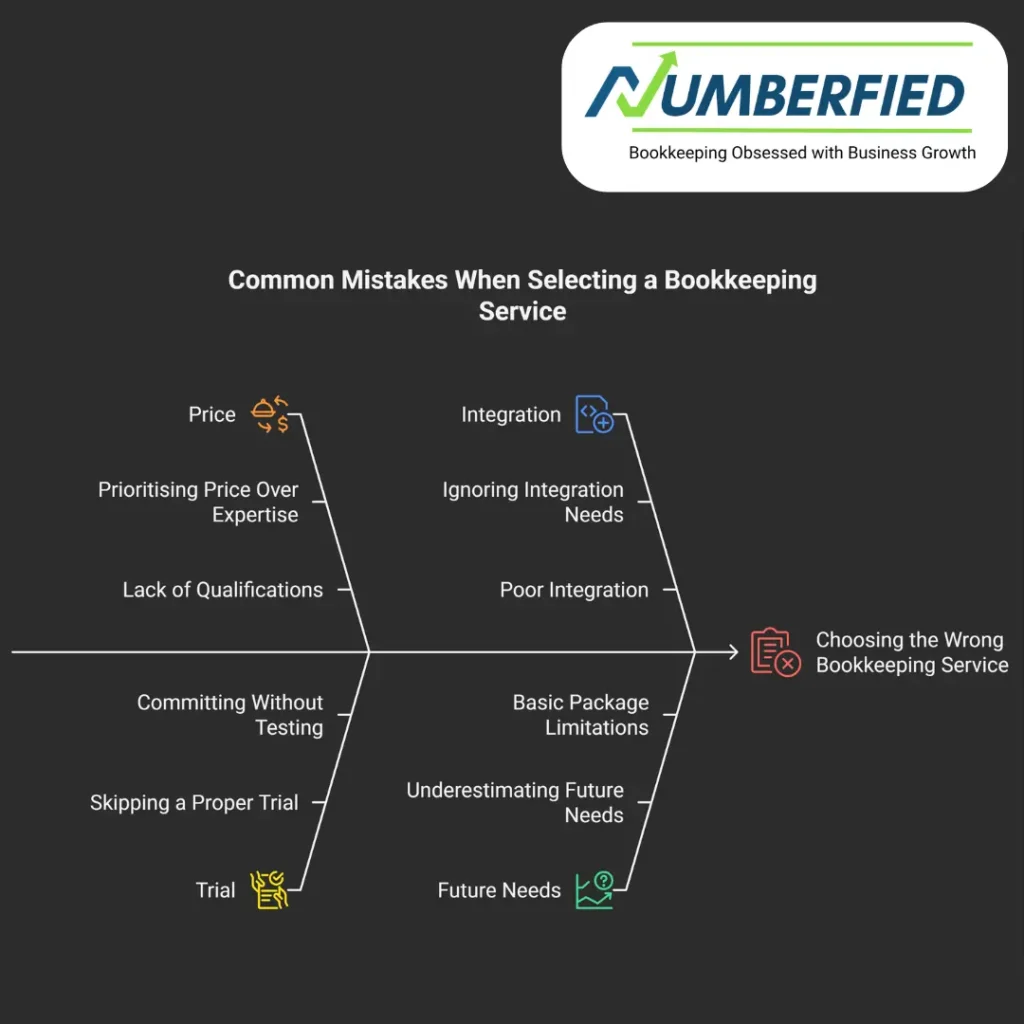
Common Mistakes When Selecting a Bookkeeping Service
Avoid these pitfalls to ensure you choose the top bookkeeping service.
Prioritising Price Over Expertize
The lowest quote often means less experience or weaker compliance support. The top bookkeeping service balances cost with qualifications, certifications, and proven small-business results.
Skipping a Proper Trial
Many owners commit without testing. Request a trial month or a discounted first quarter to verify accuracy, communication, and ease of use before locking in.
Ignoring Integration Needs
Choose a service that connects seamlessly with your existing tools (Xero, QuickBooks, Shopify, Stripe). Poor integration creates double entry and errors.
Underestimating Future Needs
Selecting a basic package can limit growth. Choose a provider that allows easy upgrades so you can add payroll, advisory, or multi-entity support without switching firms.
Weak Communication Expectations
Assume regular updates; define response times and reporting frequency upfront. The top bookkeeping service maintains clear channels and proactive check-ins.
Step-by-Step Guide to Choosing the Top Bookkeeping Service
Follow this practical process to find the right fit.
Step 1: Define Your Requirements
List must-have tasks: transaction recording, bank reconciliations, BAS lodgement, payroll, or advisory. Estimate monthly transactions and identify pain points (late BAS, poor cash flow visibility).
Step 2: Research ATO-Registered Providers
Search for registered tax agents and BAS agents with strong reviews on Google, ProductReview.com.au, and industry forums. Look for Xero or QuickBooks certification and small-business experience.
Step 3: Evaluate Technology & Security
Confirm the service uses cloud platforms with bank feeds, mobile apps, and secure portals. Ask about data encryption, backups, and compliance with Australian privacy laws.
Step 4: Compare Pricing & Inclusions
Request detailed quotes listing monthly fees, included services, and extras (e.g., tax return preparation). Compare value, look for fixed-fee packages that eliminate hourly surprises.
Step 5: Check Communication & Support
Ask about dedicated account managers, response times, and meeting frequency. The top bookkeeping service offers regular check-ins and clear escalation paths.
Step 6: Review References & Trial
Speak with current clients or request references. Use any trial period to test accuracy, ease of use, and overall fit before committing long-term.
ATO Trends & the Future of Bookkeeping in 2026
In 2026, the top bookkeeping service is shaped by several ATO-driven trends.
- Mandatory e-invoicing rollout continues, pushing providers toward integrated platforms that automate invoice capture and validation.
- Single Touch Payroll Phase 2 expands reporting requirements, making seamless STP integration essential.
- Increased data-matching means accurate categorization and complete records are more important than ever to avoid ATO notices.
- AI now handles 60–70% of transaction categorization in leading services, reducing manual review time.
- Sustainability reporting is emerging in premium packages as ESG considerations gain traction with funders and regulators.
These trends reinforce the value of the top bookkeeping service: one that combines human oversight with cutting-edge technology to keep you compliant and competitive.
Conclusion
The top bookkeeping service is no longer a luxury; it’s a strategic advantage that delivers accuracy, time savings, compliance, and financial insights essential for growth. By moving from manual processes to automated, cloud-based solutions, you gain clarity and control without the overhead of in-house staff. Whether you’re a startup scaling fast or an established business seeking efficiency, the right partner transforms your numbers into a competitive edge.
Ready to upgrade your financial operations? Request a free consultation today and discover which top bookkeeping service fits your business perfectly.
FAQ
What are the three golden rules of bookkeeping?
The three golden rules of bookkeeping are: debit the receiver and credit the giver; debit what comes in and credit what goes out; and debit expenses and losses while crediting incomes and gains. These rules form the basis of double-entry accounting and ensure every transaction stays balanced.
How much should a CPA charge for bookkeeping?
A CPA typically charges between $150 and $400 per hour for bookkeeping, or $500 to $2,500 per month for ongoing packages. The exact amount depends on the business’s size, transaction volume, and any additional services included.
What are the top 4 accounting companies?
The top four accounting companies are Deloitte, PwC, EY, and KPMG. They are known worldwide as the Big Four and lead in revenue, clients, and industry influence.
How much should I pay for bookkeeping services?
Small businesses usually pay $300 to $1,000 per month for outsourced bookkeeping services, with most falling in the $500 to $900 average range. Costs go higher when the work includes payroll, reporting, or more complex tasks.
How should I price my bookkeeping services?
You should price bookkeeping services using fixed monthly fees between $300 and $1,500 per client, depending on their size and needs, with an average of around $500 per client. Focus on value-based pricing rather than just hourly rates to improve profitability.
How much does it cost to have someone do your bookkeeping?
Having someone handle your bookkeeping usually costs $300 to $1,000 per month for outsourced work, or $40 to $70 per hour if you hire a freelancer. Full-time in-house bookkeeping can cost $3,500 to $5,800 per month, including benefits.
What is the going rate for a full-charge bookkeeper?
A full-charge bookkeeper earns about $59,000 to $60,000 per year, which equals roughly $28 to $29 per hour. Outsourced rates are typically $70 to $120 per hour or $800 to $2,000+ per month, depending on the workload.
What should a bookkeeper charge?
A bookkeeper should charge $30 to $100 per hour, with most experienced ones in the $45 to $65 range, or offer monthly retainers of $300 to $1,500. The goal is often to average around $500 per client for sustainable income.
What do freelance bookkeepers charge?
Freelance bookkeepers generally charge $25 to $100 per hour, with the average between $40 and $70, or $300 to $1,500 per month for ongoing retainers. Rates are higher for those with certifications or more experience.
How much should I pay someone to do my QuickBooks?
You should expect to pay $300 to $700 per month for QuickBooks bookkeeping services like QuickBooks Live, or $40 to $80 per hour for freelancers. Ongoing full support typically averages $400 to $800 per month, depending on your business needs.
Read Also: Virtual Bookkeeping Services for Small Businesses That’ll Change Your Life!