

Introduction
As a small to medium business owner, startup founder, entrepreneur, sole proprietor, or self-employed professional, your time and resources are limited, making efficient financial management crucial. Bookkeeping service packages offer structured solutions that combine essential tasks like transaction recording, reconciliations, and reporting into affordable, scalable plans. These packages provide the backbone for compliance, accurate insights, and growth without the hassle of piecing together services. In 2026, with rising costs and regulatory demands, choosing the right bookkeeping service packages can save you thousands while freeing up hours for core activities.
This guide explores the key benefits, factors influencing costs, comparisons, tier expectations, pricing models, red flags, a selection process, top providers, industry trends, and how to get started, all to help you find the ideal fit for your business.
Key Benefits of Bookkeeping Service Packages
Bookkeeping service packages deliver practical advantages that address common pain points for busy professionals.
Predictable Pricing for Better Budgeting
One major benefit of bookkeeping service packages is the fixed, transparent pricing that eliminates surprise bills. Monthly bookkeeping packages allow you to budget accurately, knowing exactly what you pay for a set scope of work. This predictability is especially valuable for startups and sole proprietors with fluctuating cash flow, avoiding the uncertainty of hourly billing.
Tailored Coverage to Match Your Needs
These packages are designed with flexibility in mind, offering services aligned to your business stage. Small business bookkeeping packages can include basics like transaction entry or expand to full compliance and reporting. This tailored approach ensures you get what you need without paying for extras, supporting efficient operations.
Significant Time Savings
Manual bookkeeping can consume 10-20 hours monthly, diverting focus from revenue-generating tasks. Outsourced bookkeeping packages automate much of this work, freeing you to concentrate on sales, client relationships, or innovation. The time savings compound over months, allowing self-employed professionals to take on more work or enjoy a better work-life balance.
Compliance Assurance and Peace of Mind
Bookkeeping service plans incorporate regulatory requirements like IRS filings, state taxes, and payroll compliance from the start. Tiered bookkeeping services often include audit-ready records and deduction tracking, reducing the risk of penalties. This assurance lets entrepreneurs operate confidently, knowing their finances are handled professionally.
Factors Influencing Package Costs
The cost of bookkeeping service packages varies based on several key elements that reflect your business’s unique requirements.
Transaction Volume and Frequency
Higher transaction volumes drive up costs, as more entries require additional time and processing. A startup with 100 monthly transactions might pay $300–$800, while a retailer with 500+ could see $1,200–$2,500 in monthly bookkeeping packages. Frequency also matters; daily vs weekly updates can increase fees by 20-30%.
Services Included in the Package
Basic packages covering transaction entry and reconciliations are cheaper ($300–$600/month), but adding payroll, tax prep, or advisory pushes costs to $800–$1,500. Small business bookkeeping packages with compliance features like 1099 filings or sales tax add value but raise the price.
Business Complexity and Industry
Complex structures like multi-entity businesses or those with inventory/COGS tracking cost more due to specialised handling. Outsourced bookkeeping packages for e-commerce or construction (with job costing) average 25-50% higher than simple service-based operations.
Provider Location and Experience
Urban providers in New York or California charge 20-40% more than regional ones due to higher living costs. Experienced, certified providers (CPAs or QuickBooks ProAdvisors) command premium rates in bookkeeping service plans, but their expertise often saves money long-term through better compliance and deductions.
In-House vs. Outsourced Bookkeeping Service Packages
Comparing in-house and outsourced bookkeeping service packages helps determine the best fit for your operation.
Cost Comparison
In-house bookkeeping requires salaries of $50,000–$80,000 annually, plus benefits and software, totaling $60,000–$100,000. Outsourced bookkeeping packages average $3,600–$24,000 yearly, saving 60-80% without fixed overheads. For SMBs, outsourcing provides comparable coverage at a fraction of the expense.
Expertise and Customization
In-house offers dedicated knowledge but limited specialisation. Outsourced bookkeeping packages bring certified experts who customise services to your industry, often with better tools and compliance insights. This makes outsourcing ideal for entrepreneurs needing scalable, tailored support.
Scalability and Flexibility
In-house roles are fixed, limiting adaptability during growth. Tiered bookkeeping services in outsourced packages scale easily, upgrade from basic to premium as transactions increase, without hiring. This flexibility suits startups with variable needs.
Control and Technology Access
Some fear losing oversight with outsourcing. Modern bookkeeping service plans use cloud portals for real-time access and approvals, maintaining control while leveraging advanced automation. In-house may lag in tech unless you invest heavily.
What to Expect in Different Bookkeeping Tiers
Bookkeeping service packages come in tiers to match various business sizes and needs.
Basic Bookkeeping Packages
These entry-level plans cover essential transaction entry, bank reconciliations, and basic reporting, typically costing $300–$600/month. Ideal for sole proprietors with low volume, they ensure clean records for tax time without advanced features.
Standard Bookkeeping Packages
Standard tiers add payroll, accounts payable/receivable, and monthly financial statements, averaging $600–$1,200/month. Small business bookkeeping packages at this level suit growing operations needing compliance support, like 1099 filings.
Premium or Full-Service Packages
Premium plans include everything from basics plus tax prep, advisory, cash flow forecasting, and custom reporting, at $1,200–$2,500/month. Outsourced bookkeeping packages here provide comprehensive coverage for SMBs with complex needs.
Common Pricing Models for Bookkeeping Services
Understanding pricing models helps you select bookkeeping service packages that align with your budget.
Fixed Monthly Pricing
Fixed monthly plans offer predictability at $300–$2,000, covering a defined scope. Monthly bookkeeping packages are popular for ongoing needs, with add-ons for extras like tax filing.
Hourly Add-Ons
Many packages include core services fixed, with hourly add-ons ($50–$100/hour) for overflow work. This hybrid model keeps base costs low while accommodating peaks.
Annual Contracts
Annual contracts lock in rates for 12 months, often with discounts (5–15%) for commitment. Bookkeeping service plans with annual terms provide stability but less flexibility.
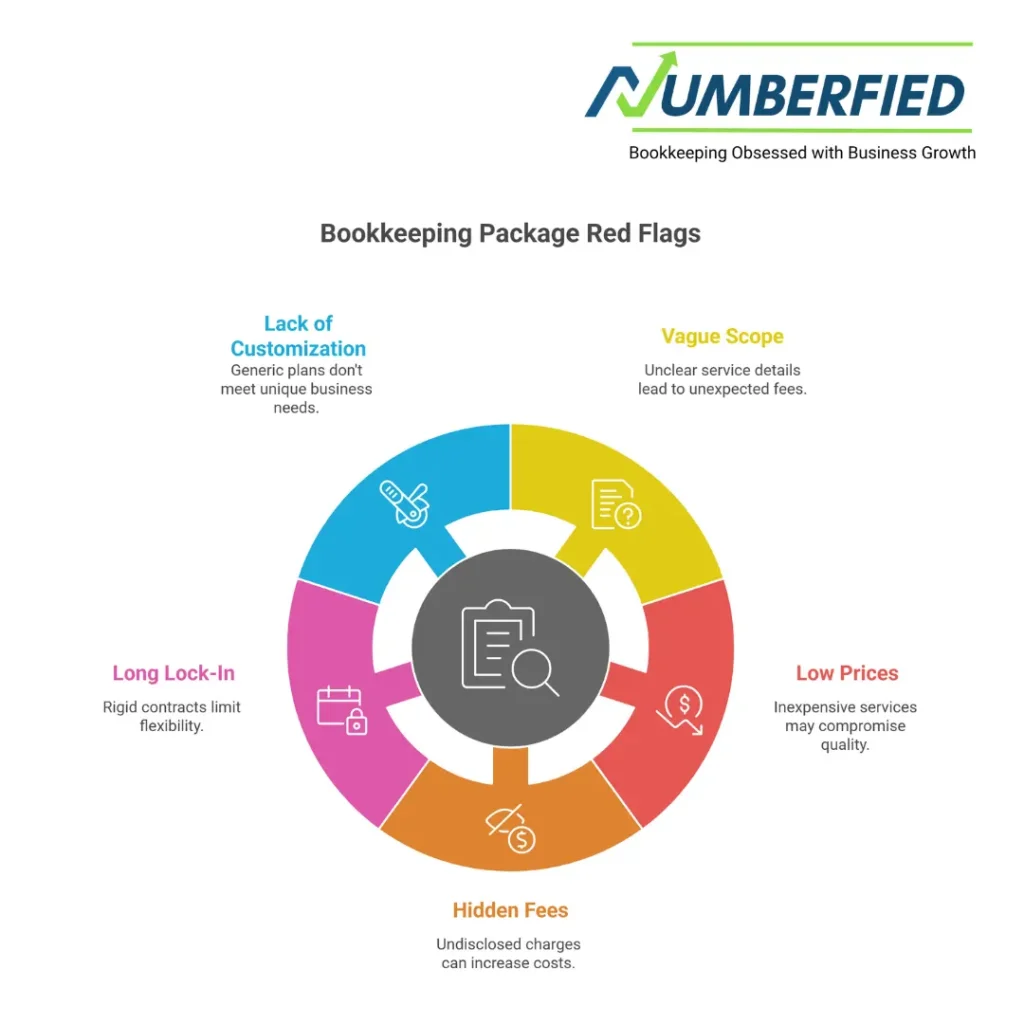
Red Flags When Evaluating Bookkeeping Packages
Spot these warning signs to avoid poor bookkeeping service packages.
Vague Scope of Services
If the package description lacks detail on inclusions (e.g., “bookkeeping and more”), you risk extra fees. Clear bookkeeping service plans specify transaction limits, reporting frequency, and exclusions.
Unrealistically Low Prices
Below-market rates ($100–$200/month for full-service) often mean inexperience or automation-only without human review. Average outsourced bookkeeping packages start at $300 for the basics. Low prices may compromise quality.
Hidden Fees and Upsells
Watch for undisclosed charges for revisions, calls, or software access. Transparent tiered bookkeeping services include all essentials without constant upsells.
Long Lock-In Periods
Avoid packages requiring 12–24 month commitments without exit clauses. Flexible bookkeeping service packages offer month-to-month or short-term trials.
Lack of Customization
One-size-fits-all plans ignore your business’s unique needs. The best small business bookkeeping packages allow tailoring to transaction volume or industry specifics.
Step-by-Step Guide to Choosing Bookkeeping Service Packages
This guide helps you select bookkeeping service packages that fit your business.
Step 1: Assess Your Bookkeeping Needs
Determine transaction volume, required services (bookkeeping only or full tax support), and frequency. Startups may need basic, while growing SMBs require premium bookkeeping service packages.
Step 2: Set a Realistic Budget
Allocate 1–3% of revenue for $150,000 turnover, budget $125–$375 monthly. Factor in your growth stage for scalable bookkeeping service plans.
Step 3: Research Providers and Packages
Search for providers with strong reviews and certifications. Compare small business bookkeeping packages on sites like G2 or Capterra for features and pricing.
Step 4: Evaluate Technology and Integration
Ensure the package uses cloud tools (QuickBooks, Xero) with bank feeds and apps you use. Good outsourced bookkeeping packages integrate seamlessly for efficiency.
Step 5: Check Compliance and Security
Verify the provider’s expertise in IRS/state taxes. Confirm data security (encryption, backups) to protect sensitive financials in bookkeeping service packages.
Step 6: Compare Quotes and Value
Request detailed proposals from 3–5 providers. Evaluate value in monthly bookkeeping packages inclusions, support, and scalability, not just price.
Step 7: Start with a Trial
Many offer 1–3 month trials. Use this to test the bookkeeping service packages before committing annually.
Conclusion
Bookkeeping service packages provide predictable pricing, tailored coverage, time savings, and compliance assurance that empower small businesses to thrive. By understanding costs, avoiding red flags, and following a thoughtful selection process, you can find a package that fits your needs perfectly. As trends in 2026 lean toward AI-driven efficiency and enhanced security, now is the time to upgrade. Ready to simplify your finances? Request a free quote or consultation today from a trusted provider and take the first step toward smarter bookkeeping.
FAQ
What are bookkeeping service packages?
Bookkeeping service packages are structured plans that bundle essential financial tasks like transaction recording, bank reconciliations, reporting, and sometimes payroll or tax prep into fixed monthly or annual fees. They offer predictable pricing and tailored coverage so small business owners get exactly what they need without hourly surprises.
How much do bookkeeping service packages cost for small businesses?
Bookkeeping service packages for small businesses typically cost $300–$2,500 per month in 2026, depending on tier and needs. Basic packages start around $300–$600, standard ones with payroll and reporting range from $600–$1,200, and premium/full-service plans (including tax prep and advisory) average $1,200–$2,500+.
Are bookkeeping service packages worth it for startups?
Yes, bookkeeping service packages are worth it for most startups. They provide predictable costs, professional accuracy, and time savings that let founders focus on growth instead of paperwork, often paying for themselves through better compliance and fewer tax surprises.
What’s included in basic bookkeeping service packages?
Basic bookkeeping service packages usually include transaction entry, bank and credit card reconciliations, expense categorization, and basic monthly reports. They’re designed for low-volume businesses or sole proprietors who need clean records for tax time without advanced features.
What’s included in premium or full-service bookkeeping packages?
Premium or full-service bookkeeping packages typically cover everything in basic plans plus payroll processing, accounts payable/receivable management, monthly financial statements (P&L, balance sheet), cash flow forecasting, and sometimes tax prep or advisory. They suit growing businesses with higher complexity and reporting needs.
How do I choose between different bookkeeping service package tiers?
Choose a tier based on your transaction volume, business complexity, and required services. Start with basic ($300–$600/month) if you have low activity and simple needs; move to standard or premium ($600–$2,500/month) if you have payroll, multiple accounts, or want forecasting and advisory support.
Are monthly bookkeeping packages better than hourly billing?
Yes, monthly bookkeeping packages are usually better than hourly billing for most small businesses. They offer predictable costs, a defined scope of work, and often include extras like reporting or compliance support, while hourly can become expensive and unpredictable for ongoing needs.
What red flags should I watch for when choosing bookkeeping service packages?
Red flags include vague package descriptions with unclear inclusions, unrealistically low prices (under $200/month for full service), hidden fees for revisions or calls, long lock-in contracts without easy exit, and a lack of cloud software integration or mobile access.
What are the latest trends in bookkeeping service packages for 2026?
Trends in 2026 include heavy AI automation for transaction categorization (reducing manual review by 60%+), tiered packages with built-in ESG/sustainability reporting, stronger integration with e-invoicing and payment platforms, predictive cash flow tools in premium tiers, and enhanced cybersecurity features as standard.
How can I get started with bookkeeping service packages for my business?
Start by assessing your transaction volume and needs (basic vs. full-service), researching providers with strong reviews, comparing quotes for monthly bookkeeping packages, and checking for cloud tools and trial periods. Many offer free consultations or a discounted first month. Request one today to find the right fit and simplify your finances.
Read Also: Why Accounting and Bookkeeping Services Will Change Your Business for the Better!