

Introduction
White label bookkeeping is a strategic service model that lets accounting firms, advisors, and financial professionals offer comprehensive bookkeeping under their own brand while outsourcing the operational work. We understand how critical consistent, accurate financial records are to client trust and business growth. In this article, we explain why white label bookkeeping matters, how it works, and how we at Numberfied help firms expand services without sacrificing quality. You will learn practical steps to evaluate partners, integrate services, and preserve client relationships.
Why this matters: Firms can increase recurring revenue, free internal resources, and improve service offerings without hiring and training a large in-house bookkeeping team. White label bookkeeping becomes a growth enabler when executed with transparency, technical proficiency, and strong communication.
Key Takeaways
- White label bookkeeping enables firms to scale services under their brand with outsourced operational expertise.
- Choose partners with strong security, technology integration, and consistent quality control.
- Clear client communication and service-level agreements preserve trust and brand integrity.
- Focus internal resources on advisory services while partners handle transactional work.
Understanding White Label Bookkeeping
Definition and core concept
White label bookkeeping refers to outsourcing bookkeeping tasks to a third-party provider that delivers services under the requesting firm’s brand name. We rely on partners to manage day-to-day transactions, reconciliations, and reporting while the hiring firm maintains client-facing relationships.
How white label bookkeeping differs from traditional outsourcing
Unlike generic outsourcing, white label bookkeeping emphasizes brand continuity and transparency. Clients often perceive services as delivered by their trusted firm, preserving the client experience while benefiting from specialized operational teams.
Common service components
Typical services include bank reconciliations, accounts payable and receivable management, payroll coordination, monthly close, financial statements, and customizable reporting. Many providers also support cloud accounting platforms and integration with client systems.
Benefits for Accounting Firms and Advisors
Scale quickly without hiring
White label bookkeeping allows firms to onboard new clients and increase workload without the time and expense of recruiting, training, and managing additional staff. We can scale capacity up or down based on client volume and seasonal needs.
Increase recurring revenue
Firms can offer monthly bookkeeping retainer packages that create predictable revenue streams. Consistent service quality encourages client retention and long-term contracts.
Focus on advisory services
By transferring transactional work to a white label partner, we free internal teams to prioritize higher-value advisory services, strategy, and client relationships that drive growth.
Choosing a White Label Bookkeeping Partner
Security and compliance
Security, data privacy, and regulatory compliance are essential. Ensure the provider follows industry-standard encryption, access controls, and secure data handling practices. Verify SOC reports and compliance certifications as applicable.
Technical integration and platform expertise
Choose a partner with strong experience across cloud accounting platforms such as QuickBooks Online, Xero, and others. Seamless integration minimizes client disruption and speeds onboarding.
Quality assurance and training
Ask about the partner’s quality control processes, staff certification, and ongoing training programs. Robust review workflows and manager oversight ensure consistent, accurate outputs.
Implementing White Label Bookkeeping in Your Firm
Onboarding and transition planning
Successful transitions require a clear onboarding checklist, data migration plan, defined timelines, and role assignments. We recommend a pilot phase to validate processes and address exceptions before full-scale rollout.
Service-level agreements and pricing models
Establish service-level agreements (SLAs) covering turnaround times, reporting deliverables, communication protocols, and escalation processes. Evaluate pricing models per-client flat fee, hourly, or tiered packages based on firm goals.
Client communication strategy
Transparent communication with clients about the change in operations is vital. Explain that services will continue under your brand and outline benefits such as faster reporting, expanded hours, or improved responsiveness.
Technology and Workflow Optimization
Standardizing processes
Standardized workflows increase consistency and reduce errors. Implement checklists, templatized plates, and a standardized chart of accounts to streamline monthly closes and reporting.
Automation and integrations
Leverage automation for bank feeds, reconciliations, invoicing, and expense capture. Integrations with payroll, CRM, and payment platforms reduce manual entry and accelerate month-end closing.
Performance metrics and dashboards
Define KPIs such as days to close, reconciliation completion rate, and error rates. Use dashboards to monitor provider performance and ensure continuous improvement.
Maintaining Brand Integrity and Client Trust
Preserving the client relationship
Although operational work is outsourced, the firm remains the primary client contact. We recommend clear escalation paths and joint client meetings during the transition to maintain trust.
Transparency without exposing backend operations
Share outcomes and improvements with clients while preserving confidentiality of the partner relationship if preferred. Framing the change as an enhancement can increase acceptance.
Handling disputes and adjustments
Define processes for errors, corrections, and billing adjustments. SLAs should specify response times and remediation steps to protect client interests and brand reputation.
Pricing Strategies and Profitability
Cost structures to consider
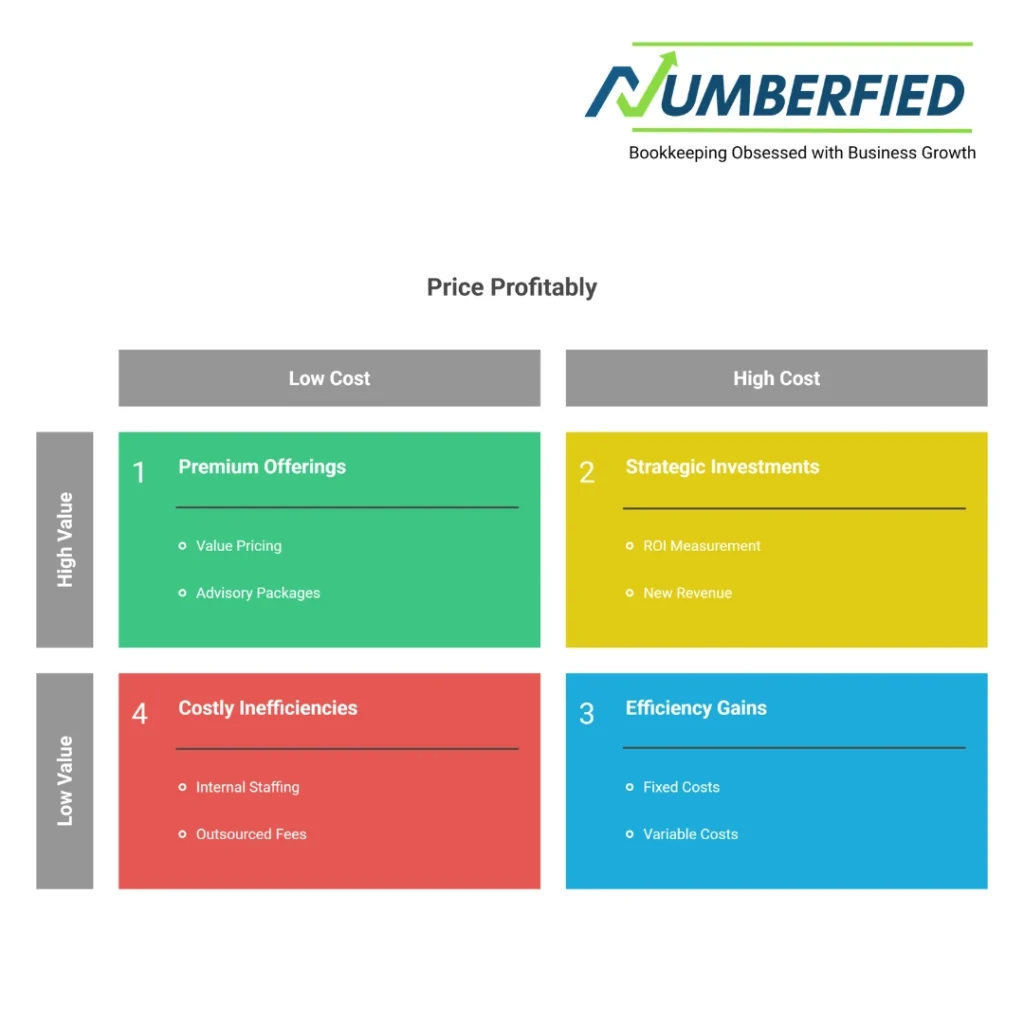
Analyze fixed-cost vs variable-cost models. White label providers often offer volume-based pricing, allowing firms to maintain margins as client volume grows.
Value-based pricing for advisory services
As transactional work is delegated, firms can introduce value-based advisory pricing. We recommend packaging advisory services to differentiate offerings and increase client lifetime value.
Measuring return on investment
Calculate ROI by comparing internal staffing costs against outsourced fees, factoring in new revenue from expanded services and time regained for high-margin work.
Risk Management and Compliance Considerations
Data protection and privacy
Ensure the white label provider has robust data protection, backup, and disaster recovery protocols. Confirm access restrictions and secure transfer methods for sensitive financial data.
Regulatory compliance and responsibilities
Clarify responsibilities for tax filings, payroll compliance, and record retention. Maintain oversight to ensure all regulatory obligations are met under your firm’s name.
Contract terms and exit clauses
Negotiate clear contract terms covering confidentiality, service levels, liability, and exit strategies. Ensure smooth transition options if you switch providers or bring services in-house.
Case Studies and Real-World Outcomes
Growing a regional firm
A mid-sized regional firm expanded bookkeeping capacity by partnering with a white label provider, enabling a 30% increase in recurring revenue while maintaining service quality and client satisfaction.
Improving turnaround times
Another firm reduced month-end closing time by 40% after standardizing processes and leveraging the partner’s automation capabilities, which improved client reporting cadence.
Launching advisory packages
Firms that reclaimed internal time redirected effort into advisory services, launching bundled offerings that strengthened client retention and raised average client revenue.
Why Work with Numberfied for White Label Bookkeeping
Experienced operational teams
We combine experienced bookkeeping professionals with standardized processes to deliver consistent, accurate outputs under your brand. We emphasize training, manager review, and measurable quality controls.
Secure, integrated technology
Numberfied supports leading cloud accounting platforms and integrates with common payroll, payment, and banking systems, enabling smooth data flows and automation-driven efficiencies.
Flexible engagement models
We offer scalable plans, transparent pricing, and dedicated onboarding support to match firm needs. Our approach helps firms grow their services while protecting client relationships and brand value.
Implementation Checklist for Firms Considering White Label Bookkeeping
Step 1: Define scope and goals
Clarify which bookkeeping tasks to outsource and establish success metrics such as improved margins, reduced close times, or expanded client capacity.
Step 2: Evaluate providers
Assess security practices, platform expertise, SLAs, training programs, and references. Request a pilot engagement to validate capabilities.
Step 3: Plan the transition
Create an onboarding roadmap, data migration plan, client communication templates, and a governance model to oversee ongoing performance.
Conclusion
White label bookkeeping is a powerful growth strategy for firms seeking to expand services, increase recurring revenue, and concentrate internal resources on advisory work. We recommend careful partner selection, strong security practices, standardized workflows, and transparent client communication to maximize benefits. When implemented thoughtfully, white label bookkeeping preserves brand integrity while delivering operational efficiency and improved client service. Contact us at Numberfied to discuss how our white label bookkeeping solutions can help your firm scale with confidence and deliver consistent, high-quality financial services.
Frequently Asked Questions
What exactly is white label bookkeeping?
White label bookkeeping is a service where bookkeeping tasks are performed by a third-party under your firm’s brand, ensuring continuity of client-facing interactions. It includes transaction processing, reconciliations, and reporting while maintaining your client relationship. This model enables your firm to scale without expanding internal bookkeeping staff.
How does white label bookkeeping protect client data?
Providers should implement industry-standard encryption, access controls, and secure transfer protocols to protect financial data. Verify SOC reports, ISO certifications, and documented backup procedures. Confirm contractual obligations regarding confidentiality and data handling.
Will clients know the work is outsourced?
Not necessarily; the white label approach allows services to appear as though delivered by your firm, preserving brand perception. You can choose the level of transparency in client communications. Clear explanations about benefits and continuity usually ease client concerns.
How do we maintain quality control?
Quality is maintained through standardized workflows, manager reviews, and performance KPIs such as reconciliation accuracy and close times. Regular audits and feedback loops help continuously improve outputs. Establish SLAs to formalize expectations and remediation steps.
What platforms do white label providers support?
Top providers support major cloud accounting platforms like QuickBooks Online and Xero, plus integrations for payroll and payment systems. Platform expertise reduces onboarding friction and preserves data integrity. Confirm platform certifications during evaluation.
How are pricing models structured?
Pricing can be flat monthly fees, per-client tiers, or variable hourly models, often with volume discounts for larger engagements. Evaluate which model aligns with your margin goals and client mix. Transparent pricing helps avoid surprises and simplifies billing to clients.
What happens if we want to change providers?
Contracts should include exit clauses and data return provisions to ensure smooth transitions and continuity of service. Maintain backups and documentation to facilitate migration. A well-defined transition plan minimizes client disruption and operational risk.
Can white label bookkeeping improve profitability?
Yes, by outsourcing transactional work, firms reduce hiring costs and redirect staff time to higher-value advisory services, increasing margins. Scaling capacity without proportional headcount growth improves profitability. Track ROI by comparing internal costs against outsourced fees and new revenue.
How long does onboarding typically take?
Onboarding timelines vary but often involve a pilot phase of a few weeks followed by phased rollouts, with full transition taking one to three months depending on complexity. Clear data migration and task documentation speed the process. Plan for client communication and parallel workflows during the transition.
Why choose Numberfied for white label bookkeeping?
Numberfied combines experienced teams, secure technology integrations, and flexible engagement models to meet firm needs while protecting brand integrity. We emphasize measurable quality controls and transparent communication throughout onboarding and ongoing service. Contact us to evaluate how our white label bookkeeping can help scale your firm effectively.
Read Also: How White-Label Bookkeeping Can Transform Your U.S. Small Business