

Introduction
Hiring a dedicated bookkeeper for real estate can transform cash flow visibility, compliance, and profitability for agents, investors, and property managers. This article explains the advantages and trade-offs of outsourcing or hiring an in-house specialist, details US compliance requirements, lists recommended tools, and provides actionable guidance for selecting and onboarding a provider. The goal is practical education with clear next steps to improve financial controls and return on investment.
Key takeaways:
- clear financials, cost savings, scalability, and focused operations.
- Actionable advice: selection checklist, onboarding steps, and ROI measurement.
- Compliance and tax prep: what real estate professionals must provide to stay IRS- and GAAP-compliant.
Why a Bookkeeping Service and Bookkeeper for Real Estate Matters
Core financial clarity
A specialized bookkeeper for real estate produces consistent month-end reports, reconciliations, and ledgers tailored to commissions, leases, security deposits, and investor distributions. Accurate books reduce errors and inform strategy.
Time to focus on revenue-generating work
Delegating bookkeeping for real estate activities allows agents, property managers, and investors to prioritize sales, acquisitions, and operations instead of bookkeeping tasks.
Scalability and predictable costs
Outsourced bookkeeping services for real estate scale with transaction volume and offer predictable monthly fees, avoiding payroll surprises and training costs for in-house hires.
Benefits of Hiring a Bookkeeper for Real Estate
Cost savings compared to in-house accounting
Engaging a bookkeeper for real estate reduces payroll, benefits, and overhead. For many firms, outsourcing yields lower per-transaction costs and access to multiple experts.
Specialized expertise and industry best practices
Real estate bookkeeping services handle commission splits, escrow, HOA accounting, and investor reporting. That industry knowledge speeds setup and prevents common classification mistakes.
Scalable support for growth
A bookkeeper for real estate can accommodate portfolio growth, additional properties, and fluctuating transaction volumes without the delays of hiring and training.
Challenges and Risks When Using a Bookkeeper for Real Estate
Privacy and data security concerns
Outsourcing requires sharing sensitive client, vendor, and bank information. Ensure providers use encryption, role-based access, and strict confidentiality agreements.
Integration with existing systems
Effective bookkeeping depends on seamless integration with MLS platforms, property management portals, CRM systems, and bank feeds. Verify compatibility before hiring.
Maintaining oversight and internal controls
Even with an external bookkeeper for real estate, maintain review processes, approval flows, and periodic audits to detect anomalies and preserve fiduciary responsibility.
US Compliance: IRS, GAAP, and Real Estate Accounting Rules
IRS reporting for real estate transactions
Real estate professionals must account for 1099 reporting, capital gains, mortgage interest statements, and rental income. A bookkeeper for real estate should prepare clean source documents for tax filing.
GAAP and accrual vs. cash accounting
Many real estate businesses adopt accrual accounting for investor reporting and loan covenant compliance, while smaller operations may use the cash basis. A qualified real estate bookkeeper will recommend the appropriate method and implement consistent policies.
Record retention and audit readiness
Maintain organized electronic records for receipts, leases, closing statements, and escrow transactions. A disciplined real estate bookkeeper ensures records are maintained to support audits and tax examinations.
Accounting Software and Tools for Real Estate Bookkeeping
QuickBooks for real estate
QuickBooks Online with class and location tracking supports multi-entity, multi-property setups. A bookkeeper for real estate typically configures a chart of accounts to track commissions, rent, security deposits, and capex.
Xero and cloud-based alternatives
Xero is an excellent choice for firms seeking multi-user access and bank connectivity. Integration with payment processors, payroll, and property management apps is common when using a bookkeeper for real estate.
Property management accounting software
Tools such as Buildium, AppFolio, and Yardi complement a real estate bookkeeper by managing tenant ledgers, maintenance workflows, and owner statements. Choose a solution that syncs to your general ledger.
Selecting a Bookkeeper for Real Estate
Define scope and responsibilities
Before outreach, document the tasks you expect a real estate bookkeeper to perform: bank reconciliations, accounts payable/receivable, commission processing, tenant ledgers, and month-end reporting.
Verify industry experience and references
Ask for specific examples of work with brokers, investor portfolios, or property management companies. Request references and sample reports showing property-level detail and investor distributions handled by the bookkeeper for real estate.
Evaluate security, deliverables, and SLAs
Confirm data security practices, backup policies, and service level agreements. Clarify deliverables such as monthly financial statements, KPI dashboards, and timelines for reconciliations performed by the bookkeeper for real estate.
Onboarding a Bookkeeper for Real Estate: Step-by-Step Process
Initial data inventory and cleanup
Begin with a list of bank accounts, trust accounts, vendor contracts, tenant leases, property deeds, and historical files. A real estate bookkeeper will conduct a cleanup to correct account classifications and reconcile legacy discrepancies.
Chart of accounts and reporting structure setup
Design a chart of accounts that distinguishes property-level income and expenses, owner equity accounts, and tenant security deposits. A specialized real estate bookkeeper creates templates for consistent monthly reporting.
Regular workflows and communication cadence
Establish a monthly close checklist, timelines for accounts payable approvals, and a reporting review meeting. A reliable bookkeeper for real estate will adhere to these workflows to deliver timely statements.
Tax Preparation and Year-End Close with a Bookkeeper for Real Estate
Preparing supporting schedules for tax filing
A bookkeeper for real estate compiles depreciation schedules, capital improvement records, and 1099 preparation data to streamline CPA tax preparation and reduce surprises at year-end.
Distinguishing capital vs expense items
Correct classification matters for depreciation and Section 179 deductions. A bookkeeper for real estate flags capital projects and maintains detailed work orders and invoices to substantiate tax positions.
Coordinate with CPAs for audit and tax strategy
Workflows should include periodic consultations between your bookkeeper for real estate and your CPA to align timing, tax elections, and audit defense documentation.
Measuring ROI and Financial Impact of a Bookkeeper for Real Estate
Key performance indicators to track
Track DSO (days sales outstanding), vacancy rates, net operating income per property, and reconciliation timeliness. A professional bookkeeper for real estate will provide KPIs and variance analysis.
Cost-benefit analysis
Compare monthly bookkeeping fees against avoided mistakes, tax savings, time reclaimed by staff, and improvements to cash forecasting. Many firms find that a bookkeeper for real estate pays for itself through better decision-making.
Scalable reporting for investors and lenders
Accurate, timely reports improve credibility with lenders and investors. A bookkeeper for real estate provides investor-ready statements and schedules that facilitate capital raising and loan renewals.
Best Bookkeeping Practices for Real Estate Professionals
Separate personal and business finances
Maintain separate bank accounts and credit cards for each entity or property. A bookkeeper for real estate ensures proper allocation and reduces commingling risk.
Maintain consistent documentation standards
Scan and label invoices, leases, and closing docs immediately. Organized records simplify reconciliations performed by the bookkeeper for real estate.
Implement approvals and dual controls
Require two-person approval for large disbursements and regular audits of trust accounts. These controls are essential when relying on a bookkeeper for real estate.
Common Use Cases: When to Hire a Bookkeeper for Real Estate
Growing brokerage or team
As transaction volume increases, a bookkeeper for real estate prevents backlog and commission disputes while providing timely agent statements.
Multiple properties or mixed portfolios
Investors with diversified holdings benefit from a bookkeeper for real estate who can consolidate reports and provide property-level analytics.
Preparing for sale, audit, or refinancing
Clean books simplify due diligence processes. Engaging a bookkeeper for real estate ahead of a sale or refinance reduces friction and shortens transaction timelines.
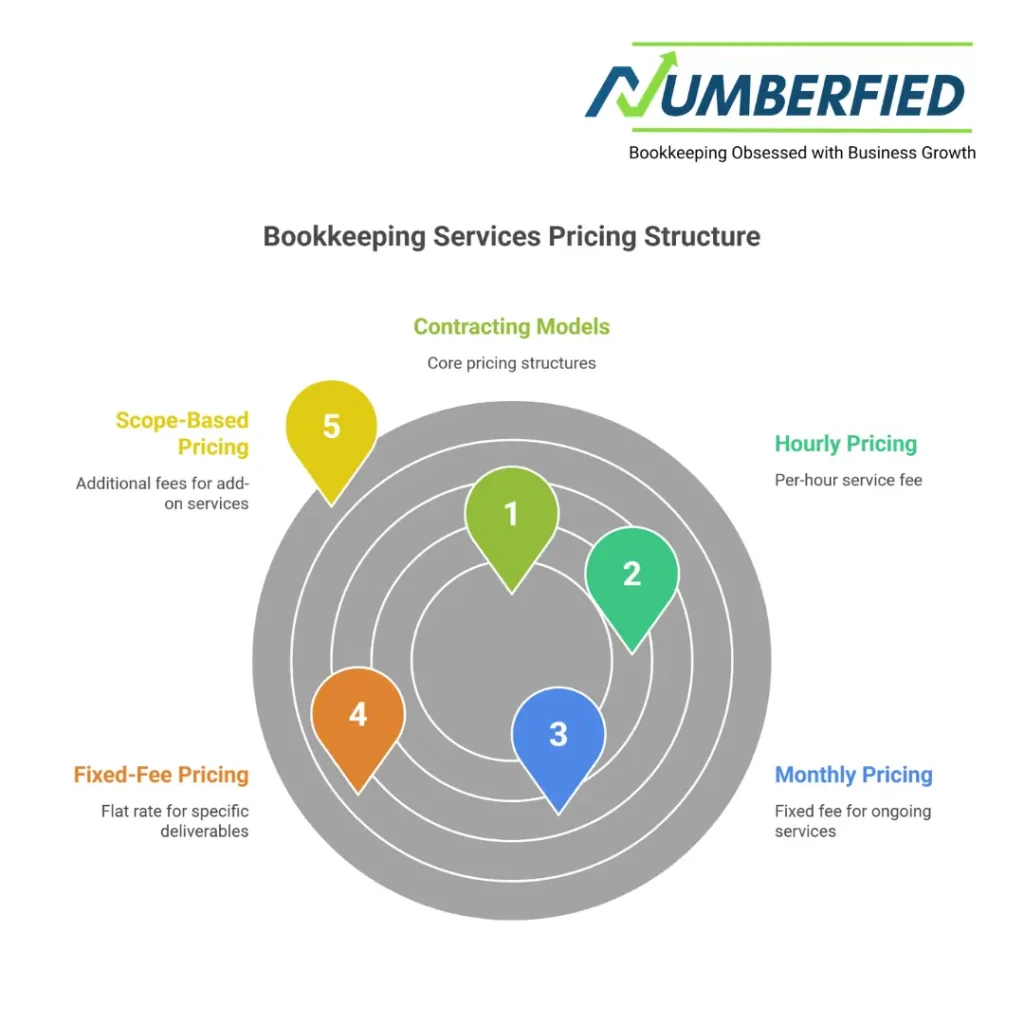
Contracting Models and Pricing for Bookkeeping Services for Real Estate
Hourly, monthly, or fixed-fee arrangements
Providers may offer hourly cleanup, monthly bookkeeping packages, or flat fees for standard deliverables. Assess which model aligns with your volume and predictability needs when hiring a bookkeeper for real estate.
Scope-based pricing for add-on services
Expect additional fees for payroll, commission processing, tax prep coordination, and integration projects. Clarify which tasks are included in the baseline service from your bookkeeper for real estate.
Contracts and termination terms
Negotiate clear notice periods, data access rights, and exit support to ensure smooth transitions if you change providers or move bookkeeping in-house from a bookkeeper for real estate.
How Numberfied Supports Real Estate Businesses with Bookkeeping
Specialized services and experienced teams
Numberfied offers bookkeeping services tailored for brokers, investors, and property managers. Our teams implement industry-standard charts of accounts and reconcile trust and operating accounts with the accuracy expected from a bookkeeper for real estate.
Technology integrations and secure workflows
We integrate QuickBooks, Xero, and property management platforms to centralize financial data and protect client information. Security practices ensure that a bookkeeper for real estate handles data with encryption and control measures.
Flexible engagement and ROI focus
Numberfied provides scalable monthly packages and clear KPIs to demonstrate the financial impact of a bookkeeper for real estate on your business performance.
To discuss a customized plan and receive a free assessment, contact Numberfied for a consultation with a real estate bookkeeping expert.
Implementation Checklist
Documents to prepare
Gather bank statements, payroll records, vendor contracts, leases, closing statements, previous tax returns, and a list of open receivables. This expedites the setup for a bookkeeper for real estate.
Initial meetings and timeline
Schedule a kickoff meeting to agree on accounts, reporting schedule, and access permissions. Expect a 4–8 week setup period for most small to medium portfolios when engaging a bookkeeper for real estate.
Ongoing review and improvement
Set quarterly reviews to assess KPIs, workflow improvements, and tax planning. A bookkeeper for real estate should proactively recommend process enhancements.
Conclusion
Accurate, timely bookkeeping is a strategic asset for real estate agents, investors, and property managers. A specialist bookkeeper for real estate delivers cost savings, industry expertise, scalability, and the freedom to focus on core business activities while maintaining compliance and audit readiness. When selecting a provider, prioritize experience, security, integration capabilities, and clear deliverables. The right partner will provide measurable ROI through better cash management, cleaner tax preparation, and investor confidence.
If you are evaluating bookkeeping services for real estate, contact Numberfied to schedule a detailed needs assessment and receive a tailored proposal from our real estate bookkeeping experts.
Frequently Asked Questions
What does a bookkeeper for real estate typically handle?
A bookkeeper for real estate manages bank reconciliations, accounts payable and receivable, tenant ledgers, security deposit tracking, commission processing, and monthly financial statements. They prepare supporting documents for tax filing and coordinate with CPAs.
How much does hiring a bookkeeper for real estate cost?
Costs vary by scope: cleanup projects run hourly, while ongoing monthly services range from modest packages for single-property owners to higher fees for brokerages and large portfolios. Evaluate pricing against expected time savings and error reduction.
Can a bookkeeper for real estate help with property management software?
Yes. Many bookkeepers for real estate integrate with Buildium, AppFolio, Yardi, and other platforms to sync tenant data, payments, and maintenance costs into the general ledger for consolidated reporting.
How does a bookkeeper for real estate support tax preparation?
They compile depreciation schedules, distinguish capital expenses, prepare 1099 information, and deliver organized schedules and reconciliations that enable a CPA to file accurate returns and identify tax-saving opportunities.
What security practices should I expect from a bookkeeper for real estate?
Expect encrypted data transfer, role-based access, secure cloud storage, routine backups, and confidentiality agreements. Ask for documented policies and any relevant security certifications.
Should I hire an in-house bookkeeper or outsource?
Outsourcing offers cost predictability and scalable expertise; in-house hires provide closer daily control. Choice depends on transaction volume, need for on-site presence, and budget. Many firms adopt a hybrid approach.
How long does onboarding a bookkeeper for real estate take?
Typical onboarding ranges from 4 to 8 weeks, depending on data complexity and cleanup needs. Expect initial reconciliations, chart of accounts setup, and report templates to be completed during this period.
What software do bookkeepers for real estate commonly use?
Common tools include QuickBooks Online, Xero, Buildium, AppFolio, Yardi, and specialized integrations for payments and bank feeds. The right bookkeeper for real estate will recommend software aligned with your operations.
How do I measure the success of a bookkeeper for real estate?
Measure timely closings, accurate reconciliations, reduced tax preparation time, improved cash forecasts, and investor satisfaction. Regular KPI reviews should demonstrate tangible improvements.
How can Numberfied help with real estate bookkeeping?
Numberfied delivers tailored bookkeeping services for real estate professionals, integrating industry best practices, secure workflows, and scalable reporting. Contact Numberfied to request a free assessment and see how a dedicated bookkeeper for real estate can improve your financial operations.
Read Also: Why Every Real Estate Professional Needs a Dedicated Bookkeeper for Real Estate