
Introduction
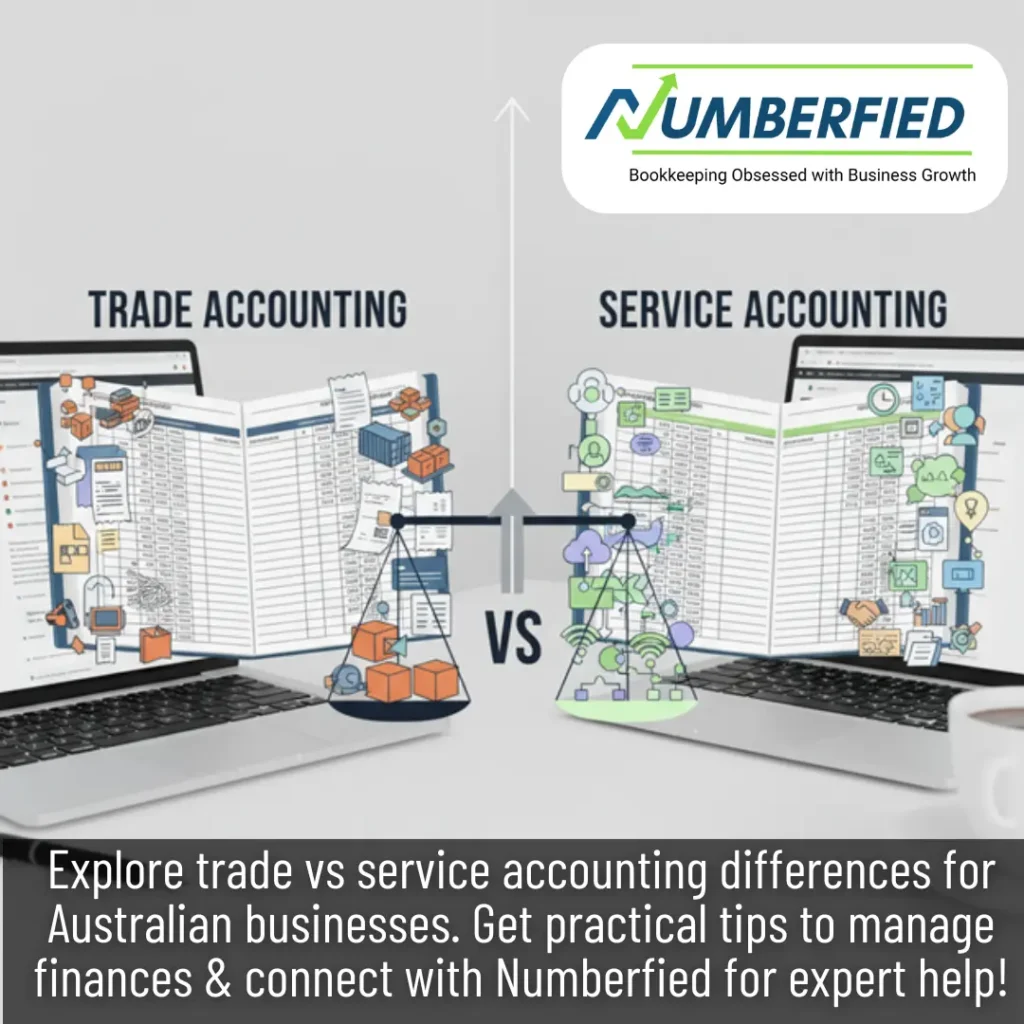
At Numberfied, we know that every business runs differently. One of the biggest differences comes down to how you handle your books – that’s where trade vs service accounting comes in.
If you’re in a trade, you’re dealing with materials, stock, and project costs every day. If you run a service business, your focus is your time, skills, and clients. Knowing the difference between the two helps you stay on top of your finances, follow ATO rules, and grow your profits without stress.
The right approach to trade vs service accounting makes sure your records are clean, your tax claims are right, and your business runs smoothly. Let’s break it down and make it easy to understand.
Key Takeaways
- Trade accounting tracks stock, tools, and supplies. Service accounting focuses on time, labour, and invoicing.
- Getting trade vs service accounting right helps you manage income, taxes, and deductions under ATO standards.
- Good accounting software makes both systems easier and cuts out manual mistakes.
- Accurate books help you plan ahead and claim what you’re entitled to.
- Need a hand? Visit https://numberfied.com/au and talk to the team at Numberfied.
Defining Trade vs Service Businesses: The Foundation of Accounting Differences
The first step in understanding trade vs service accounting is recognising what sets these business types apart. At Numberfied, we see how these differences shape everything from tax filings to daily bookkeeping.
What Is a Trade Business?
A trade business deals mainly in physical goods. Think of electricians, builders, or retailers – they all buy materials, keep stock, and either sell those items or use them in their work. For example, a plumber might purchase pipes and fittings for upcoming jobs. The ATO treats these materials as trading stock, which plays a key role in trade vs service accounting and needs proper valuation to keep your records accurate.
What Is a Service Business?
Service businesses, such as IT consultants or accountants, provide expertise or labour without selling physical products. Your income comes from fees for hours worked or projects completed, like a graphic designer charging for a logo design. This lack of stock simplifies some aspects of accounting.
Why the Difference Matters for Accounting
In trade vs service accounting, trades must track inventory as an asset, while services focus on recording billable work. Misclassifying your business can lead to tax errors or missed savings. Numberfied helps you identify your business type and set up accounting systems that align with ATO requirements, ensuring accuracy from day one.
Revenue Recognition: A Key Distinction in Trade vs Service Accounting
How you record income is a major difference in trade vs service accounting, affecting your financial statements and tax obligations.
How Trades Record Revenue
Trade businesses recognise revenue when goods are delivered or a job involving materials is completed, per AASB 15 standards. For example, a carpenter invoices when cabinets are installed, tying income to physical delivery. This point-in-time approach creates clear revenue spikes.
How Services Record Revenue
Service businesses record income as work is performed, often over time. A consultant might bill for each phase of a project or hours worked, spreading revenue across months. This accrual method, required by the ATO, ensures your books reflect ongoing work accurately.
Tips for Accurate Revenue Tracking
For trades, link invoices to stock sales in software like Xero to avoid errors. Services should use time-tracking tools to bill precisely. Numberfied recommends weekly invoice checks to catch mistakes early, ensuring trade vs service accounting aligns with your cash flow and ATO filings.
Inventory Management: Where Trade and Service Accounting Diverge
Inventory is a defining factor in trade vs service accounting, as it’s a major focus for trades but absent for services.
Understanding Trading Stock in Trade Accounting
The ATO requires trade businesses to value their stock- items like bricks or tools- at cost, market value, or replacement cost annually. This affects your taxable income, as unsold stock reduces profits. For example, a retailer must track inventory to report accurate sales costs.
Managing Inventory Effectively
Regular stocktakes, especially for high-value items, prevent discrepancies. Use methods like FIFO to calculate costs and software to monitor stock levels in real time. Numberfied’s trade clients often save on holding costs by optimising their inventory processes.
Why Services Avoid Inventory
Service businesses don’t deal with stock, focusing instead on assets like laptops or software, which are depreciated over time. This simplifies trade vs service accounting for services but requires tracking non-physical costs carefully. Numberfied tailors solutions to keep both types compliant.
Expense Tracking: Different Costs, Different Strategies
Expenses are central to trade vs service accounting, and how you categorise them impacts your tax savings and financial clarity.
Expenses in Trade Businesses
Trades face costs like materials, which form the cost of goods sold (COGS), and overheads like workshop leases. Small tools under $300 can be deducted immediately, per ATO rules, while larger equipment is depreciated. Job costing helps trades see which projects make money.
Expenses in Service Businesses
Service businesses spend heavily on labour, like contractor fees, and overheads like office subscriptions. Home office deductions require logs to prove business use. Numberfied suggests digital receipt apps to organise expenses, making tax claims easier for services.
Maximising Your Deductions
Both trades and services can deduct super contributions, travel, or training costs. Use accounting software to sort expenses automatically, and review them quarterly to spot missed deductions. Numberfied’s expertise ensures you claim every eligible offset, boosting your profits.
Tax Compliance: Navigating ATO Rules in Trade vs Service Accounting
While tax laws apply to all Australian businesses, trade vs service accounting brings unique compliance challenges.
GST and BAS Obligations
If your business turns over more than $75,000 a year, you’ll need to register for GST and lodge your BAS every quarter. Trade businesses often claim more GST credits on materials and stock purchases, while service businesses usually claim on tools, software, or subscriptions. Keeping GST records accurate is a key part of trade vs service accounting, helping you avoid penalties and get the full refunds you’re entitled to.
Income Tax and Business Structure Choices
Sole traders report business income on their personal tax returns, while companies pay a flat 30% tax rate. Trade businesses often gain from instant asset write-offs on tools and equipment, whereas service businesses can claim deductions for things like training or professional development. At Numberfied, we guide you in choosing the best structure to reduce tax, stay compliant, and make the most of your earnings.
Preparing for ATO Audits
Store records for seven years, ideally digitally, and use Single Touch Payroll for staff wages. Numberfied sets up audit-ready systems, so you can focus on your business without worrying about ATO reviews, whether you’re a trade or service operation.
Financial Reporting: Reflecting Trade vs Service Accounting Differences
Financial reports show how trade vs service accounting shapes your business’s story, guiding decisions and compliance.
Profit and Loss Statements
Trades calculate gross profit by subtracting COGS, showing how well they manage stock. Services deduct labour costs, highlighting time efficiency. Both reports end with net profit, which informs reinvestment or expansion plans in trade vs service accounting.
Balance Sheet Variations
Trade balance sheets list inventory and equipment as assets, while services show receivables or intangible assets like software. Trades often carry more stock-related debt. Clear reports help secure loans or attract investors, tailored to your business type.
Cash Flow Strategies
Trades monitor cash tied up in stock, while services track client payments. Use cash flow forecasts to plan for tax payments or slow periods. Numberfied’s tools provide real-time insights, ensuring you’re ready for opportunities or challenges in trade vs service accounting.
Technology Solutions: Simplifying Trade vs Service Accounting
The right tools make trade vs service accounting easier, saving time and reducing mistakes.
Software for Both Business Types
Xero or MYOB works for trades and services. Trades need inventory tracking features, while services benefit from time-logging integrations. These tools automate bank feeds and BAS calculations, streamlining your work.
Using Automation for Better Insights
Dashboards show key metrics, like stock turnover for trades or billable hours for services. Numberfied integrates these tools to give you clear data, helping you price jobs or plan growth without guesswork in trade vs service accounting.
Training Your Team
Short training sessions help your team use accounting software confidently. Numberfied provides ongoing support to ensure smooth adoption, keeping your financial processes efficient and aligned with your business goals.
Conclusion
Understanding trade vs service accounting is essential for Australian businesses aiming to thrive. Trades manage stock and material costs, while services focus on time and expertise, each requiring unique strategies for revenue, expenses, and taxes. By getting trade vs service accounting right, you ensure compliance, maximise savings, and gain insights to grow your business. At Numberfied, we’re here to simplify this process with tailored advice and tools. Ready to take charge of your finances? Visit https://numberfied.com/au for a free consultation and let’s build your financial success together!
Also Read: Why Outsourced Bookkeeping Services Australia Could Be Your Business’s Secret Weapon
FAQs
How does trade vs service accounting change how I plan my business finances?
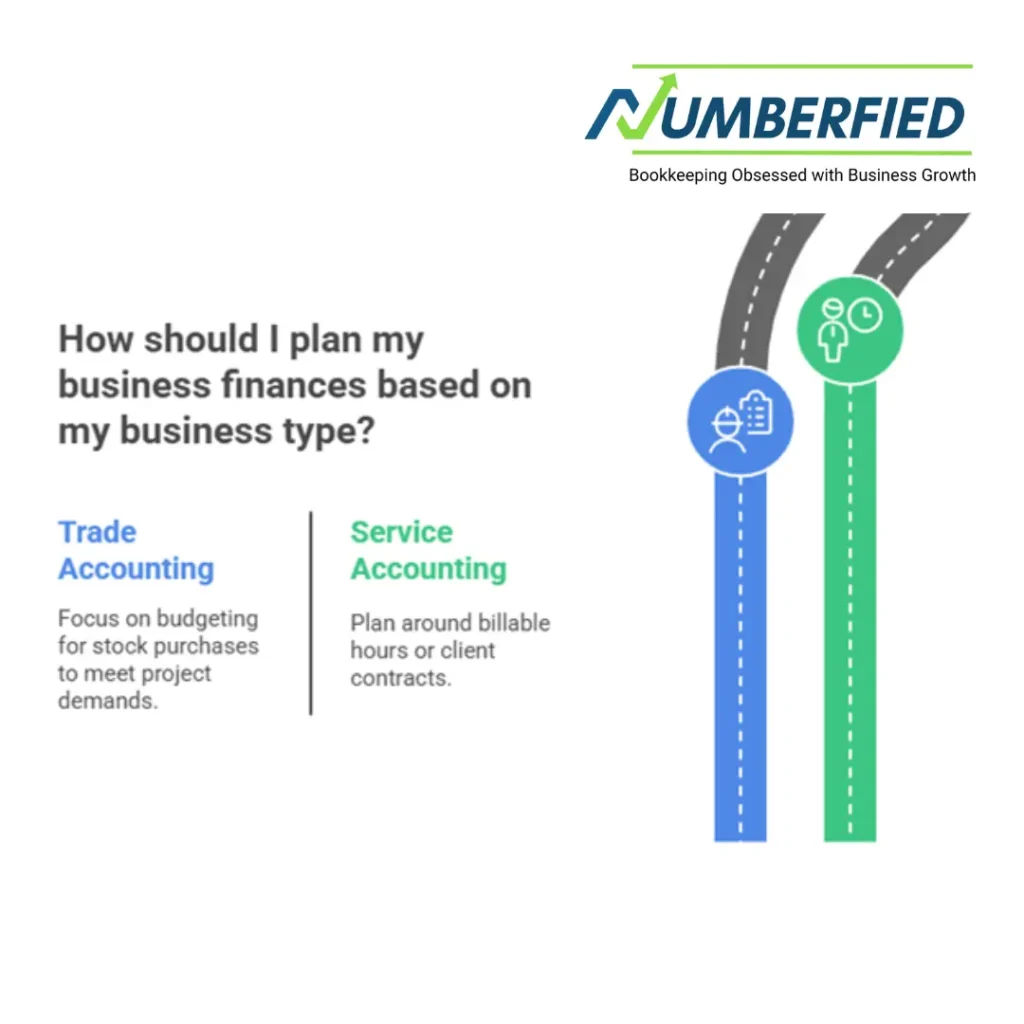
Trade vs service accounting shapes your financial strategy. Trades budget for stock purchases to meet project demands, while services plan around billable hours or client contracts. Both need accurate records to predict cash flow and meet ATO obligations. For example, a builder tracks material costs, while a consultant budgets for staff time. Numberfied helps you create plans that match your business type, ensuring you avoid cash shortages and make informed choices for growth or investment.
Why is stock a big deal in trade accounting but not in service accounting?
In trade vs service accounting, trades like plumbers must track stock- items like pipes or fittings- as it’s a key asset affecting profits and taxes, per ATO rules. You value stock yearly to report income accurately. Services, like marketers, don’t have stock, focusing on fees instead. This makes trade accounting more complex but offers GST credits on purchases. Numberfied sets up stock systems for trades and expense trackers for services, keeping both efficient and compliant.
How does recording income differ in trade vs service accounting?
Trades record income when goods are delivered, like a tiler invoicing after laying tiles, per AASB 15. Services record income as work progresses, like a lawyer billing for case hours. This creates different cash flow patterns- trades see sales spikes, services steady flows. In trade vs service accounting, accurate timing prevents tax errors. Numberfied suggests software to track invoices, ensuring your income reflects your work and supports smooth ATO filings.
What tax differences should I know about in trade vs service accounting?
Both trades and services file BAS if GST-registered, but trades claim more credits on stock, while services claim on fees or tools. Trades can use equipment write-offs, while services deduct training costs. The ATO checks stock records for trades and fee breakdowns for services. Numberfied helps you structure your business- sole trader or company- to save taxes and prepares records to pass audits easily, ensuring compliance in trade vs service accounting.
How can trade businesses make their accounting simpler?
Trades can use tools like MYOB to track stock and invoices automatically, reducing paperwork. Keep business accounts separate and count stock regularly to avoid mistakes. Set BAS deadlines and use payroll software for staff. In trade vs service accounting, these steps save time. Numberfied helps trades set up efficient systems, giving you clear profit insights to focus on jobs and grow your business confidently.
Why is time tracking critical for service businesses in trade vs service accounting?
Service businesses rely on time tracking to bill clients accurately, as income comes from hours or project work. It ensures you charge for all efforts and supports tax deductions for labour. Tools like Toggl sync with accounting software for easy billing. Numberfied advises weekly time checks to catch unbilled work, improving cash flow and helping you plan for busy or slow periods in Australia’s service market.
How does cash flow differ in trade vs service accounting?
Trades tie up cash in stock, like buying timber before a sale, while services wait for client payments after work. Both plan for ATO tax payments. In trade vs service accounting, forecasting helps avoid shortfalls. Numberfied uses cash flow tools to predict money movements, helping trades manage stock costs and services chase invoices, keeping your business ready for growth or unexpected expenses.
How do financial reports vary in trade vs service accounting?
Trade reports show profits after material costs, highlighting stock efficiency, while service reports deduct labour, showing time usage. Trades list stock on balance sheets; services show client debts. Both follow AASB standards but focus on different metrics. Numberfied tailors reports to your business type, providing clear insights for loans or growth plans in trade vs service accounting.
What mistakes should I avoid in trade vs service accounting?
Trades often miscalculate stock, skewing profits, while services might miss work-in-progress, affecting income. Both can slip on GST or payroll rules, risking ATO fines. Mixing personal and business expenses is another error. Numberfied catches these with regular checks and software, ensuring you claim all deductions and keep records audit-ready, strengthening your finances in trade vs service accounting.
When should I contact Numberfied for trade or service accounting help?
Get Numberfied’s help when your books get complex- like trades with growing stock or services hiring staff- or if you face ATO notices or need loan-ready reports. Early support prevents errors, especially for GST or structure changes. In trade vs service accounting, Numberfied offers custom tools and advice to simplify your finances, letting you focus on growth. Contact us today for a free consultation!