

Introduction
Accurate, timely bookkeeping is the foundation of confident business decisions. Small business bookkeeping services give the small business owner clarity on cash flow, profits, invoices, payroll, and tax obligations so they can focus on growing the business. Whether you’re running bookkeeping for a startup, managing finances for a growing company, or exploring professional bookkeeping and accounting services, choosing the right bookkeeping solution will improve business performance, keep you compliant with Australian tax and your local laws, and support long-term business growth.
What are small business bookkeeping services?
Small business bookkeeping services encompass the routine bookkeeping tasks that track your business numbers: recording sales and expenses, reconciling bank accounts, managing invoices and payroll, preparing business activity statements (BAS) or quarterly tax filings, and maintaining an up-to-date accounting system. These services can be provided by a single bookkeeper, a bookkeeping team, or outsourced accounting services that include bookkeeping and tax. Services range from basic bookkeeping packages to professional bookkeeping services that include accounting software setup, such as Xero accounting software or QuickBooks Online.
Key benefits of professional bookkeeping for small business
1. Accurate, timely financial information
Professional bookkeeping ensures your books are accurate and current, which means you always have the business numbers needed to make informed business decisions. Accurate records reduce the risk of costly errors at tax time and improve the quality of financial reporting.
2. Better cash flow and invoice management
Bookkeeping services for small business include invoice tracking, collections, and cash flow forecasting. Proactive invoice management helps you get paid faster and improves the health of your business finances.
3. Saves you time to focus on growth
Outsourcing your bookkeeping frees the business owner to focus on core activities, such as sales, product development, and customer service, so you can focus on growing your business.
4. Compliance and reduced risk
Professional bookkeeping and accounting services can help you meet tax and reporting obligations, including BAS preparation, payroll tax, and Australian tax compliance. This reduces audit risk and penalties.
5. Scalable bookkeeping solutions
Bookkeeping packages can suit your business as it grows. From an online bookkeeper handling daily transactions to a full bookkeeping team supporting complex accounting needs, scalable services match your business needs without the overhead of hiring full-time staff.
Related services and modern approaches
Common options include outsourced bookkeeping, cloud bookkeeping, online bookkeeping services, virtual bookkeeper arrangements, and combined bookkeeping and tax services. Many small businesses adopt bookkeeping software, such as QuickBooks, QuickBooks Online, or Xero accounting software, paired with an outsourced bookkeeper to create an efficient online accounting system. These cloud-based solutions allow real-time collaboration between the business and the bookkeeping service, improving communication and responsiveness.
DIY bookkeeping vs outsourced bookkeeping: a practical comparison
Deciding between DIY bookkeeping and hiring professional bookkeeping services depends on your business needs, budget, and growth plans. Below is a practical comparison to help a small business owner evaluate options.
Costs
DIY bookkeeping: Lower direct costs initially, only bookkeeping software subscriptions and your time. However, time spent on bookkeeping is time not spent on revenue-generating activities. Errors can lead to higher tax bills or penalties.
Outsourced bookkeeping: Monthly fees for bookkeeping packages or hourly rates. Costs vary by scope, basic transaction entry vs full bookkeeping and payroll. Outsourcing is often more affordable than hiring a full-time bookkeeper and provides access to bookkeeping experts and bookkeeping software expertise.
Expertise and accuracy
DIY bookkeeping: Suitable for very simple businesses with few transactions. Risk of mistakes increases with complexity, such as payroll, GST/BAS, deferred revenue, or inventory, making DIY bookkeeping more challenging.
Outsourced bookkeeping: Provides professional bookkeeping and accounting support. Expert bookkeeping services reduce errors, improve tax planning, and ensure bookkeeping and tax obligations are met.
Time and focus
DIY bookkeeping: Significant time investment for ongoing bookkeeping tasks, reconciliation, and reporting. Time taken away from business strategy and growth.
Outsourced bookkeeping: Time-saving. Outsourcing your bookkeeping allows you to focus on growing the business and strategic decisions while professionals manage the bookkeeping process.
Scalability
DIY bookkeeping: Can become inefficient as the business grows. Upgrading to a more robust accounting system or hiring staff becomes necessary.
Outsourced bookkeeping: Scales with your business. Bookkeeping services to small businesses often offer tiered packages, from basic bookkeeping to comprehensive bookkeeping and accounting services, so your service level can increase as business needs change.
Common bookkeeping mistakes small businesses make
Understanding common mistakes helps you avoid them. Here are frequent issues business owners face:
Poor record keeping
Not keeping receipts, missing invoice records, and inconsistent data entry make reconciliations difficult and increase audit risk.
Mixing personal and business finances
Using personal accounts for business transactions blurs the financial picture and complicates bookkeeping and tax reporting.
Failing to reconcile regularly
Skipping monthly bank reconciliations leads to undetected errors and cash flow surprises.
Ignoring payroll and tax obligations
Incorrect payroll calculations, missed super contributions, or late BAS lodgements can trigger fines and affect employee trust.
Not leveraging bookkeeping software
Manually tracking records when cloud bookkeeping and bookkeeping software exist results in inefficiencies and missed insights.
Lack of financial reporting
Without timely profit & loss, balance sheet, and cash flow statements, the business owner lacks the data to make informed decisions about growth and investments.
Step-by-step guide to choosing small business bookkeeping services
Choosing the right bookkeeping service is a critical decision for a small business. Use this practical step-by-step guide tailored to the small business owner to find a bookkeeping service that suits your business and helps you make better business decisions.
Step 1: Define your bookkeeping needs
List the bookkeeping tasks you need: daily transaction entry, invoice management, payroll, BAS filing, tax-ready reporting, or full bookkeeping and accounting. Consider whether you need bookkeeping for startups, bookkeeping services for small business expansion, or specialist support for e-commerce, inventory, or multi-jurisdictional tax.
Step 2: Decide on the delivery model
Choose between in-house bookkeeping, a virtual bookkeeper, online bookkeeping services, or outsourcing to a bookkeeping firm. Cloud bookkeeping makes virtual collaboration possible and is ideal for small businesses in Australia and globally.
Step 3: Check software and systems compatibility
Confirm the provider supports your chosen accounting software, Xero accounting software, QuickBooks, or other online accounting software. A provider experienced with your accounting system will speed onboarding and produce better bookkeeping outcomes.
Step 4: Evaluate expertise and credentials
Look for expert bookkeeping services with proven experience in accounting and bookkeeping, and, if applicable, Australian tax knowledge. Ask about qualifications, client industries, and referrals. Professional bookkeeping services should understand BAS, payroll, and bookkeeping process best practices.
Step 5: Review service offerings and packages
Compare bookkeeping packages and what they include: frequency of reconciliations, reporting, payroll processing, BAS lodgement, and support for tax and accounting services. Ensure the package suits your business size and growth trajectory.
Step 6: Compare pricing and value
Ask for transparent pricing and compare cost vs value. Affordable bookkeeping is important, but prioritize providers who deliver accurate books, timely reporting, and proactive advice that helps your business grow.
Step 7: Assess communication and accessibility
Good bookkeeping services communicate clearly and provide access to your bookkeeping team or bookkeeper. Check response times, reporting cadence, and whether they provide dashboards or regular business performance reviews.
Step 8: Test the onboarding process
A structured onboarding process indicates a professional bookkeeping service. The provider should help set up or clean up your accounting system, migrate data, and explain the bookkeeping process and responsibilities for you as the business owner.
Step 9: Ask about security and data protection
Ensure the bookkeeping firm uses secure systems and follows best practices for online accounting software and client data protection.
Step 10: Start with a trial period or a monthly plan
Begin with a short-term arrangement to ensure the provider suits your business. Most bookkeeping services offer monthly bookkeeping packages that can be adjusted as your bookkeeping needs evolve.
How bookkeeping supports business growth and decisions
Accurate bookkeeping is more than compliance. It enables the business owner to measure performance, set budgets, and evaluate opportunities. With timely financial reports, you can identify profitable products, reduce unnecessary expenses, plan payroll, and forecast cash flow. This information supports better business decisions from pricing to hiring to deciding when to invest in marketing or expand operations. Expert bookkeeping services for small business often include advisory services that translate numbers into actionable strategies to grow your business.
What to expect from a professional bookkeeping service
A reputable bookkeeping service will provide:
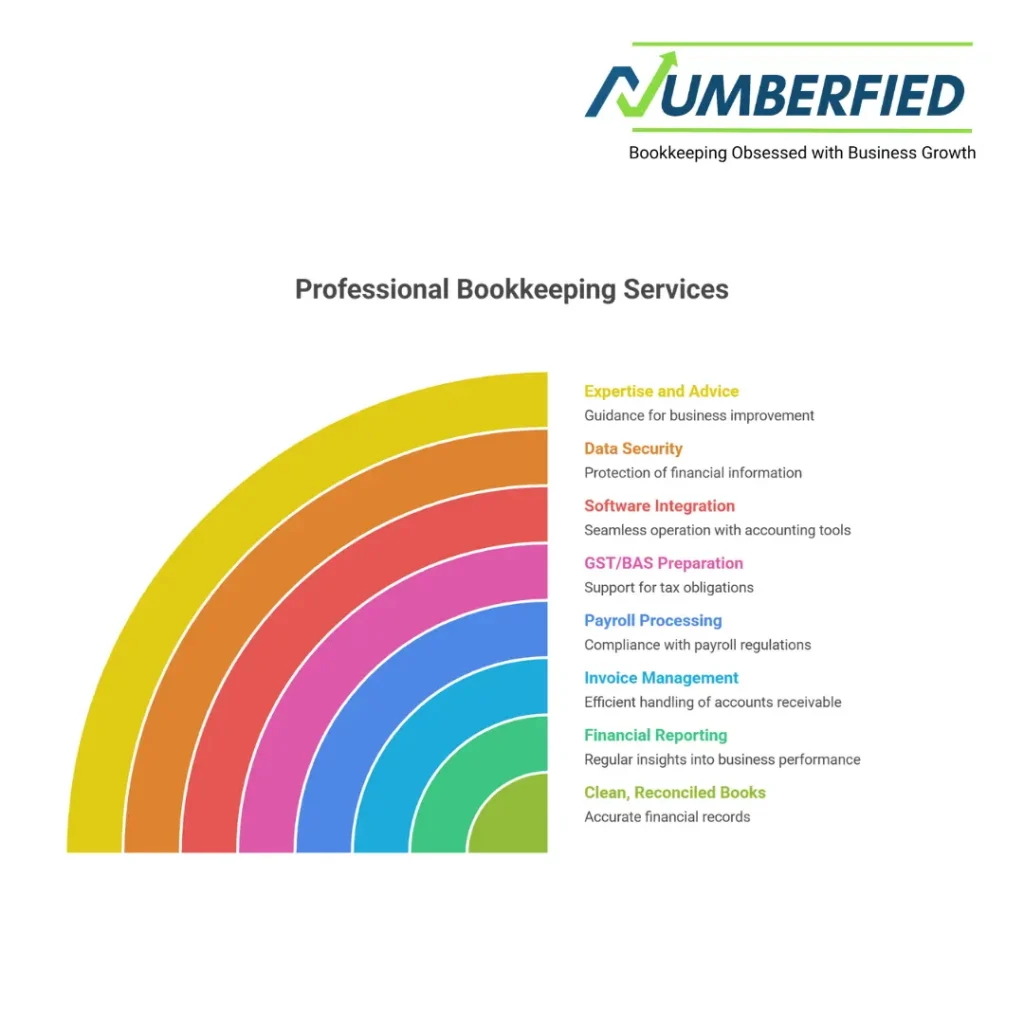
- Clean, reconciled books and regular financial reporting (P&L, balance sheet, cash flow)
- Invoice management and accounts receivable follow-up
- Payroll processing and reporting, including superannuation and payroll tax where applicable
- GST/BAS preparation and lodgement support
- Integration with accounting software like QuickBooks Online or Xero accounting software
- Security and data protection for your financial records
- Access to bookkeeping expertise and advice on improving business performance
Affordable bookkeeping options for small businesses
Affordable bookkeeping doesn’t mean cutting corners. Many providers offer tiered bookkeeping packages designed to suit your business. Typical packages include a basic plan for transaction entry and reconciliation, a mid-tier plan adding payroll and BAS support, and a premium plan that includes accounting and tax services. Online bookkeeping services and virtual bookkeeper options often have lower overhead and can be more cost-effective for small businesses.
How technology improves bookkeeping outcomes
Using bookkeeping software and online accounting tools simplifies the bookkeeping process. Cloud bookkeeping platforms like Xero and QuickBooks integrate bank feeds, streamline invoice issuance, automate recurring transactions, and generate financial reports instantly. These tools reduce manual work and allow bookkeeping teams to focus on high-value tasks. Bookkeeping and accounting services that implement an efficient accounting system give your small business a clear, real-time view of business finances.
Questions to ask before hiring a bookkeeping service
Before committing, ask potential providers:
- What bookkeeping and accounting services are included in your packages?
- Which accounting software do you work with (Xero, QuickBooks, etc.)?
- How often will you reconcile accounts and provide financial reports?
- Do you handle payroll, BAS, and tax lodgements?
- What are your onboarding steps and timelines?
- Can you provide references from small businesses similar to mine?
- How do you charge (fixed monthly fee, hourly, per transaction)?
- What security measures protect my financial data?
Real-life scenarios: when to hire a bookkeeper
Consider hiring professional bookkeeping services when:
- You’re spending more than a few hours per week on bookkeeping, and it distracts from core business activities.
- Your business has grown to the point where payroll, inventory, or multiple sales channels complicate bookkeeping tasks.
- You need reliable financial reports to apply for funding or to attract investors.
- You want to ensure BAS, payroll, and tax obligations are handled correctly to avoid penalties.
Conclusion
Small business bookkeeping services are a strategic investment, not just an administrative expense. Whether you adopt DIY bookkeeping with solid accounting software or outsource to expert bookkeeping services, the goal is the same: maintain accurate books, stay compliant with tax and reporting obligations, free up time to focus on growing your business, and use clear financial data to make smarter business decisions. Choose a bookkeeping solution that suits your business, leverages modern bookkeeping software like Xero accounting software or QuickBooks Online, and provides the expertise you need to drive business performance and long-term growth.
FAQ
How much should you pay a bookkeeper per month?
For small businesses in Australia, expect to pay AU$300–$800 per month for basic outsourced bookkeeping services (e.g., reconciliations, BAS prep). Costs vary by transaction volume and complexity. Simpler sole traders often pay AU$150–$400, while more complex businesses can reach AU$600+.
What is the best bookkeeping method for a small business?
Double-entry bookkeeping with cash-basis accounting is best for most small businesses in Australia. It ensures accuracy and compliance, and works well with cloud software like Xero or MYOB.
What do bookkeepers charge per hour in Australia?
Bookkeepers in Australia typically charge AU$30–$90 per hour in 2025, with an average around AU$31–$40. Rates are higher in cities like Sydney or Melbourne (up to AU$80+ for experienced or specialized services).
Can I do my own bookkeeping for my small business?
Yes, many small business owners in Australia successfully handle their own bookkeeping, especially with easy cloud software like Xero or MYOB. It’s great for low-volume businesses but can become time-consuming as you grow.
Can I do my own bookkeeping for my small business?
Yes, it’s common and feasible for small businesses in Australia, particularly using user-friendly tools like Xero or QuickBooks. Many start DIY and outsource later if needed.
Can a small business do its own bookkeeping?
Yes, a small business can absolutely do its own bookkeeping. Many small business owners in Australia manage it themselves, especially when starting out or with low transaction volumes, using simple cloud-based tools like Xero, MYOB, or QuickBooks.
What is the easiest way to do bookkeeping for a small business?
The easiest way to handle bookkeeping for a small business is to use cloud-based accounting software such as Xero, MYOB, or QuickBooks. These platforms connect directly to your bank accounts, automate transaction imports, and simplify reconciliations, invoicing, and reporting with minimal manual work.
Can you do bookkeeping without being an accountant?
Yes, you can do bookkeeping without being an accountant. Bookkeeping involves recording daily financial transactions and basic reconciliations, and it does not require formal accounting qualifications. Many bookkeepers operate without being qualified accountants.
What is a bookkeeper not allowed to do?
In Australia, a bookkeeper who is not a registered BAS agent is not allowed to lodge Business Activity Statements (BAS), Instalment Activity Statements (IAS), or provide tax advice. They also cannot legally handle GST, PAYG withholding, or superannuation guarantee reporting on behalf of clients. These activities require registration with the Tax Practitioners Board.
What is one of the most common bookkeeping mistakes that business owners make?
One of the most common bookkeeping mistakes business owners make is mixing personal and business finances, such as using the same bank account for both. This makes tracking expenses difficult, complicates tax deductions, and increases the risk of errors or audits.
Also Read: Small Business Bookkeeping Services in Australia: A Complete Guide