

Understanding bookkeeping costs is an important part of managing a business. Whether you operate a small business, manage a growing company, or work independently, accurate financial records help you monitor expenses, track income, and make informed decisions. However, bookkeeping fees can vary significantly depending on the amount of work involved and the services you need.
In the United States, bookkeeping providers may charge hourly rates, fixed monthly fees, or project-based prices. Some services cover basic transaction recording and bank reconciliation, while others include accounts payable, accounts receivable, payroll support, and regular financial reporting.
So, how much does bookkeeping cost in the USA? The answer depends on your business size, monthly transaction volume, financial systems, and reporting requirements. This article explains typical bookkeeping costs, common pricing models, additional fees, and the factors to consider when choosing a bookkeeping provider.
How Much Does Bookkeeping Cost in the USA?
Bookkeeping costs in the USA can range from a few hundred dollars per month for basic services to more than $1,000 per month for businesses with complex financial requirements. Some online bookkeeping subscriptions start below $200, while dedicated bookkeeping services generally charge more depending on the level of professional involvement and work included.
Average Monthly Bookkeeping Costs
Monthly bookkeeping fees usually depend on how much financial activity a business generates and how much work the provider is expected to complete. A business with one bank account and a limited number of monthly transactions will generally require less support than a company with multiple accounts, employees, suppliers, and sales channels.
Basic monthly packages commonly cover transaction categorization, bank reconciliation, and standard financial reports. More comprehensive arrangements may include accounts payable, accounts receivable, payroll coordination, and additional reporting.
When comparing monthly prices, review the services included rather than choosing a provider based only on the lowest advertised fee.
Hourly Bookkeeping Rates
Some independent bookkeepers and bookkeeping firms charge by the hour. This approach can work well when a business needs occasional assistance, a short-term project, or help with a specific financial task.
Hourly rates vary according to experience, location, specialization, and the complexity of the work. NerdWallet’s 2026 bookkeeping pricing overview reports an average freelance marketplace rate of approximately $43 per hour on Upwork, with some bookkeepers charging $80 or more.
Hourly pricing may be suitable for:
- Organizing financial records.
- Reviewing transaction classifications.
- Completing bank reconciliations.
- Correcting bookkeeping errors.
- Providing short-term bookkeeping assistance.
However, hourly billing can make monthly expenses difficult to predict when the workload changes. Businesses that need consistent support may prefer an agreed monthly fee.
Bookkeeping Costs for Small Businesses
Small businesses often have different bookkeeping requirements from larger organizations. A freelancer or single-member business may only need transaction recording and monthly reconciliation, while a growing company may require additional support for invoices, vendor payments, payroll records, and financial reporting.
A smaller business with limited transactions may fit within a basic monthly package. Companies with higher transaction volumes or more complicated operations may need a mid-range or premium service.
Before selecting a package, consider the number of transactions, financial accounts, employees, and reports your business needs each month.
Additional Costs for Bookkeeping Services
The advertised monthly fee does not always cover every financial task. Some providers charge separately for work that falls outside the agreed service scope.
Additional charges may apply to:
- Historical bookkeeping cleanup.
- Catch-up bookkeeping for previous months.
- Payroll processing and related support.
- Accounts payable and receivable management.
- Inventory and cost tracking.
- Additional financial reports.
- Accounting software setup or migration.
- Multi-entity bookkeeping.
Ask for a written breakdown of these costs before signing an agreement. This helps you understand the complete financial commitment rather than relying on the advertised starting price.
What Factors Affect Bookkeeping Costs?
Bookkeeping fees are based on the time, expertise, and systems required to maintain accurate financial records. Two businesses with similar revenue may pay different amounts because their transaction volumes, account structures, and reporting requirements are not the same.
Understanding the following factors can help you estimate your bookkeeping budget more accurately.
Number of Monthly Transactions
Transaction volume is one of the main factors affecting bookkeeping costs. Every sale, purchase, bank charge, vendor payment, and customer receipt may require review and categorization.
A business processing 50 transactions per month generally has a different workload from one handling several hundred transactions. Higher transaction volumes may require more frequent reconciliation and additional quality checks.
When requesting a quote, provide an approximate monthly transaction count so the provider can assess the expected workload.
Business Size and Financial Complexity
Larger businesses often maintain multiple bank accounts, credit cards, departments, employees, and revenue streams. These arrangements can increase the time needed to review and organize financial information.
Business structure also matters. A company with multiple entities may need separate records, account reconciliations, and financial reports for each entity.
A bookkeeping provider should understand the structure of your business before recommending a suitable service package.
Industry and Business Operations
Different industries have different bookkeeping requirements. Retail businesses may need inventory tracking and sales reconciliation, while professional service companies may focus more on client invoices, contractor payments, and project expenses.
For example:
- Retail and e-commerce: Sales platform reconciliation, inventory records, refunds, and payment processor fees.
- Professional services: Client invoicing, contractor expenses, project costs, and accounts receivable.
- Construction: Job costing, subcontractor expenses, materials, and project-related payments.
- Real estate: Property income, operating expenses, maintenance costs, and property-level reporting.
- Consulting businesses: Client payments, operating expenses, contractor records, and project profitability.
A provider with relevant industry experience may be better equipped to organize these records and understand the reporting requirements involved.
Reporting Frequency and Requirements
Some businesses only need monthly financial statements, while others require weekly reports or more detailed management information.
Additional reporting may involve tracking departmental expenses, comparing budgets with actual results, monitoring project performance, or preparing customized financial summaries.
The more detailed the reporting requirements, the more work may be involved. Confirm which reports are included in the monthly fee and whether additional reporting is billed separately.
Condition of Existing Financial Records
The condition of your current bookkeeping records can also affect the initial cost of hiring a provider.
If transactions are uncategorized, bank accounts have not been reconciled, or financial records contain missing information, the provider may need to complete cleanup work before starting regular monthly bookkeeping.
This initial project may be priced separately from ongoing services. Keeping financial records updated can help reduce the time and cost required for future bookkeeping work.
Common Bookkeeping Pricing Models in the USA
Bookkeeping providers use different pricing structures depending on the type of work and the level of support required. Understanding these models makes it easier to compare service proposals and choose an arrangement that fits your budget.
Hourly Bookkeeping Pricing
With hourly pricing, the provider charges for the time spent completing bookkeeping tasks. The final amount depends on the hours required and the agreed hourly rate.
This model is useful for businesses that need occasional support, one-time corrections, or short-term assistance. It can also work when the scope of a project is difficult to estimate in advance.
However, businesses should request an estimated number of hours and a process for approving additional work. Without clear limits, monthly expenses can become unpredictable.
Fixed Monthly Bookkeeping Fees
Fixed monthly pricing provides an agreed fee for a defined set of recurring services. The package may include transaction categorization, bank reconciliation, and monthly financial reporting.
This approach is useful for businesses that need regular bookkeeping and want predictable expenses. It also makes it easier to plan a monthly operating budget.
Before accepting a fixed-price package, check transaction limits, the number of accounts covered, reporting frequency, and additional service charges. A fixed fee is only predictable when the scope is clearly documented.
Tiered Bookkeeping Packages
Some providers offer different service levels based on business activity and support requirements. Basic packages may cover essential bookkeeping, while higher tiers include additional reporting, invoice management, or more frequent reviews.
Tiered pricing can help businesses select a suitable service level without paying for tasks they do not need.
However, compare the deliverables within each tier. Two packages with similar prices may offer different transaction limits, account coverage, and reporting services.
Per-Transaction Pricing
Some bookkeeping providers calculate fees according to the number of transactions processed. This approach connects the price to the amount of financial activity handled by the provider.
It may work for businesses with relatively consistent transaction volumes. However, costs can increase during busy periods, seasonal sales, or periods of business expansion.
Ask how transactions are counted and whether bank transfers, refunds, payroll entries, and payment processor activity are included in the calculation.
What Services Are Included in Monthly Bookkeeping Fees?
The services included in a bookkeeping package depend on the provider and the agreement. Some packages cover only essential recordkeeping, while others offer a broader range of financial administration and reporting support.
Reviewing the service scope helps you understand what you are paying for and whether additional assistance will be necessary.
Transaction Recording and Categorization
Transaction recording involves entering and organizing business income and expenses in the accounting system. Each transaction should be assigned to the appropriate account, so financial reports reflect business activity accurately.
This process helps business owners understand where money comes from and how it is being spent.
Bank and Credit Card Reconciliation
Bank reconciliation involves comparing transactions recorded in the accounting system with statements from banks and credit card providers.
Regular reconciliation helps identify missing transactions, duplicate entries, incorrect amounts, and unexplained differences. It also supports more reliable financial reporting.
The number of accounts and the frequency of reconciliation can influence the monthly bookkeeping fee.
Accounts Payable and Receivable
Accounts payable relates to money a business owes suppliers and service providers. Accounts receivable refers to money customers owe the business.
Depending on the agreement, bookkeeping support may include recording supplier invoices, tracking customer payments, monitoring outstanding balances, and maintaining organized payment records.
Full invoice processing, payment execution, and collection follow-up may be separate services, so confirm what the provider actually handles.
Monthly Financial Reporting
Financial reports help business owners review performance and understand their financial position.
Common bookkeeping reports include:
- Profit and Loss Statement: Summarizes revenue, expenses, and profit or loss over a selected period.
- Balance Sheet: Shows assets, liabilities, and equity at a particular date.
- Cash Flow Statement: Reports cash entering and leaving the business.
- Accounts Receivable Summary: Shows outstanding customer balances.
- Accounts Payable Summary: Shows amounts owed to suppliers.
Not every bookkeeping package includes all these reports. Confirm which statements are prepared, how often they are delivered, and whether explanations or management reviews are included.
Payroll Record Support
Payroll introduces additional records and recurring administrative requirements. Bookkeeping-related payroll support may involve recording payroll expenses, reconciling payroll transactions, and organizing payroll information within the accounting system.
Payroll processing, tax deposits, and employment tax filings may be handled by a separate payroll provider or qualified professional. Do not assume these services are included in a standard bookkeeping package.
In-House vs. Outsourced Bookkeeping Costs
Businesses can manage bookkeeping internally or work with an external provider. The right option depends on transaction volume, internal resources, operational requirements, and the level of financial support needed.
Costs of Hiring an In-House Bookkeeper
Hiring an employee gives a business direct access to someone responsible for maintaining its financial records. However, the total employment cost includes more than the employee’s hourly wage or annual salary.
Additional expenses may include:
- Employer payroll taxes.
- Health insurance and other benefits.
- Paid time off.
- Recruitment and onboarding.
- Accounting software and equipment.
- Training and professional development.
An in-house employee may be appropriate when a business has enough ongoing work to justify a dedicated position. Smaller businesses should calculate the full employment cost before comparing this option with an outsourced service.
Costs of Outsourced Bookkeeping
Outsourced bookkeeping allows businesses to work with an external provider rather than employing a full-time bookkeeper.
Depending on the arrangement, the service may provide access to bookkeeping professionals, established processes, and accounting software support for an agreed fee.
Potential advantages include:
- No need to recruit a full-time bookkeeping employee.
- Flexible support based on business requirements.
- Predictable monthly pricing when the scope is fixed.
- Access to bookkeeping experience without maintaining an internal department.
- More time for owners to focus on business operations.
However, outsourcing still requires clear communication, secure access to financial information, and regular review of completed work.
Which Option Is More Suitable?
An in-house bookkeeper may be appropriate for a company with a large, continuous volume of financial administration. Outsourced bookkeeping may be more practical for small businesses that need regular financial recordkeeping without the full cost of an employee.
Compare the complete cost of each option, including software, supervision, payroll expenses, and the services included. The lowest monthly quote is not necessarily the most cost-effective choice if important tasks are excluded.
How to Reduce Your Bookkeeping Costs
Businesses can manage bookkeeping expenses by improving their internal processes and reducing avoidable manual work. These steps do not replace professional bookkeeping support, but they can make the work more efficient.
Keep Financial Records Organized
Maintain a consistent system for storing invoices, receipts, bank statements, and expense records. Provide your bookkeeper with the information needed to categorize transactions and resolve questions.
Organized documentation reduces the time spent searching for missing records and correcting incomplete entries.
Use Accounting Software and Automation
Accounting software can simplify transaction imports, invoice management, receipt collection, and bank reconciliation.
Tools such as QuickBooks, Xero, and other accounting platforms can reduce repetitive manual tasks when configured correctly. The right setup depends on the size and requirements of your business.
Automation should support accurate bookkeeping rather than replace the review of unusual or incorrectly categorized transactions.
Separate Business and Personal Transactions
Using separate bank accounts and credit cards for business activities makes financial records easier to maintain.
Mixing personal and business transactions creates additional work because each item must be reviewed and classified correctly. Keeping transactions separate can simplify reconciliation and reduce unnecessary questions.
Maintain Records Throughout the Month
Do not wait until the end of the year to organize receipts and financial documents. Submit information regularly and respond to bookkeeping questions promptly.
A consistent monthly routine can prevent large backlogs and reduce the need for expensive catch-up work.
Choose a Service Package That Matches Your Needs
Avoid paying for services your business does not require. At the same time, do not select a basic package if your business needs more frequent reconciliation or detailed reporting.
Review your requirements with the provider and request a written breakdown of the services included in each option.
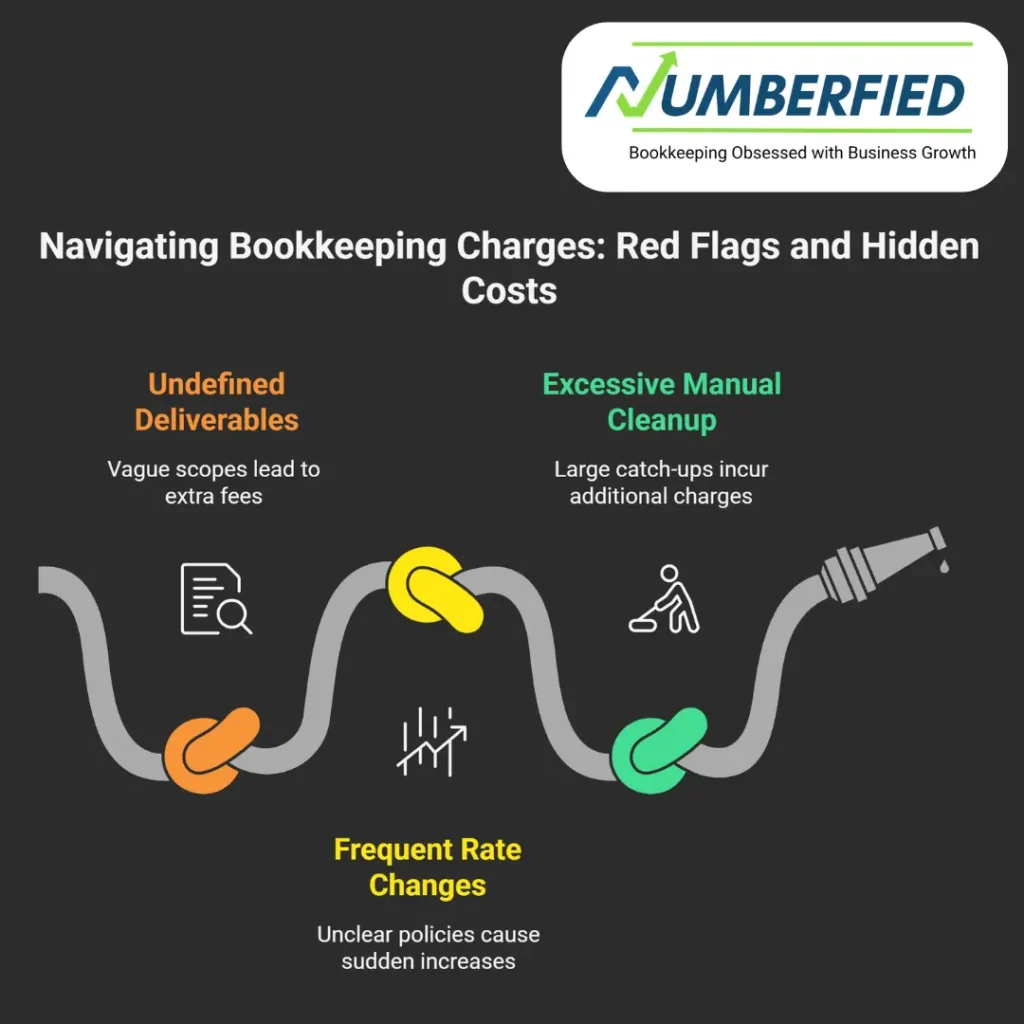
How to Compare Bookkeeping Providers and Avoid Hidden Fees
A low advertised price does not always represent the best value. Businesses should compare the scope of work, communication standards, reporting process, and additional fees before choosing a bookkeeping provider.
Request a Detailed Scope of Work
Ask the provider to explain exactly what the monthly package includes. The agreement should identify the accounts covered, transaction limits, reconciliation frequency, reports, and responsibilities of both parties.
A written scope makes it easier to compare different proposals and reduces the risk of unexpected charges.
Ask About Onboarding and Cleanup Fees
Some businesses need historical records reviewed before regular bookkeeping begins. Ask whether the provider charges separately for onboarding, software setup, account migration, or catch-up bookkeeping.
Clarify whether the initial fee is a one-time payment or whether additional work may be billed later.
Understand Additional Service Charges
Ask whether payroll support, accounts payable, accounts receivable, inventory tracking, and customized reports are included.
You should also understand how the provider handles work outside the agreed scope. Request approval before additional billable work begins.
Review Communication and Reporting
A reliable bookkeeping arrangement should include a clear process for submitting records, asking questions, and receiving completed reports.
Find out who will handle your account, how often you can expect updates, and how issues are escalated.
Check Data Security Practices
Bookkeeping providers may need access to sensitive financial records and accounting software. Ask how access is controlled, how documents are shared, and whether appropriate security measures are in place.
Use individual user permissions and secure authentication wherever possible. Avoid sharing banking passwords or unnecessary account credentials.
Industry-Specific Bookkeeping Costs
Bookkeeping requirements differ across industries because businesses generate different types of transactions and financial records. Understanding these differences can help you select a provider with relevant experience.
Retail and E-Commerce Bookkeeping
Retail and e-commerce businesses may process sales through websites, marketplaces, point-of-sale systems, and payment processors. Their bookkeeping may involve sales reconciliation, refunds, inventory records, payment fees, and supplier expenses.
The number of sales channels and inventory complexity can increase the workload and affect the monthly fee.
Professional Services and Consulting
Consultants, agencies, and professional service businesses often need support with client invoices, contractor payments, project expenses, and accounts receivable.
Businesses that track profitability by project or department may also require additional reporting.
Construction and Contracting
Construction businesses may manage materials, subcontractor payments, equipment expenses, project budgets, and job costs.
Accurate records help owners understand project expenses and compare actual costs with estimates. These requirements may call for more specialized bookkeeping support.
Real Estate and Property Management
Real estate businesses may maintain records for rental income, property expenses, maintenance, management fees, and separate properties.
The number of properties and the level of reporting required can affect the bookkeeping workload.
How Numberfied Supports Business Bookkeeping
Managing financial records takes time, consistency, and an organized process. Business owners who spend too much time handling bookkeeping administration may find it difficult to focus on customers, operations, and growth.
Numberfied works with businesses that need bookkeeping support and a structured approach to financial recordkeeping. The appropriate service scope depends on the business’s requirements, transaction activity, accounting systems, and agreed responsibilities.
When considering bookkeeping support, businesses should understand the tasks they need help with, the reports they expect, and the level of communication required.
Before choosing a service, discuss:
- Your monthly transaction volume.
- The accounting software currently used.
- The number of bank and credit card accounts.
- Your reconciliation and reporting requirements.
- Whether you need accounts payable or receivable support.
- Any historical bookkeeping work that needs attention.
A clear understanding of these requirements helps establish a suitable scope of work and pricing arrangement.
Explore Numberfied’s bookkeeping and business support to learn more about available services and discuss your business requirements.
How to Request an Accurate Bookkeeping Quote
A bookkeeping provider can give a more realistic estimate when you share clear information about your business. Preparing a few details before requesting a quote can make the process more efficient.
Share Your Monthly Transaction Volume
Provide an approximate number of monthly sales, purchases, expenses, and other financial transactions. If your business has seasonal activity, explain how transaction volume changes throughout the year.
Explain Your Accounting Setup
Identify the software you currently use, the number of bank accounts, and any payment platforms connected to your business.
If your records are maintained across spreadsheets and different systems, mention this during the initial discussion.
List the Services You Need
Identify whether you need basic transaction recording, bank reconciliation, accounts payable, accounts receivable, or monthly financial reports.
Be clear about services that you already handle internally and those you want the provider to manage.
Disclose Any Backlog or Cleanup Requirements
If previous months have not been reconciled or categorized, explain the situation before receiving a quote.
The provider may need to assess the condition of your records and estimate the cleanup work separately from ongoing monthly bookkeeping.
Request Written Pricing and Service Terms
Ask for the monthly fee, onboarding charges, additional service rates, payment terms, and process for changing the scope.
A written proposal makes it easier to compare providers and understand the total expected cost.
Conclusion
Bookkeeping costs in the USA depend on transaction volume, business complexity, reporting requirements, and the level of support included. Basic monthly services may cost a few hundred dollars, while businesses with more extensive financial needs may require higher-priced packages or customized arrangements.
Before choosing a provider, compare the complete service scope rather than focusing only on the advertised monthly fee. Review onboarding costs, additional charges, reporting frequency, communication, and data security. Maintaining organized records and using suitable accounting software can also help reduce avoidable bookkeeping work.
The right bookkeeping arrangement should support accurate financial records, provide useful reporting, and fit your business’s operating requirements. Numberfied can help businesses explore bookkeeping support based on their needs and agreed service scope.
Visit Numberfied to learn more and discuss bookkeeping support for your business.
Frequently Asked Questions
How much does bookkeeping cost per month in the USA?
Basic bookkeeping services for small businesses commonly fall around $250 to $350 per month, while mid-range services may cost $500 to $700. More comprehensive arrangements can exceed $1,000 per month. Actual fees depend on transaction volume, business complexity, and the services included.
What is the average hourly rate for a bookkeeper in the USA?
Hourly bookkeeping rates vary by experience, location, and the type of work required. Freelance marketplace rates can be around $43 per hour on average, with some experienced providers charging $80 or more. Always compare the hourly rate with the provider’s experience and service scope.
How much should a small business pay for bookkeeping?
A small business may budget approximately $250 to $700 per month for routine bookkeeping, depending on its financial activity and reporting needs. Businesses with fewer transactions may pay less, while those with payroll, inventory, or multiple accounts may require a higher-priced service.
What factors affect monthly bookkeeping fees?
Monthly fees are influenced by transaction volume, the number of financial accounts, business structure, industry requirements, reporting frequency, and the condition of existing records. Additional services such as payroll support and accounts payable management can also increase the total cost.
Is outsourced bookkeeping cheaper than hiring an in-house bookkeeper?
Outsourced bookkeeping can be more cost-effective for businesses that do not need a full-time employee. It may reduce recruitment, payroll, benefits, equipment, and training expenses. However, the best option depends on the business’s workload, internal requirements, and the complete cost of each arrangement.
What services are included in monthly bookkeeping fees?
A standard bookkeeping package may include transaction recording, expense categorization, bank reconciliation, and basic financial reporting. Some providers also offer accounts payable, accounts receivable, and additional reporting. Payroll processing, historical cleanup, and tax preparation are not automatically included and should be confirmed separately.
Do bookkeepers charge separately for cleanup and catch-up work?
Yes. Many providers charge an additional fee when financial records are incomplete, outdated, or unreconciled. The cost depends on how many months need attention, the number of transactions, and the condition of the records. Ask for a separate estimate before the cleanup begins.
Are payroll services included in bookkeeping packages?
Not always. Some bookkeeping packages include payroll record support, while others charge separately for payroll processing and related services. Confirm whether the provider handles payroll entries, employee payment processing, payroll tax deposits, and employment tax filings, as these are different responsibilities.
How can a business reduce its bookkeeping costs?
Businesses can reduce avoidable bookkeeping work by organizing receipts, separating personal and business transactions, using accounting software, maintaining records regularly, and responding to questions promptly. Choosing a package that matches actual business requirements can also help prevent unnecessary expenses.
Is fixed monthly bookkeeping pricing better than hourly pricing?
Fixed monthly pricing is often more suitable for businesses that need consistent bookkeeping because it makes budgeting easier when the scope is clearly defined. Hourly pricing may be better for occasional tasks or one-time projects. The right model depends on the frequency and predictability of the work.