

Introduction
At Numberfied, we understand that bookkeeping fees for small business can often feel confusing and difficult to navigate, especially when pricing structures and service levels vary so widely. This guide is designed to simplify that complexity by clearly explaining the key factors that influence bookkeeping costs, including transaction volume, business size, industry requirements, and the technology used. It also provides practical guidance on evaluating service options, comparing pricing models, and identifying the best fit for your specific business goals. Whether you are starting a new venture or optimizing an existing operation, this resource will help you make informed, confident decisions about bookkeeping fees for small businesses, while showing how Numberfied’s transparent, tailored approach can support your financial management needs.
Key Takeaways
- Bookkeeping fees for small business vary based on services, volume, and frequency; identify your needs first.
- Transparent pricing and defined deliverables reduce hidden costs and improve forecasting.
- Compare in-house, freelance, and outsourced bookkeeping to balance control and cost.
- Technology can lower bookkeeping fees for small business by automating routine tasks.
- Regular communication and clear processes help manage bookkeeping fees for small business over time.
Why Bookkeeping Fees for Small Businesses Matter
Financial clarity and decision-making
Bookkeeping fees for small businesses are an investment in financial clarity. Proper bookkeeping enables timely reports, accurate cash flow tracking, and informed planning. When you understand bookkeeping fees for small businesses, you can allocate resources to tasks that deliver the most value to your company.
Compliance and risk management
Paying attention to bookkeeping fees for small businesses reduces compliance risk. Experienced bookkeepers help ensure payroll, tax filing, and regulatory requirements are met. Understanding bookkeeping fees for small businesses means understanding the value of professional oversight.
Scalability and growth
When evaluating the bookkeeping fees for small businesses, consider scalability. The right bookkeeping arrangement grows with you, adjusting services and pricing so bookkeeping fees for small businesses remain predictable and aligned with revenue and transaction volume.
Common Pricing Models for Bookkeeping Fees for Small Businesses
Hourly rates
Hourly fees are common, especially for irregular or project-based needs. Hourly bookkeeping fees for small businesses can be flexible, but they may fluctuate month to month. Track time and outcomes to ensure value.
Fixed monthly packages
Fixed pricing provides predictability. Monthly bookkeeping fees for small businesses often bundle recurring services like reconciliations, reporting, and payroll. Compare package details to find the right balance between cost and coverage.
Value-based and subscription models
Some providers offer value-based or subscription pricing, where bookkeeping fees for small businesses align with service levels and deliverables. These models emphasize outcomes and typically include ongoing advisory support.
How Service Scope Affects Bookkeeping Fees for Small Businesses
Record keeping and reconciliations
Basic bookkeeping activities, such as recording transactions and performing bank reconciliations, are foundational. Lower bookkeeping fees for small businesses reflect a limited scope, but more complex needs increase fees accordingly.
Payroll and payroll tax services
Adding payroll services increases bookkeeping costs for small businesses due to compliance and timing requirements. Integrated payroll solutions can streamline processes and affect the overall fee structure.
Financial reporting and advisory services
Regular financial reporting and advisory add strategic value and typically increase bookkeeping fees for small businesses. These services help owners interpret numbers and plan for growth.
Factors That Influence the Cost of Bookkeeping Fees for Small Businesses
Transaction volume
Higher transaction volume increases bookkeeping fees for small businesses because processing, categorizing, and reconciling require additional time and resources. Consider automation to control costs.
Industry complexity
Businesses in regulated or complex industries may face higher bookkeeping costs due to specialized reporting and compliance requirements. Industry knowledge can reduce errors and long-term costs.
Use of accounting software
The choice of accounting software affects bookkeeping fees for small businesses. Modern cloud platforms can lower manual work and reduce fees, but integration and setup may involve upfront costs.
Comparison
In-house bookkeeping
Hiring an in-house bookkeeper sets a baseline for bookkeeping fees for a small business, including salary, benefits, and overhead. In-house control can suit high-volume or sensitive finance functions but may be less flexible.
Freelance bookkeepers
Freelancers often charge competitive bookkeeping fees for small businesses and can be cost-effective for part-time needs. Vet experience and availability to ensure consistent, reliable service.
Outsourced bookkeeping services
Outsourced providers offer scalable bookkeeping fees for small businesses and access to team-based expertise. This model can reduce administrative burden and offer predictable pricing aligned with service tiers.
How to Evaluate Bookkeeping Fees for Small Business Proposals
Define your needs clearly
Before comparing bookkeeping fees for small businesses, list required services, frequency, and expected outcomes. Clear requirements ensure accurate proposals and reduce surprises in the billed amount.
Request detailed deliverables
Ask for itemized deliverables, so you understand what you’re getting for bookkeeping fees for small businesses. Transparency on what’s included prevents scope creep and unexpected charges.
Compare total cost and value.
Compare bookkeeping fees for small businesses across proposals, factoring in software, payroll add-ons, and advisory time. Look for the best overall value, not just the lowest price.
Reducing Bookkeeping Fees for Small Businesses Without Sacrificing Quality
Automate routine tasks
Automation reduces manual work and can lower bookkeeping fees for small businesses over time. Set up bank feeds, recurring invoices, and expense rules to streamline processing.
Organize documentation
Well-organized receipts and records reduce bookkeeping costs for small businesses by minimizing time spent sorting and clarifying transactions. Use standard naming and categorization systems.
Schedule regular reviews
Monthly or quarterly reviews keep books current, reducing the effort needed to catch up later. Regular maintenance helps small businesses control bookkeeping fees by avoiding backlog charges.
Technology and Tools That Influence Bookkeeping Fees for Small Businesses
Cloud accounting platforms
Cloud platforms reduce traditional bookkeeping fees for small businesses by enabling remote access, automated data capture, and integrations. Evaluate software compatibility with your operations.
Expense management apps
Expense automation tools streamline receipt capture and categorization, reducing bookkeeping costs for small businesses by enabling faster processing and fewer corrections.
Payroll and tax integrations
Integrated payroll tools reduce administrative overhead and can simplify bookkeeping fees for small businesses by bundling related services and ensuring timely compliance.
Estimating and Budgeting for Bookkeeping Fees for Small Business
Develop a baseline budget
Create a baseline for essential bookkeeping costs for small businesses, including monthly reconciliations and reporting. Update the budget as operations change.
Plan for seasonal variation
Some businesses experience seasonal transaction spikes that temporarily increase bookkeeping costs. Build contingency into your budget for peak periods.
Monitor and adjust quarterly
Review actual bookkeeping fees for small businesses quarterly to ensure alignment with service levels and adjust as necessary to avoid surprises.
Contract Terms and Hidden Costs to Watch
Scope changes and additional hourly charges
Contracts that allow scope creep can increase bookkeeping fees for small businesses. Ensure change processes and hourly rates for additional work are documented upfront.
Software and subscription fees
Confirm which party pays for accounting software and add-on subscriptions. These items can increase bookkeeping costs for a small business if not explicitly allocated.
Onboarding and cleanup charges
Initial setup or backlog cleanup may be billed separately and affect initial bookkeeping fees for small businesses. Request an estimate for onboarding work and a timeline for completion.
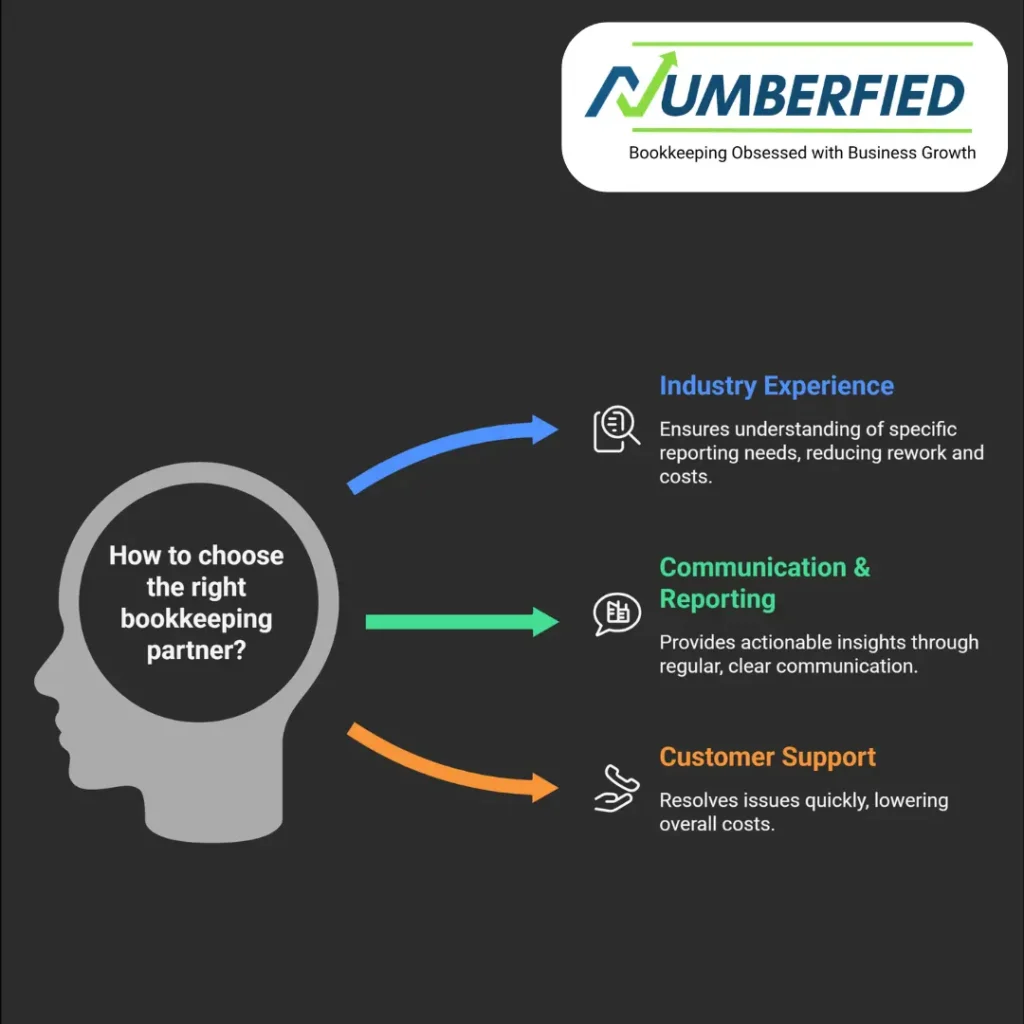
Choosing the Right Bookkeeping Partner to Optimize Fees and Value
Look for industry experience
Partners with experience in your industry understand your specific reporting needs and can often keep bookkeeping costs for small businesses efficient by avoiding rework and corrections.
Prioritize communication and reporting cadence
Regular, clear communication ensures bookkeeping fees for small businesses translate into actionable insights. Agree on reporting timelines and formats that support your decision-making.
Evaluate customer support and responsiveness
Responsive support reduces time to issue resolution and can lower overall bookkeeping costs for small businesses by preventing escalations and rework.
How Numberfied Approaches Bookkeeping Fees for Small Business
Transparent pricing and clear deliverables
At Numberfied, we present straightforward pricing and specify deliverables so you understand what you’re paying for. Our approach helps small businesses control bookkeeping costs while delivering consistent value.
Scalable services tailored to your needs
We design packages that match your transaction volume and service needs, helping you manage bookkeeping costs as your small business grows. Scale up or down without losing continuity.
Technology-driven efficiency
Numberfied uses proven cloud tools and automated workflows to reduce manual tasks and optimize bookkeeping fees for small businesses. We invest in efficiency that benefits you.
Practical Steps to Start Reducing Your Bookkeeping Fees for Small Business Today
Audit your current spend.
Review your current bookkeeping fees for small businesses and list services, frequencies, and providers. Identify redundancies and inefficiencies to target for improvement.
Create a prioritized improvement plan
Develop a plan that targets high-impact changes, such as automating specific processes or renegotiating package terms to reduce bookkeeping fees for small businesses without losing essential services.
Engage with a partner for a cost-benefit review
Schedule a consultation to evaluate bookkeeping fees for a small business in line with your financial goals. A partner can reveal savings opportunities and implementation steps.
Common Misconceptions About Bookkeeping Fees for Small Businesses
Lowest price equals best outcome
Low bookkeeping fees for small businesses can mean limited service or missed items. Evaluate deliverables, accuracy, and the provider’s ability to support decision-making before choosing solely on price.
Bookkeeping is only data entry
Professional bookkeeping includes categorization, reconciliations, and reporting that inform business strategy. Investing in quality can reduce other costs and deliver better outcomes than the cheapest bookkeeping services for small businesses.
DIY always saves money
DIY bookkeeping can initially save small businesses on bookkeeping fees, but mistakes and time costs may outweigh short-term savings. Consider the value of professional support where appropriate.
Conclusion
Understanding bookkeeping fees for small businesses empowers you to choose a solution that balances cost, control, and strategic value. Thoughtful evaluation of service scope, pricing models, and technology reduces surprises and ensures your books support business growth. If you want a transparent, scalable approach to bookkeeping fees for a small business, the Numberfied team is ready to help. Visit https://numberfied.com/ to schedule a consultation and see how we can tailor services to your needs.
Frequently Asked Questions
What typically determines bookkeeping fees for small businesses?
Bookkeeping fees for small businesses are usually determined by transaction volume, account complexity, service frequency, and additional needs such as payroll or tax filings. Service level and software integrations also influence the price. Clarifying these elements helps you get accurate quotes and avoid unexpected charges.
How can I reduce bookkeeping costs for a small business without sacrificing quality?
Lower bookkeeping fees for small business by automating repetitive tasks, organizing your records, and consolidating services with a single provider. Also, review package inclusions and remove nonessential features. Regular maintenance prevents costly backlog cleanup that increases fees.
Are monthly packages better than hourly rates for bookkeeping fees for small businesses?
Monthly packages often offer predictability and are better when you need consistent, ongoing services. Hourly rates may suit irregular or limited needs. Compare both models based on your transaction patterns and desired level of support to choose the best fit for bookkeeping fees for a small business.
Do software subscriptions add to bookkeeping fees for small businesses?
Yes, software subscriptions can add to bookkeeping fees for small businesses if not accounted for in proposals. Some providers include software costs; others bill them separately. Confirm who pays for subscriptions and integrations when evaluating total bookkeeping fees for a small business.
When should I switch from DIY bookkeeping to a professional service?
Consider switching when bookkeeping consumes too much of your time, when errors appear, or when you need regular financial reports for decision-making. Professional services can reduce bookkeeping fees for small businesses in the long run by improving accuracy and freeing you to focus on growth.
Can industry specialization affect bookkeeping fees for small businesses?
Industry specialization can affect bookkeeping fees for small businesses, as some sectors require specialized knowledge of compliance, revenue recognition, or reporting. Specialized providers may charge more, but their expertise can improve efficiency and reduce overall risk and cost.
What hidden costs should I watch for in bookkeeping fees for a small business?
Hidden costs include onboarding and backlog cleanup fees, additional hourly charges for out-of-scope work, and separate software subscriptions. Ask for an itemized proposal and change management terms to control unexpected increases in bookkeeping fees for small businesses.
How often should I review my bookkeeping fees for a small business?
Review bookkeeping fees for small businesses at least quarterly or whenever transaction volume or service needs change. Periodic reviews ensure services remain aligned with your business and help you budget accurately for future bookkeeping costs.
What advantages does outsourcing bookkeeping have over hiring in-house?
Outsourcing can provide access to a team with varied expertise, predictable pricing, and reduced overhead compared to in-house hires. These factors often make outsourcing an attractive option for managing bookkeeping fees for small businesses, especially for growing companies seeking scalability.
How can Numberfied help me optimize bookkeeping fees for a small business?
Numberfied offers transparent pricing, scalable services, and technology-driven workflows designed to control bookkeeping fees for small businesses while delivering consistent reporting and advisory support. We work with you to define scope, streamline processes, and implement tools that reduce manual work and long-term fees. Visit https://numberfied.com/ to get started with a tailored consultation.
Read Also: How Bookkeeping & Accounting Services Can Transform Your Business Growth