

Introduction
As a small to medium business owner, startup founder, entrepreneur, freelancer, or self-employed professional, your finances are the backbone of your operation, but managing them shouldn’t slow you down. Freelance accounting services offer a flexible, expert solution, allowing you to access professional support on demand without the commitment of full-time staff. These services provide the precision and compliance you need while adapting to your business’s rhythm.
In this guide, we dive into the key benefits of freelance accounting services, compare them to in-house options, outline essential offerings, highlight common mistakes, provide a practical hiring process, discuss top platforms and trends in 2026, and show you how to get started. Whether you’re scaling a startup or streamlining freelance operations, the right freelance accountant for small businesses can be a game-changer.
Key Benefits of Freelance Accounting Services
Freelance accounting services bring tailored advantages that align perfectly with the dynamic needs of modern businesses.
Cost Flexibility Without Compromises
One standout benefit of freelance accounting services is the ability to pay only for what you use, avoiding fixed salaries or benefits. Rates typically range from $50 to $150 per hour, making it 40-60% cheaper than full-time hires for intermittent needs. This cost flexibility is ideal for startups or self-employed professionals who need outsourced freelance accounting during peak seasons without ongoing overhead.
Specialized Expertise on Demand
Freelancers often bring niche skills in areas like e-commerce taxes or startup funding, offering deeper insights than a generalist employee. Virtual freelance accountant services provide access to certified professionals who stay current with IRS regulations, ensuring accurate filings and strategic advice. This expertise helps avoid costly errors and uncovers opportunities others might miss.
Scalability for Growing Businesses
As your business evolves, freelance accounting services scale effortlessly, add hours for tax season, or reduce during slow periods. Freelance bookkeeping and tax experts can handle surges in transactions without recruitment delays. This adaptability supports entrepreneurs transitioning from side hustle to full operation.
No Overhead and Quick Startup
Unlike in-house roles, freelance accounting services eliminate office space, training, and equipment costs. On-demand accounting services allow you to start immediately through platforms, with freelancers often ready in days. This no-overhead model keeps your focus on core activities while maintaining financial health.
In-House vs. Freelance Accounting Comparison
The decision between in-house staff and freelance accounting services hinges on control, cost, and capacity. Here’ss how they stack up.
Cost Structure and Savings
In-house accountants cost $60,000–$100,000 annually (salary, benefits, taxes), plus software and training. Freelance accounting services average $500–$3,000 monthly on a project basis, saving 50-70% for part-time needs. Outsourced freelance accounting eliminates fixed expenses, making it ideal for variable workloads.
Expertise and Skill Availability
In-house provides dedicated knowledge but may lack specialisation in niche areas like crypto taxes or grants. A freelance accountant for small businesses brings diverse experience from multiple clients, often with certifications like CPA or EA. Virtual freelance accountant options offer on-demand access to experts without long-term commitments.
Flexibility and Scalability
In-house roles are rigid, requiring notice for changes. Freelance accounting services allow scaling hours up or down monthly, perfect for seasonal businesses. Freelance bookkeeping and tax adapts quickly to growth phases without hiring hurdles.
Control and Communication
In-house offers daily interaction but demands management time. Freelance uses tools like QuickBooks or Slack for real-time updates and portals, maintaining control with less oversight. On-demand accounting services succeed with clear scopes and regular check-ins.
Essential Services Offered in Freelance Accounting
Freelance accounting services cover core financial needs, providing comprehensive support without full-time ties.
Bookkeeping and Record-Keeping
Daily transaction entry, bank reconciliations, expense tracking, and ledger maintenance form the foundation. An AA freelance accountant for small businesses uses cloud tools for accuracy, ensuring clean books for tax time or loans.
Tax Preparation and Filing
Preparing and filing federal, state, and local taxes, including 1099s and quarterly estimates. Freelance bookkeeping and tax identifies deductions like QBI or home office, minimising liabilities while ensuring IRS compliance.
Financial Reporting and Analysis
Creating balance sheets, P&L statements, and cash flow reports. Outsourced freelance accounting offers analysis to spot trends, aiding budgeting and forecasting for informed decisions.
Advisory and Planning
Strategic advice on cash management, growth strategies, or funding options. Virtual freelance accountant provides insights like cost-cutting or investment recommendations, acting as a fractional CFO.
Payroll Processing
Handling wages, withholdings, and filings like W-2s. On-demand accounting services ensure timely payments and compliance, reducing administrative burden for businesses with employees.
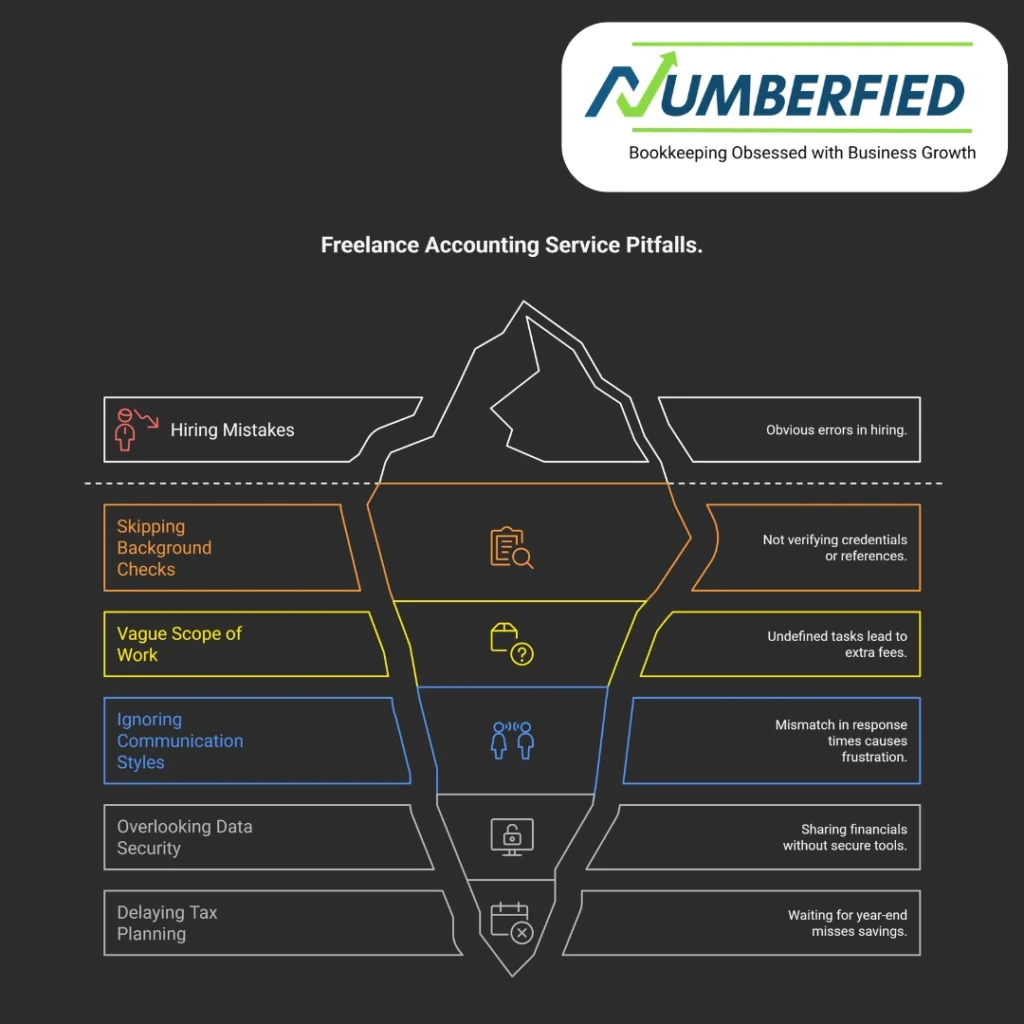
Common Mistakes to Avoid with Freelance Accounting Services
Hiring freelance accounting services can be smooth, but these pitfalls are worth dodging.
Skipping Background Checks
Hiring without verifying certifications or references risks poor quality. Always check for CPA/EA credentials and client reviews to ensure a reliable freelance accountant for a small business.
Vague Scope of Work
Undefined tasks lead to extra fees or incomplete work. Create detailed contracts outlining deliverables, timelines, and revisions for outsourced freelance accounting.
Ignoring Communication Styles
Mismatch in response times causes frustration. Discuss expectations upfront, daily updates, or weekly summaries to align with your virtual freelance accountant.
Overlooking Data Security
Sharing financials without secure tools risks breaches. Choose freelancers using encrypted portals and compliant with IRS data standards for freelance bookkeeping and tax.
Delaying Tax Planning
Waiting for year-end misses savings. Engage on-demand accounting services early for quarterly planning to maximise deductions and avoid surprises.
Step-by-Step Guide to Hiring Freelance Accounting Services
Follow this structured approach to find and onboard the right freelancer.
Step 1: Define Your Needs
List required tasks: basic bookkeeping, tax prep, or advisory? Consider transaction volume and frequency for accurate scoping.
Step 2: Research Platforms and Freelancers
Use Upwork, Fiverr, or LinkedIn to find certified professionals. Search for “freelance accountant for small business” and review profiles with strong ratings and portfolios.
Step 3: Check Qualifications and References
Verify licenses (CPA, EA) and request client references. Ask about experience in your industry for relevant outsourced freelance accounting.
Step 4: Interview and Test
Conduct video calls to discuss your business. Assign a small test task (e.g., reconcile a sample bank statement) to gauge quality and fit.
Step 5: Draft a Clear Contract
Include scope, timelines, payment terms, confidentiality, and termination clauses. Use tools like HelloSign for secure agreements in virtual freelance accountant arrangements.
Step 6: Onboard and Set Up Tools
Share secure access to software (QuickBooks, Xero). Establish communication channels and initial workflows for smooth freelance bookkeeping and tax delivery.
Step 7: Monitor and Adjust
Review work monthly. Provide feedback and scale hours as needed with on-demand accounting services.
Conclusion
Freelance accounting services offer cost flexibility, specialized expertise, scalability, and no overhead, perfect for dynamic small to medium businesses. By avoiding common mistakes and following a thoughtful hiring process, you can secure a partner who elevates your financial management. As trends in 2026 lean toward tech-driven, on-demand solutions, now is the time to act. Find a freelance accountant today and take the first step toward streamlined finances and business growth. Request a free consultation to see how freelance accounting services can transform your operation.
FAQ
What does a freelance accountant do?
A freelance accountant handles financial tasks for clients on a contract basis, including bookkeeping, preparing financial statements, managing accounts payable and receivable, reconciling bank statements, and assisting with payroll. They also help with tax preparation, filing returns, and providing basic financial advice tailored to small businesses or individuals. Freelancers work remotely or on-site as needed, offering flexibility without long-term employment commitments.
What are the duties of a freelance accountant?
The duties of a freelance accountant typically include recording daily transactions, reconciling accounts, preparing profit and loss statements and balance sheets, tracking expenses and invoices, processing payroll, and ensuring accurate financial records. They often assist with quarterly tax estimates, annual tax returns, and compliance with IRS or state regulations. Many freelancers also offer budgeting advice, cash flow analysis, and basic financial planning for their clients.
Do you need a CPA to be a freelance accountant?
No, you do not need to be a CPA to work as a freelance accountant in most cases; many freelancers provide bookkeeping, payroll, and basic tax preparation without CPA certification. However, a CPA credential is required if you want to prepare and sign tax returns, represent clients in IRS audits, or offer certain attest services. Most freelance accountants operate successfully with bookkeeping certifications or software expertise instead of a full CPA license.
Is freelance accounting worth it?
Freelance accounting is worth it for small businesses and startups because it provides high-quality financial support at a fraction of the cost of a full-time employee, typically $50–$150 per hour or $500–$3,000 per month. It offers flexibility, specialized expertise on demand, and scalability without long-term commitments or benefits overhead. For growing businesses that need occasional or project-based help, it delivers excellent value and saves significant time and money.
What are the 4 types of accountants?
The four main types of accountants are financial accountants who prepare external financial statements and reports for stakeholders; management accountants who create internal reports and analysis to support business decisions; tax accountants who focus on tax compliance, planning, and return preparation; and auditing accountants who examine financial records for accuracy and regulatory adherence. Each type serves a different purpose in business and compliance. Freelancers often specialize in one or more of these areas to meet client needs.
What do most CPAs charge per hour?
Most CPAs in the United States charge between $150 and $400 per hour in 2026, depending on experience, location, and complexity of the work. Hourly rates average around $200–$300 for small business clients, with higher rates in major cities or for specialized services. Many CPAs also offer fixed-fee packages for tax returns or monthly services instead of hourly billing.
How much should a CPA charge per hour?
A reasonable hourly rate for a CPA is typically $150–$350, with most charging $200–$300 for standard small business or individual work in 2026. Rates can go higher ($350–$500+) for complex tax planning, audits, or forensic accounting. The fee should reflect the CPA’s experience, credentials, location, and the value provided to the client.
What are red flags when hiring a CPA?
Red flags when hiring a CPA include promising guaranteed tax refunds or unrealistically high returns, pressure to sign quickly, reluctance to show credentials or references, poor communication or unresponsiveness, and pushing unnecessary services or products. Other warning signs are a lack of transparency about fees, no written agreement, or a history of disciplinary actions with state boards. Always verify licensing and ask for client testimonials.
What is the average price to get your taxes done by a CPA?
The average price for a CPA to prepare individual taxes ranges from $300 to $1,200 in 2026, depending on complexity. Small business returns (Schedule C, S-Corp, partnership) typically cost $800–$3,500, while more complex situations can exceed $5,000. Fees vary by location, number of forms, and whether planning or representation is included.
Is a CPA more expensive than a tax preparer?
Yes, a CPA is generally more expensive than a non-certified tax preparer because CPAs have advanced education, licensing, and can offer broader services like audit representation and financial planning. Enrolled agents and basic tax preparers charge less, often $200–$800 for returns, while CPAs average $500–$2,000+ for similar work. The higher cost reflects greater expertise, accountability, and value for complex needs.
What is a reasonable CPA?
A reasonable CPA charges $150–$350 per hour or $800–$3,000 for annual tax preparation, depending on the scope and location. They provide transparent pricing, clear communication, strong references, and value through tax savings, compliance, and planning. A good CPA acts as a trusted advisor rather than just a preparer, justifying their fees with measurable benefits.
Read Also: 9 Surprising Ways a Bookkeeping Service for Small Business Can Boost Your Success