

Introduction
Managing the financial side of real estate operations requires precision, consistency, and deep industry knowledge. Real estate bookkeepers deliver exactly that: expert handling of transactions, expenses, and income, with reporting tailored specifically to the property sector. Whether you manage rental properties, flip houses, operate as a real estate agent, or run a property management company, staying on top of finances can quickly become overwhelming. Real estate bookkeepers help property professionals maintain accurate records, improve cash flow visibility, and stay compliant with tax and regulatory requirements. At Numberfied, we specialize in providing dedicated bookkeeping solutions to real estate businesses nationwide, tailored to the industry’s unique demands.
Key Takeaways:
- Real estate bookkeepers bring specialized knowledge that general bookkeepers often lack in property-specific transactions and regulations.
- Professional bookkeeping improves accuracy, saves time, and supports better investment and operational decisions.
- These services scale with your portfolio size and business complexity.
- Proper selection focuses on industry experience, technology, and communication.
- Timely and accurate bookkeeping helps property professionals reduce stress during tax season and funding processes.
Why Real Estate Businesses Need Specialized Real Estate Bookkeepers
Real estate bookkeepers understand the nuances of tenant payments, maintenance costs, mortgage interest, insurance, and closing transactions. Their specialized approach ensures your financial records reflect the true performance of each property or project.
Handling Multiple Income and Expense Streams
Property owners and managers frequently deal with diverse revenue sources and cost categories. Real estate bookkeepers organize these streams clearly for accurate analysis.
Supporting Investment Analysis
Detailed records allow investors to evaluate property performance, calculate returns, and make data-driven decisions about acquisitions or sales.
Navigating Seasonal and Market Fluctuations
Real estate activity often varies by season and market conditions. Experienced real estate bookkeepers help maintain consistent financial oversight regardless of transaction volume.
Ensuring Proper Classification of Transactions
Correct categorization of expenses and income is critical for tax purposes and financial reporting in real estate.
Core Services Provided by Real Estate Bookkeepers
Real estate bookkeepers offer a comprehensive set of services tailored to the property industry.
Transaction Recording and Reconciliation
Every rent payment, vendor invoice, repair cost, and closing expense is recorded and reconciled accurately with bank and credit card statements.
Property-Specific Financial Reporting
Detailed reports can be generated for individual properties, portfolios, or projects, providing clear visibility into profitability and performance.
Expense Tracking and Vendor Management
Real estate bookkeepers monitor maintenance, utilities, property management fees, and other operating costs to prevent overspending and missed deductions.
Tenant Deposit and Security Handling
Proper tracking of security deposits and application of funds when needed helps avoid disputes and maintains clear liability records.
Benefits of Working with Professional Real Estate Bookkeepers
Partnering with experienced real estate bookkeepers delivers numerous operational and financial advantages.
Improved Accuracy and Reduced Errors
Specialized knowledge minimizes mistakes in classifying real estate transactions that commonly occur with non-specialized support.
Time Savings for Property Professionals
Delegating bookkeeping tasks allows agents, investors, and managers to focus on client relationships, property acquisition, and growth activities.
Better Cash Flow Management
Regular monitoring and reporting help identify cash flow patterns and potential shortfalls before they create problems.
Stronger Tax Preparation Readiness
Well-organized records throughout the year make year-end tax filing smoother and help maximize legitimate real estate deductions.
Technology and Tools Used by Modern Real Estate Bookkeepers
Today’s leading real estate bookkeepers leverage specialized technology to deliver faster and more transparent service.
Cloud-Based Bookkeeping Platforms
Secure online systems provide real-time access to financial data from anywhere while maintaining strong data protection.
Integration with Property Management Software
Seamless connections with popular real estate platforms streamline data flow between rent collection, maintenance requests, and accounting records.
Automated Reporting Features
Advanced tools generate customized reports on demand, saving time and improving decision-making speed.
Mobile Access and Notifications
Many real estate bookkeepers offer mobile-friendly dashboards and alerts that keep busy professionals informed of important financial developments.
How to Choose the Right Real Estate Bookkeepers
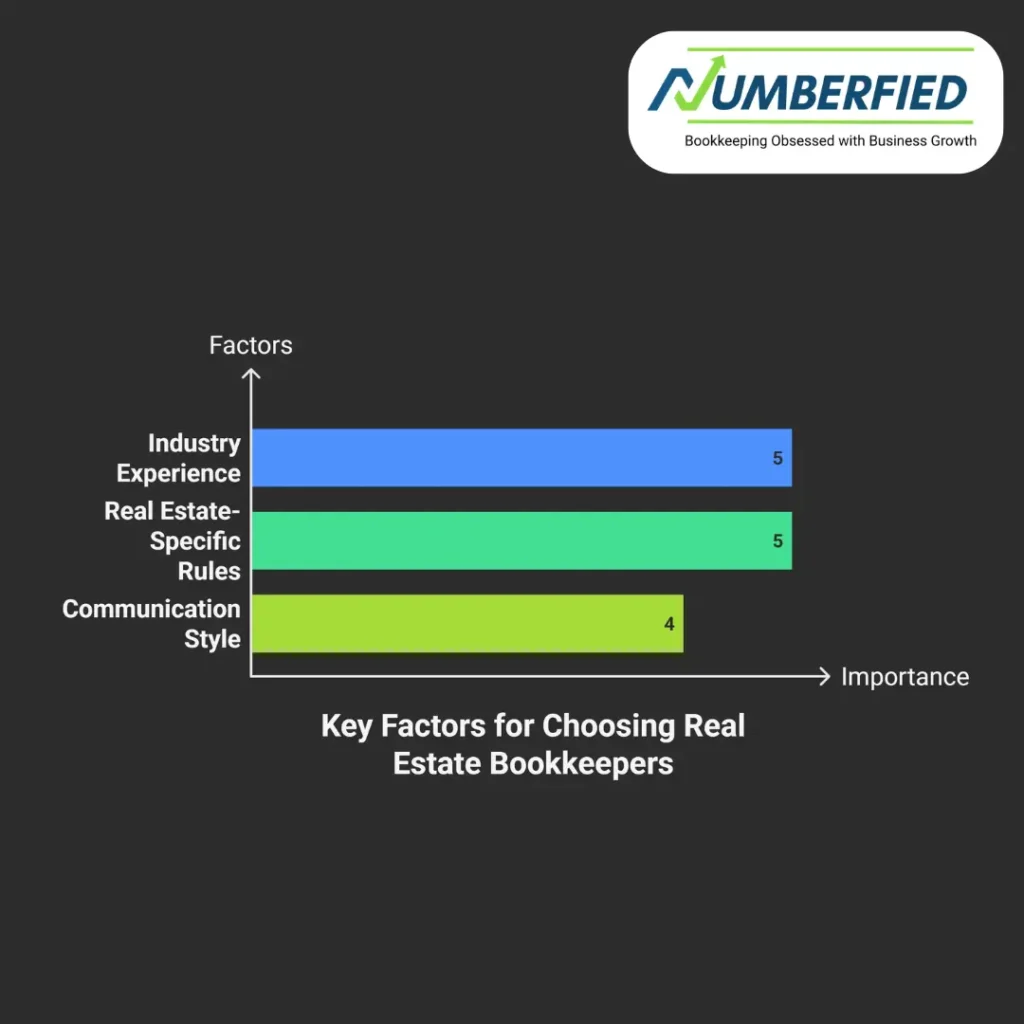
Selecting the best real estate bookkeepers for your business requires evaluating several important factors.
Industry Experience and Expertise
Prioritize providers who have extensive experience working exclusively or primarily with real estate investors, agents, and property managers.
Understanding of Real Estate-Specific Rules
The right team should be familiar with depreciation, cost segregation, passive activity rules, and other property-related accounting principles.
Communication Style and Responsiveness
Choose real estate bookkeepers who communicate clearly and respond promptly to questions throughout the year, not just during tax season.
Implementing Real Estate Bookkeeping Services Successfully
A smooth transition to professional real estate bookkeepers depends on good preparation and clear processes.
Organizing Initial Documentation
Gather existing bank statements, lease agreements, vendor contracts, and previous tax returns to help your bookkeepers establish accurate baseline records.
Setting Clear Reporting Expectations
Define which reports you need, how often, and in what format to ensure the information supports your management style and decision-making.
Establishing Regular Review Meetings
Periodic check-ins allow you to discuss financial trends, address questions, and adjust services as your portfolio changes.
Using Financial Data Strategically
Treat monthly or quarterly reports as tools for optimizing operations, identifying underperforming properties, and planning future investments.
Compliance and Risk Management with Real Estate Bookkeepers
Real estate activities involve numerous compliance considerations that professional real estate bookkeepers help manage effectively.
Sales Tax and Use Tax Considerations
Proper handling of taxable services and materials related to property improvements helps avoid compliance issues.
Mortgage and Loan Tracking
Accurate recording of interest, principal payments, and refinancing activity supports correct financial reporting and tax treatment.
Audit Preparation Support
Organized and well-documented records make any potential audits or lender reviews significantly less stressful.
Maintaining Proper Separation of Entities
For investors with multiple properties or LLC structures, real estate bookkeepers ensure clear separation of financial activities between entities.
Common Challenges Real Estate Bookkeepers Help Overcome
Property professionals regularly face several financial and administrative challenges that specialized bookkeeping addresses.
Complex Transaction Volume
High volumes of transactions from rents, repairs, commissions, and closings can become difficult to track manually.
Difficulty Allocating Shared Expenses
Real estate bookkeepers develop systems to fairly and accurately allocate costs across multiple properties or projects.
Inconsistent Record Keeping During Busy Periods
Professional support maintains consistency even when deal flow or property management demands increase.
Preparing for Property Sales or Transfers
Clean records simplify property sales or transfers of ownership by providing clear historical financial data.
Future Trends in Real Estate Bookkeeping
The field of real estate bookkeeping continues to evolve, with new tools and practices that add even more value.
Increased Automation in Transaction Matching
Smart systems automatically match payments and expenses, reducing manual work while maintaining accuracy.
Greater Focus on Predictive Insights
Advanced real estate bookkeepers are increasingly providing forward-looking analysis to support investment and operational planning.
Enhanced Collaboration Platforms
Modern providers offer shared workspaces where property managers, agents, and bookkeepers can collaborate efficiently.
Conclusion
Real estate bookkeepers play a vital role in helping property owners, investors, agents, and managers maintain financial clarity and operational efficiency. Their specialized knowledge of real estate transactions, reporting requirements, and industry practices delivers significant advantages over general bookkeeping approaches. Throughout this article, we have examined why specialized support matters, the range of services available, the benefits of professional real estate bookkeepers, technology considerations, selection criteria, implementation best practices, and emerging trends.
The key insight is that investing in the right real estate bookkeeping partner creates accuracy, saves time, and supports smarter property decisions. At Numberfied, we are proud to offer dedicated real estate bookkeeping services tailored to the needs of American real estate professionals. Our team combines industry-specific expertise with modern technology and responsive communication to deliver reliable financial support.
FAQs
What makes real estate bookkeepers different from regular bookkeepers?
Real estate bookkeepers possess specialized knowledge of property-related transactions, tax rules, depreciation schedules, and industry-specific reporting requirements. They understand how to properly track rental income, maintenance expenses, tenant deposits, and property sales. This focused expertise ensures more accurate records and better financial insights compared to general bookkeeping services.
Do real estate bookkeepers handle both residential and commercial properties?
Many real estate bookkeepers work with both residential and commercial real estate portfolios. They adapt their processes to accommodate different lease structures, expense categories, and reporting needs. When selecting a provider, confirm their experience with the specific property types in your portfolio for the best results.
How often should I review reports from my real estate bookkeepers?
Most property professionals benefit from monthly financial reports with quarterly reviews for deeper analysis. Real estate bookkeepers can customize reporting frequency based on your portfolio size and management style. Regular reviews help you spot trends, address issues early, and make informed decisions about your properties.
Can real estate bookkeepers help prepare information for tax filings?
Yes, professional real estate bookkeepers organize records throughout the year to make tax preparation smoother and more accurate. They ensure proper classification of income and expenses and maintain supporting documentation for deductions. Many coordinate closely with CPAs to provide complete and well-organized information during tax season.
What technology do real estate bookkeepers typically use?
Modern real estate bookkeepers utilize cloud-based accounting platforms that integrate with popular property management software. These systems allow secure access to financial data and automate routine tasks such as transaction matching. Ask potential bookkeepers about their technology stack and integration capabilities with your current tools.
Will real estate bookkeepers track security deposits and tenant payments?
Yes, tracking tenant payments, security deposits, and application of funds is a standard part of real estate bookkeeping. Professional bookkeepers maintain clear records that help prevent disputes and ensure funds are handled in accordance with state regulations and lease agreements.
How do real estate bookkeepers support property investors with multiple holdings?
They create systems to track financial performance by individual property while also providing consolidated portfolio views. This dual-level reporting helps investors evaluate which properties are performing well and identify opportunities for improvement or divestment across their holdings.
Can we switch to real estate bookkeepers mid-year?
Yes, it is possible to transition at any time. Professional real estate bookkeepers can review historical records and reconcile accounts to establish accurate starting balances. A smooth handover process minimizes disruption and ensures continuity in your financial records.
What information should I provide when first engaging real estate bookkeepers?
Prepare recent bank and credit card statements, existing lease agreements, vendor contracts, previous tax returns, and details about your property portfolio. The more complete the initial information, the faster your real estate bookkeepers can establish accurate and organized records.
How can real estate bookkeepers help during property sales or refinances?
They provide clean, well-documented financial histories that support accurate calculations of basis, gains, and depreciation recapture. Organized records also make due diligence processes smoother for lenders or buyers and help ensure all relevant tax implications are properly considered.
Read Also: Why Do Accountants Charge So Much? Exploring Accounting Firm CFO Services