

Smart Bookkeeping for Small Business
Bookkeeping services for small business are more than record-keeping; they deliver the financial clarity owners need to make decisions, control cash flow, and grow their business. Whether you’re a startup founder, a solo entrepreneur, or a small to medium-sized company owner, expert bookkeeping helps you understand your business with real-time financial data, reduces tax stress, and frees you to focus on growing your business.
Why small business bookkeeping matters
Accurate bookkeeping is the foundation of sound accounting and tax planning. A reliable bookkeeping service ensures your company’s financial data is organized for payroll, tax returns, and financial reporting. For small business owners, this means timely monthly financial statements, improved cash flow management, and actionable insights to guide strategy. Outsourcing bookkeeping or hiring a local bookkeeper can improve financial controls and deliver year-round tax readiness.
Key benefits
- Clear cash flow visibility to make informed decisions and plan growth.
- Timely financial reporting and monthly financial statements for stakeholders.
- Reliable payroll services and payroll tax compliance.
- Reduced tax season stress with catch-up bookkeeping, tax prep, and tax filing support.
- Scalable bookkeeping team and CFO services as your business grows.
- Cloud-based bookkeeping and real-time financial access from anywhere.
Related terms you should know.
When evaluating providers, you’ll encounter terms like small business accounting, outsourced bookkeeping, virtual bookkeeper, cloud bookkeeping, and bookkeeping for startups. These reflect different delivery models, ranging from in-house accountants or CPAs to remote bookkeeping firms offering full-service bookkeeping and tax advisory services.
Bookkeeping options: DIY vs. professional services
Do-it-yourself bookkeeping
Many small business owners start with DIY bookkeeping using tools like QuickBooks Online. The advantages include lower monthly expenses and hands-on control of your books. For sole proprietors or very small businesses, DIY may suffice if transactions are minimal. However, DIY bookkeeping brings risks: missed tax deductions, inaccurate financial reporting, inefficient workflows, and time taken away from running your business.
Professional bookkeeping services
Professional bookkeeping services for small businesses, whether a local bookkeeper, a bookkeeping firm, or remote bookkeeping with a cloud-based bookkeeping provider, offer accuracy, tax preparation support, and scalable services. Outsourcing bookkeeping provides access to expert bookkeeping services, CPA collaboration, and even fractional CFO services for cash flow strategy. The trade-offs include a monthly fee and the need to choose the right provider.
Common bookkeeping mistakes small businesses make
- Mixing personal and business accounts complicates tax returns and financial reporting.
- Delaying bank reconciliations, small discrepancies become major issues over time.
- Not tracking receipts and expenses, lost deductions, and inaccurate cash flow.
- Ignoring payroll compliance, late payroll taxes, or misclassified workers can be costly.
- Relying on outdated spreadsheets instead of QuickBooks Online or other cloud tools.
- Failing to perform catch-up bookkeeping, letting months of transactions pile up, makes tax season painful.
How do bookkeeping services for small business support tax and growth
Good bookkeeping isn’t just about tax filing; it’s about tax strategy. With continuous bookkeeping, your bookkeeper and CPA can identify tax deductions, prepare accurate tax returns, and plan for tax savings. Year-round tax advisory and tax preparation reduce surprises during tax season and ensure your business takes full advantage of allowable deductions. Additionally, accurate bookkeeping supports business tax planning, informs CFO-level cash flow strategy, and strengthens loan or investor proposals.
Step-by-step guide to choosing bookkeeping services for small business
- Define your needs. List core requirements: monthly bank reconciliations, payroll services, QuickBooks setup, catch-up bookkeeping, tax prep, or full-service bookkeeping with CFO services. Consider whether you need remote bookkeeping, a local bookkeeper, or cloud-based bookkeeping for real-time financial access and management.
- Decide on your delivery model. Choose between in-house bookkeeping, outsourcing bookkeeping to a bookkeeping firm, hiring a virtual bookkeeper, or subscribing to online bookkeeping services for small businesses. Consider scalability and the ability to add accounting services or CPA support as needed.
- Check experience and credentials. Look for providers with experience serving small business owners and startups, as well as those who work with QuickBooks Online. Ask if they collaborate with a CPA or offer tax advisory and year-round tax planning.
- Ask about tools and processes. Ensure they use cloud-based bookkeeping platforms that provide real-time financial data and monthly financial statements. Confirm how they handle payroll services, integrations, and secure document sharing.
- Understand pricing. Compare standard pricing and monthly fee structures. Ask about fees for catch-up bookkeeping, payroll services, tax filing support, and additional accounting services. Beware of hidden charges and make sure you understand what’s included.
- Request references and case studies. Speak with other small business owners or review case studies showing how the provider helped with tax savings, improved cash flow, and streamlined financials.
- Evaluate communication and support. Choose a team that offers clear reporting, regular check-ins, and the option to scale to CFO services if you need higher-level financial strategy.
- Start with a trial period or limited engagement. Begin with a monthly service to confirm their reporting cadence, responsiveness, and accuracy before committing to a long-term plan.
What to expect from a high-quality bookkeeping service
A trustworthy bookkeeping service for small business will deliver organized financials, monthly financial statements, payroll services, tax prep and filing coordination, and real-time access to financial data. They will work alongside your accountant or CPA, provide catch-up bookkeeping if needed, and offer recommendations on tax strategy and cash flow optimization. If your company grows, it should be able to scale into CFO services or provide fractional CFO support to align financials with business goals.
Pricing models and budgeting
Bookkeeping pricing varies. Many providers charge a monthly fee based on transaction volume, number of accounts, payroll complexity, and add-on services like tax filing or CFO services. Expect standard pricing tiers for basic bookkeeping up to full-service bookkeeping. Get clear quotes that include QuickBooks Online setup, monthly reconciliations, payroll services, and allowances for tax time. Budgeting for bookkeeping is an investment; the right service can save on business tax, prevent penalties, and help grow your business faster.
How cloud bookkeeping and virtual bookkeepers improve efficiency
Cloud-based bookkeeping and remote bookkeeping let small business owners access real-time financials from anywhere and collaborate with an online bookkeeper. QuickBooks Online and other cloud platforms enable secure, up-to-date accounting, making payroll services, monthly financial statements, and tax return preparation smoother. Virtual bookkeepers often combine software expertise with flexible pricing, making them a popular option for startups and growing businesses that need scalable business bookkeeping services.
Checklist: What to ask before hiring
- Do you specialize in small business bookkeeping services and startups?
- Which accounting tools do you use (QuickBooks Online, etc.)?
- Do you provide payroll services and tax filing support?
- Will you coordinate with my CPA or provide CPA referrals?
- How frequently will I receive monthly financial statements and real-time financial data?
- What is included in the monthly fee, and what costs extra?
- Can you handle catch-up bookkeeping if needed?
- Do you offer a free consultation or trial period?
Case examples: How bookkeeping transforms operations
Example 1: A retail startup hired an outsourced bookkeeping team and moved to QuickBooks Online. Monthly financial statements improved cash flow forecasting, allowing the owner to re-allocate marketing spend to higher-return initiatives, increasing revenue by 25% in a year.
Example 2: A professional services firm switched from spreadsheets to a full-service bookkeeping firm that provided payroll services and year-round tax planning. They reduced tax liabilities through accurate deduction tracking and avoided late payroll tax penalties.
Integrating bookkeeping with accounting and tax
Bookkeeping and accounting are complementary. Bookkeepers maintain the company’s financial data; accountants and CPAs perform deeper analysis, tax return preparation, and audit support. A quality bookkeeping firm will collaborate with your CPA to provide the clean financials needed for tax return preparation and tax advisory services. For growing businesses, consider bookkeeping plus CFO services to align financials with strategic planning and funding needs.
Who benefits most from outsourced bookkeeping?
Outsourcing bookkeeping services for small business is ideal for owners who need to focus on operations rather than data entry, for businesses experiencing growth, and for startups that require scalable bookkeeping and accounting services. Small business owners gain time back, reduce bookkeeping errors, and access financial expertise usually reserved for larger companies, including tax strategy and CFO-level insights.
Choosing between a local bookkeeper and a remote firm
A local bookkeeper can offer in-person support and a personal relationship. Remote bookkeeping firms and virtual bookkeepers provide broader expertise, cloud-based workflows, and often more competitive pricing. Determine whether you value face-to-face meetings or real-time financial access and flexible scaling when choosing your partner.
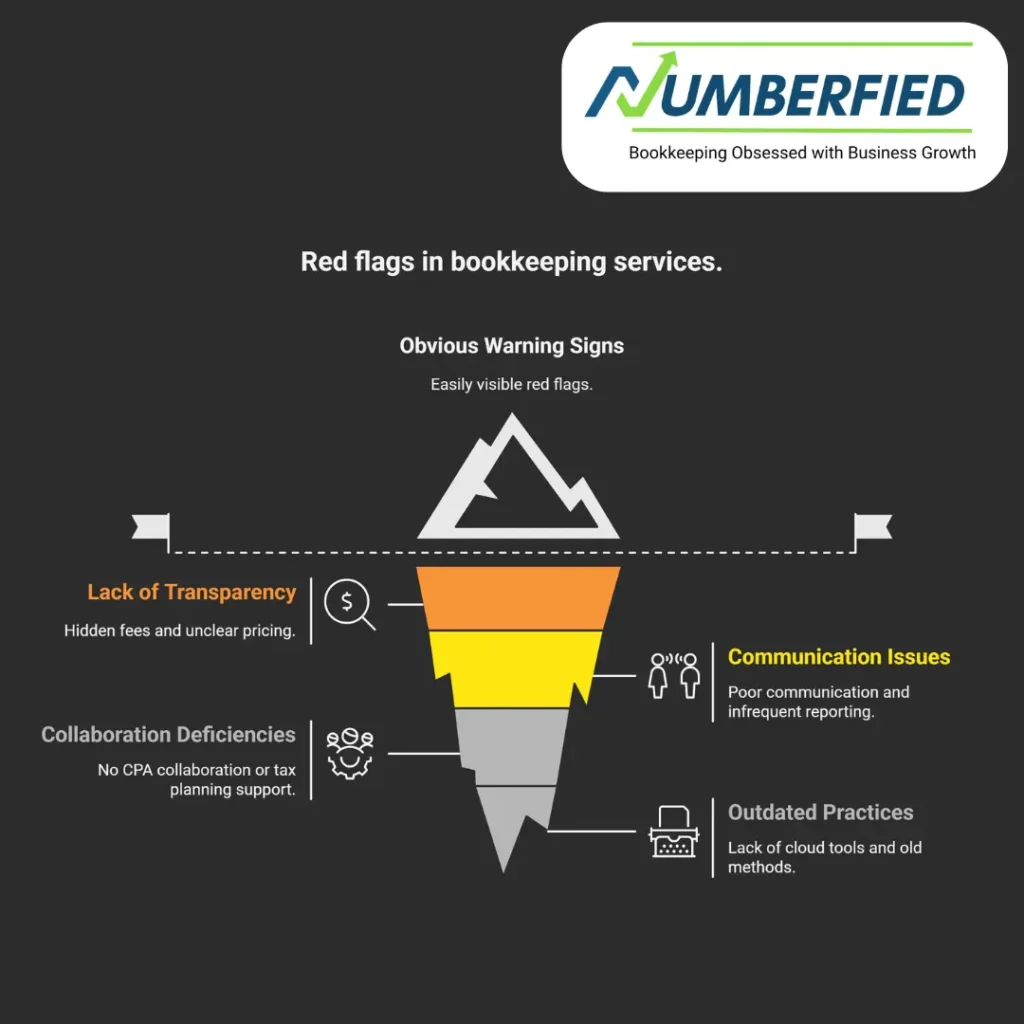
Red flags to avoid
- No references or client testimonials.
- Unclear pricing or hidden fees for catch-up bookkeeping or tax filing.
- Poor communication or infrequent reporting.
- No collaboration with CPAs or lack of tax planning support.
- Lack of cloud tools or outdated accounting practices.
Suggested internal linking anchor texts
- Small business accounting services
- QuickBooks Online setup guide
- Payroll services for small businesses
- Tax planning and preparation
- Virtual bookkeeping and outsourcing options
Conclusion
Your business financials are a strategic asset. Investing in bookkeeping services for small business helps you maintain compliance, optimize taxes, and focus on what matters: running and growing your business. Whether you choose a local bookkeeper, an online bookkeeping service, or a full-service bookkeeping firm with CPA and CFO services, the priority is accuracy, accessibility to real-time financial data, and a partner who understands your business needs.
Next step: get expert bookkeeping support
If you’re ready to simplify accounting, streamline payroll services, and prepare for tax season with confidence, schedule a free consultation with an expert bookkeeping team. We’ll assess your current financials, recommend the right service, whether catch-up bookkeeping, cloud-based bookkeeping, or full-service bookkeeping, and provide a transparent quote with a monthly fee that fits your budget.
Book a free consultation today to get expert bookkeeping, payroll services, and tax planning that help you focus on growing your business. Schedule a free consultation or request a quote now.
FAQ
What is the best bookkeeping method for a small business?
Double-entry with cash-basis accounting is best for small businesses due to its simplicity and error reduction; switch to accrual-basis for growth and better accuracy. It balances debits and credits and integrates well with software.
What is the easiest way to do bookkeeping for a small business?
Use cloud-based software like QuickBooks, Xero, FreshBooks, or Wave for automation of bank feeds, categorization, invoicing, and reports. Maintain separate business accounts, scan receipts, and reconcile monthly.
What are the three golden rules of bookkeeping?
The three golden rules of double-entry are: debit the receiver and credit the giver (personal accounts); debit what comes in and credit what goes out (real accounts); debit expenses/losses and credit incomes/gains (nominal accounts). They ensure balanced records.
Which method of bookkeeping is appropriate for a small business?
Double-entry with cash-basis suits most small businesses for accuracy and scalability. Cash-basis works for simple operations; accrual offers deeper insights for growth. Single-entry is limited to very basic needs.
What is one of the most common bookkeeping mistakes that business owners make?
Mixing personal and business expenses is a top mistake, complicating tracking and taxes. Others include skipping reconciliations, poor categorization, ignoring receipts, and delaying entries.
What is a bookkeeper not allowed to do?
Bookkeepers cannot audit, provide tax or investment advice, file taxes beyond prep, or offer legal interpretations; these require CPAs. They also can’t sign statements or represent clients in disputes.
Is QuickBooks better than Excel for bookkeeping?
Yes, QuickBooks excels with automation, error prevention, and compliance features. Excel risks manual errors and lacks scalability; use it only for custom analysis.
How much do small businesses pay bookkeepers?
Small businesses pay $300–$1,200 monthly for outsourced services, or $40–$100 hourly. In-house roles cost $45,000–$60,000/year plus benefits.
How much should you charge as a bookkeeper?
Charge $40–$100/hour or $300–$2,500+ monthly packages, depending on experience and services. Certified professionals and extras like payroll justify higher rates.
How much do bookkeepers with their own business make?
Freelance bookkeepers average $50,000–$100,000+ annually in 2025, often $70,000–$150,000 gross with 20–30 clients. Low overhead drives strong profits, with top earners over $180,000.
Read Also: How Bookkeeping Services for Small Business Can Transform Your Success