
Introduction
For decades, the world of Accounting was defined by stacks of receipts, clunky desktop software, and a mad rush at the end of the financial year. That era is officially over.
According to a recent analysis of industry trends, the modern bookkeeping landscape is shifting rapidly toward automation, artificial intelligence, and real-time data access. As highlighted in a key industry report, “87% of accountants rated cloud technology as important or extremely important to their company’s operations” (Zeni.ai). This isn’t just a temporary shift; it is a fundamental restructuring of how financial health is managed.
For business owners, moving to cloud-based solutions is no longer a luxury reserved for tech startups -it is a survival tactic. Whether you are a freelancer, a scaling SME, or an established enterprise, integrating cloud Accounting into your workflow is the only way to stay competitive, secure, and compliant.
The Evolution of Accounting: From Compliance to Strategy
The traditional role of an accountant was largely historical. They looked backward, tidying up what had already happened. Today, cloud technology has flipped this model on its head.
Moving Past Manual Data Entry
The source article notes that in the past, “bookkeepers had to enter data by hand. This was slow and often caused mistakes.” Modern cloud-based Accounting eliminates this drudgery. By automating data entry and bank reconciliation, software reduces human error to near zero. This shift frees up financial professionals to stop being data entry clerks and start being strategic advisors.
The Rise of the “Advisory” Accountant
As automation handles the “boring stuff,” the value of a Accounting professional now lies in interpretation. Instead of asking, “What were our expenses last quarter?” you can ask, “Based on our cash flow trends, can we afford to hire two more salespeople in six months?” Cloud platforms provide the data instantly, allowing Accounting teams to offer growth-driven insights, not just compliance reports.
The Core Technologies Disrupting Financial Management
Cloud-based Accounting is more than just storing numbers online. It is an ecosystem of advanced technologies working in tandem. The Zeni source breaks down three major pillars driving this change.
Automation and AI Bookkeeping
Artificial Intelligence is arguably the biggest game-changer. AI tools embedded in cloud Accounting software can predict cash flow trends by analyzing sales, expenses, and payment histories. For example, as noted in the source, AI can “detect seasonal dips in revenue and automatically forecast when cash reserves will be low.” This proactive approach allows business owners to make decisions based on predictive models rather than gut feelings.
The Security and Transparency of Blockchain
While AI handles prediction, blockchain handles trust. For Accounting, blockchain offers an immutable ledger. Once a transaction is recorded, it cannot be altered, which drastically reduces the risk of fraud and simplifies audits. For businesses concerned about data integrity, integrating blockchain-aware cloud Accounting tools provides a level of security that paper trails or basic spreadsheets simply cannot match.
Real-Time Access and Collaboration
Perhaps the most immediate benefit of cloud Accounting is accessibility. In the past, you had to be at the office computer to check your books. Now, you can access your financial dashboard from a phone in an airport lounge. This facilitates better collaboration between business owners and their Accounting teams, ensuring everyone is looking at the same, up-to-the-minute data.
Overcoming Challenges in the Cloud Era
While the benefits are immense, moving to the cloud is not without its hurdles. To successfully leverage modern Accounting, businesses must address two major concerns: security and regulatory compliance.
Navigating Data Security and Privacy
When you move your Accounting to the cloud, you are putting your most sensitive data (tax IDs, bank details, revenue figures) on servers owned by a third party. The source warns that “hackers target these systems to steal financial data.”
To mitigate this, businesses must ensure their cloud Accounting provider uses encryption (scrambling data so it can’t be read by outsiders) and multi-factor authentication (requiring a code from a phone to log in). Reputable providers treat security as their primary feature, not an afterthought.
Keeping Up with Regulatory Changes
Tax laws and financial regulations change constantly. A major advantage of cloud-based Accounting is that software updates automatically. When a new tax law is passed, the platform updates its logic instantly. This ensures that your Accounting remains compliant without you having to manually recalculate formulas or worry about obsolete tax rates.
Conclusion
The future of Accounting is not about counting beans; it is about growing trees. As the industry moves away from manual, retrospective bookkeeping and toward automated, predictive, and strategic financial management, the tools you use will define your success.
Cloud-based solutions offer the speed, security, and insight necessary to navigate the modern business landscape. By embracing AI, ensuring robust cybersecurity, and utilizing real-time data, businesses can transform their Accounting department from a cost center into a growth engine.
The age of the dusty ledger is over. The age of the live dashboard has begun.
Read Also: Why Numberfied’s Bookkeeping Accounting Service Is Your Small Business’s Secret Weapon
FAQS
Is cloud-based Accounting safe from hackers?
Yes, when using reputable providers. Look for features like 256-bit encryption, multi-factor authentication (MFA), and regular third-party audits. Cloud Accounting is often safer than keeping files on a local hard drive that could be stolen or corrupted.
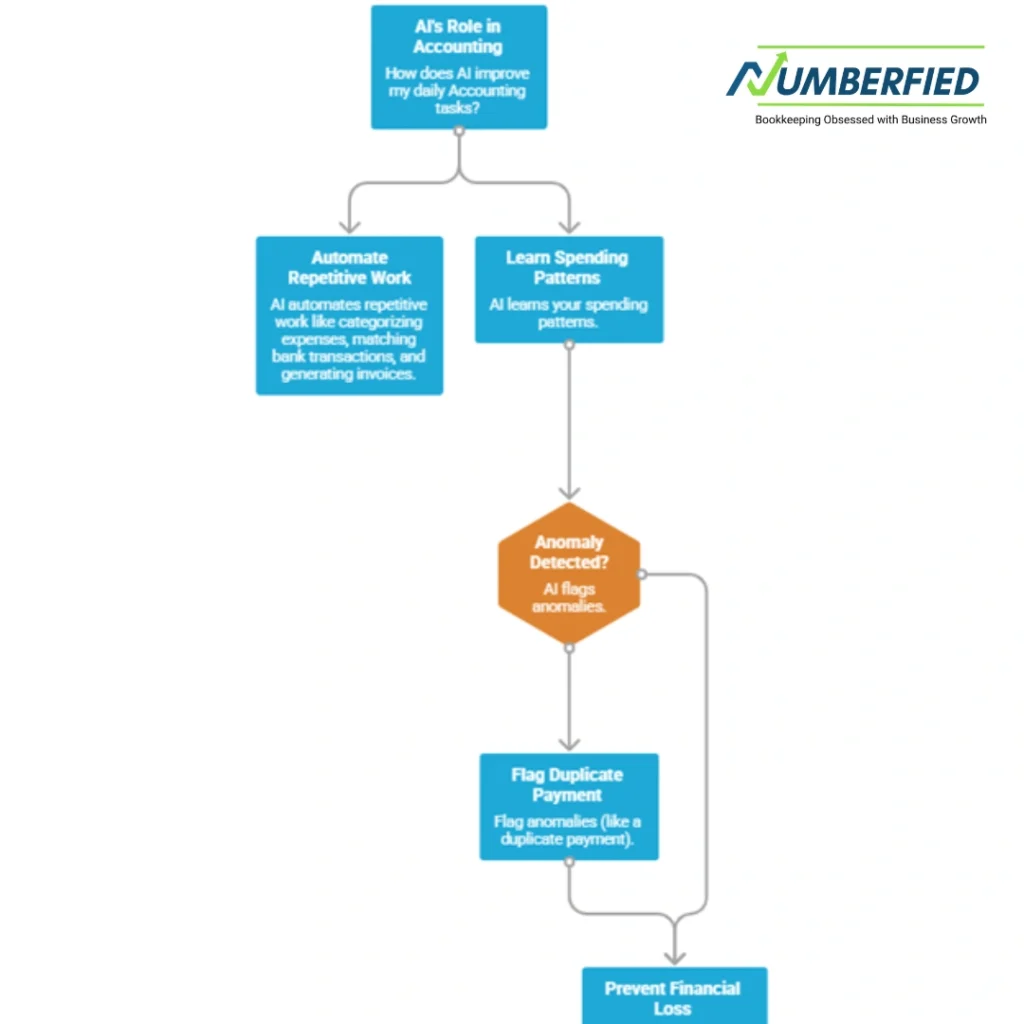
How does AI improve my daily Accounting tasks?
AI automates repetitive work like categorizing expenses, matching bank transactions, and generating invoices. It also learns your spending patterns to flag anomalies (like a duplicate payment) before you lose money.
Can I switch from desktop software to cloud Accounting mid-year?
Absolutely. Most cloud services offer data migration tools. You can import your historical data from QuickBooks Desktop, Excel, or other legacy systems without losing your financial history.
Do I need an internet connection to do my Accounting?
Most cloud platforms offer limited offline modes, but the full functionality (real-time updates, bank feeds, AI insights) requires an internet connection. However, most modern business environments are always connected.
How does cloud Accounting help with cash flow management?
It provides real-time dashboards that show exactly how much cash you have on hand, what is owed to you (Accounts Receivable), and what you owe (Accounts Payable). AI can also forecast your cash position weeks in advance.
Will cloud Accounting save me money?
Yes. You eliminate the cost of expensive server hardware, IT maintenance, and software upgrade fees. Most cloud Accounting works on a low monthly subscription, making it highly budget-friendly for small businesses.
What happens to my data if I stop paying for the subscription?
Most providers give you a grace period (usually 30–90 days) to export your data as CSV or PDF files. After that period, the data is usually archived and eventually deleted, so you should always keep local backups.
Is cloud Accounting suitable for businesses with complex inventory?
Yes. Many modern platforms integrate with specialized inventory management systems (ERP). While basic plans handle simple products, advanced tiers or integrations can manage complex manufacturing and logistics.
How does cloud Accounting handle sales tax?
Very well. Most systems automatically update sales tax rates based on your location and the customer’s location. They can also generate sales tax liability reports, making filing returns much easier.
What is the difference between cloud Accounting and online bookkeeping?
Online bookkeeping often refers to a service (a human doing work remotely). Cloud Accounting refers to the software (the platform used to do the work). The best scenario combines both: cloud software used by a professional online bookkeeper.
Ready to stop wrestling with spreadsheets and start scaling your business? You don’t have to navigate the future of finance alone.
At Numberfied, we combine the power of cloud-based Accounting with human-led strategic growth coaching. Whether you need a seamless transition to the cloud or a partner to help you interpret your real-time data, we are here to help.
Don’t wait for “perfect timing.” Book your free strategy call today and see how modern, cloud-driven Accounting can unlock the momentum your business has been missing.
Contact Numberfied to Get Started