

Introduction
Welcome, we’re the Numberfied team, and we’re glad you’re here. Understanding small business bookkeeping costs can feel overwhelming, but it doesn’t have to be. This guide walks you through how costs are calculated, which factors affect pricing, and practical steps you can take to manage bookkeeping fees while keeping accurate financial records. We’ll also show how Numberfied can help streamline your bookkeeping so your business can focus on growth.
Key takeaway
- The small business bookkeeping cost depends on the scope of work and the service model you choose.
- Hiring a bookkeeper or outsourcing changes the way bookkeeping fees are structured and tracked.
- You can lower recurring bookkeeping costs with routine cleanups, automation, and clear workflows.
Understanding bookkeeping costs and how bookkeepers charge for small business bookkeeping
What does the small business bookkeeping cost include
Small business bookkeeping costs typically cover transaction recording, bank reconciliations, management of accounts payable and receivable, and financial reporting. Depending on your needs, services may expand to payroll coordination, sales tax filing support, and software setup.
How bookkeepers charge: hourly, monthly, and project-based
Bookkeepers may charge by the hour, on a monthly retainer, or per project. The best option depends on the predictability of your transaction volume and the level of ongoing support you require. Knowing the structure helps estimate bookkeeping fees accurately.
Why transparency matters in bookkeeping fees
Transparent pricing prevents surprises. A clear scope of work and regular reporting help you monitor the small business bookkeeping cost and adjust services as your business evolves.
Factors that affect bookkeeping costs for a small business owner
Transaction volume and complexity
The number of transactions and their complexity directly influence bookkeeping costs. High transaction volume or complex revenue streams require more time and resources from a bookkeeper.
Industry-specific needs and add-on services
Certain industries need specialized bookkeeping services, like job costing or inventory tracking. Add-on services increase bookkeeping fees, so understand what your business genuinely requires.
Software and automation choices
Choosing the right bookkeeping service and software affects long-term bookkeeping costs. Cloud-based solutions with automation reduce manual effort and can lower recurring fees when implemented correctly.
How much does a bookkeeper cost when you hire a bookkeeper for a small business
In-house bookkeeper cost considerations
Hiring in-house changes bookkeeping costs by adding payroll, benefits, and workspace expenses. An in-house bookkeeper is suited for businesses needing constant hands-on attention to finances and immediate access to records.
Outsourced bookkeeping service vs. in-house resources
Outsourcing can be more flexible for many small business owners. It often converts fixed costs into scalable bookkeeping fees and provides access to a team of specialists rather than a single individual.
Using an online bookkeeping service to control cost
Online bookkeeping services bring automation and remote support that can reduce the small business bookkeeping cost. They are ideal for owners who prefer digital workflows and regular, standardized reporting.
Average bookkeeping rates and how to compare bookkeeper costs
Understanding average bookkeeping rates and ranges
Average bookkeeping rates vary by service level and geography. To assess value, compare what’s included in bookkeeping fees, such as monthly reports, reconciliations, and dedicated support.
Comparing hourly pricing and monthly cost structures
Hourly pricing may fit short-term projects or cleanup tasks, while monthly cost structures offer predictable budgeting for ongoing bookkeeping. Match the pricing model to your business rhythm.
Evaluating service providers for best value
When comparing providers, review sample reports, client testimonials, and the process for handling irregular events. The right provider reduces long-term bookkeeping costs by preventing errors and improving cash flow visibility.
How to reduce small business bookkeeping costs without losing quality
Implementing standard workflows and documentation
Clear workflows reduce the time bookkeepers spend on routine tasks, which lowers bookkeeping fees. Consistent documentation speeds reconciliation and reporting.
Use software integrations and automation
Automating bank feeds, invoice processing, and recurring transactions minimizes manual entry and cuts recurring bookkeeping costs. Integrations with your point-of-sale or e-commerce platforms are especially helpful.
Regular cleanups to avoid escalating fees
Periodic reconciliations keep records accurate and prevent expensive catch-up projects. Regular maintenance is a cost-effective way to manage bookkeeping fees.
Hiring decisions: how to hire a bookkeeper and what bookkeeper costs to expect
Choosing between freelance bookkeepers and bookkeeping service providers
Freelancers can be flexible for light workloads, while bookkeeping service providers offer continuity and multiple points of expertise. Consider stability and response time when projecting bookkeeping costs.
Questions to ask potential bookkeepers about bookkeeping fees
Ask about billing cycles, included deliverables, additional charges, and how they handle unexpected tasks. Clear answers help forecast your small business’s bookkeeping costs and prevent surprise invoices.
Setting expectations and service level agreements
A service level agreement defines responsibilities, turnaround times, and escalation paths. A good agreement reduces ambiguity and helps keep bookkeeping fees aligned with performance.
QuickBooks, software, and the impact on bookkeeper costs
Why software proficiency affects bookkeeping cost
Bookkeepers skilled in tools like QuickBooks can complete tasks faster and more accurately, which can lower bookkeeping cost over time. Efficient workflows reduce billable hours and improve reporting quality.
Choosing the right plan and add-ons to manage bookkeeping fees
Select software plans that match your business needs. Avoid overpaying for features you won’t use and invest in add-ons that provide clear returns in time savings and data accuracy.
Training your team to minimize external bookkeeping work
Simple internal training on expense categorization and receipt submission reduces the time your bookkeeper spends on corrections, thereby lowering ongoing bookkeeping cost.
When to outsource bookkeeping vs. keep it in-house for small business bookkeeping cost control
Signs you should outsource bookkeeping
If bookkeeping is causing missed deadlines, inconsistent reports, or stress for the owner, outsourcing is a practical option. Outsourcing offers predictable bookkeeping fees and access to specialists.
Signs to keep bookkeeping in-house
If you need daily cash management, immediate access to physical records, or highly specialized internal knowledge, in-house bookkeeping might be more appropriate despite higher direct costs.
Hybrid models to balance cost and control
A hybrid approach combines an in-house point person with an outsourced provider handling routine reconciliations and reporting. This can optimize bookkeeping costs while keeping control where you need it.
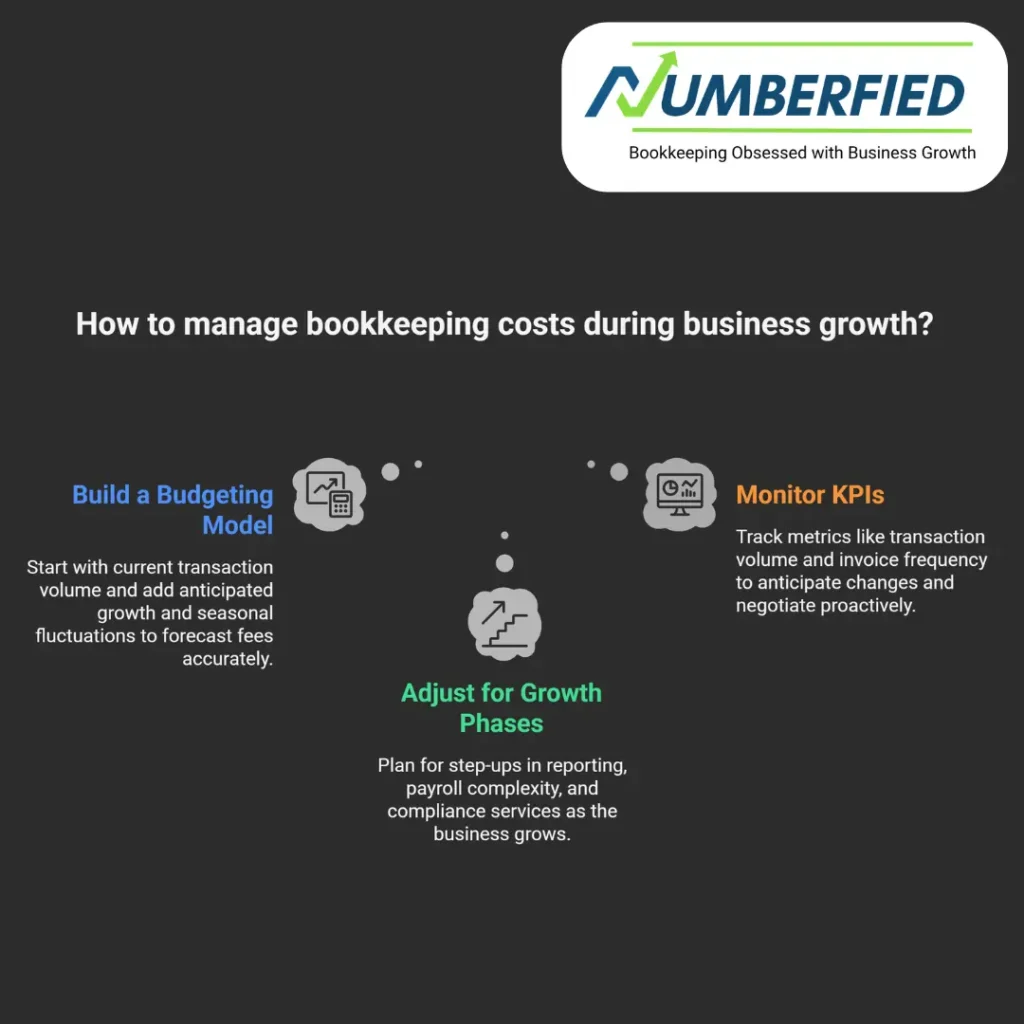
Estimating monthly cost and projecting bookkeeping fees for growth
How to build a budgeting model for bookkeeping costs
Start with current transaction volume, add anticipated growth, and include seasonal fluctuations. Factor in software subscriptions and expected add-on services to forecast bookkeeping fees accurately.
Adjusting bookkeeping for business growth phases
As your business grows, bookkeeping needs change. Plan for step-ups in reporting, payroll complexity, and compliance services to avoid surprises in bookkeeping costs.
Monitoring KPIs that influence bookkeeping fees
Track metrics such as the number of transactions, invoice volume, and payroll frequency. Monitoring these KPIs helps you anticipate changes in bookkeeping fees and negotiate service levels proactively.
How Numberfied helps manage small business bookkeeping costs effectively
What we include and how we reduce bookkeeping fees
Numberfied focuses on efficient workflows, automation, and clear reporting. We aim to reduce the time we spend on manual tasks, which lowers the recurring small business bookkeeping cost for our clients while improving accuracy.
Onboarding and ongoing support that control costs
Our onboarding process minimizes catch-up work and clarifies responsibilities, preventing costly cleanup projects later. Ongoing support includes routine reconciliations and timely reports to keep bookkeeping fees predictable.
How to get started with Numberfied
Contact Numberfied to discuss your current bookkeeping process and goals. We’ll assess your needs and propose a plan that aligns the small business bookkeeping cost with the value you receive.
Managing bookkeeping fees: contracts, SLAs, and communication
Structuring contracts to avoid hidden bookkeeping fees
Contracts should list deliverables, billing frequency, and the process for additional work. Clear terms reduce disputes and help you control bookkeeping costs over the long term.
Service level agreements that protect your business
An SLA outlines turnaround times for reconciliations, reporting, and support. It ensures the bookkeeping fees you pay are linked to measurable service outcomes.
Regular review meetings to align expectations and costs
Quarterly or monthly reviews help you reassess the scope of work and adjust bookkeeping fees as needed. Communication ensures billing aligns with your business priorities.
Preventing costly bookkeeping mistakes that increase bookkeeping fees
Common errors that drive up bookkeeping costs
Mismatched transactions, missing receipts, and delayed reconciliations create cleanup work. Preventing these errors keeps bookkeeping fees lower and records reliable.
Internal controls to reduce errors and hidden fees
Simple controls, such as receipt submission policies and approval workflows, reduce the time your bookkeeper spends resolving issues, lowering bookkeeping fees.
How proactive advice from your bookkeeper saves money
A proactive bookkeeper identifies inefficiencies and suggests improvements. This advisory role often reduces other costs and improves financial decision-making, making bookkeeping fees an investment rather than an expense.
Conclusion
Understanding small business bookkeeping costs is about clarity and choices. By evaluating transaction volume, software, service models, and provider capabilities, you can control bookkeeping fees while maintaining accurate, timely financial records. Numberfied is ready to help you optimize bookkeeping workflows, reduce unnecessary bookkeeping costs, and provide the consistent reporting you need to run your business with confidence. If you’re ready to get clarity and control over your bookkeeping, visit our site and contact us at https://numberfied.com/ to discuss a plan tailored to your needs.
Frequently Asked Questions
What determines the cost of my small business bookkeeping?
Several factors determine small business bookkeeping costs, including transaction volume, complexity, industry-specific needs, and the chosen service model. The breadth of services, such as payroll or sales tax support, also changes pricing and the level of expertise required.
Is outsourcing bookkeeping cheaper than hiring an in-house bookkeeper?
Outsourcing can be more cost-effective for many small businesses because it converts fixed personnel costs into scalable fees. Outsourcing also provides access to a wider range of expertise and tools without the overhead of hiring, often reducing total bookkeeping costs.
How can I predict monthly bookkeeping fees as my business grows?
To predict monthly bookkeeping fees, estimate your transaction volume, payroll complexity, and reporting needs as you scale. Include expected software subscriptions and potential add-on services. Monitoring these variables helps you project bookkeeping costs and negotiate service packages accordingly.
What are common add-on services that increase bookkeeping fees?
Add-on services that increase bookkeeping fees often include payroll processing, inventory management, job costing, sales tax filings, and specialized reporting. Understand which of these are essential for your operation to avoid unnecessary bookkeeping costs.
How does software like QuickBooks impact bookkeeping costs?
Software proficiency reduces bookkeeping costs by speeding up data entry and reconciliation. The right software plan and integrations minimize manual work and errors, which lowers ongoing bookkeeping fees. Investing in software that fits your processes usually delivers cost savings over time.
Can regular cleanups reduce my bookkeeping costs?
Yes. Regular cleanups prevent errors from piling up and turning into larger, more expensive projects. Routine reconciliations and timely categorization keep records accurate and predictable, reducing the need for high-cost catch-up work.
What should I include in a bookkeeping contract to control fees?
A bookkeeping contract should specify deliverables, billing frequency, responsibilities, and a clear process for additional work. Including a service-level agreement helps align expectations and keeps bookkeeping fees tied to measurable outcomes.
How do I choose between hourly pricing and a monthly retainer?
Choose hourly pricing for one-off projects or cleanup tasks, and a monthly retainer for predictable, ongoing bookkeeping needs. Monthly retainers often provide better budgeting stability, while hourly rates offer flexibility for sporadic workloads.
How much of my bookkeeping costs should be automated?
Aim to automate repetitive tasks like bank feeds, recurring invoices, and receipt capture. The right level of automation minimizes manual entry and reduces bookkeeping fees. Balance automation with necessary human oversight for complex or judgment-based tasks.
How can Numberfied help me lower my small business bookkeeping costs?
Numberfied combines automation, best practices, and efficient onboarding to reduce time spent on manual bookkeeping tasks. We work with you to create clear workflows, provide reliable reporting, and minimize recurring bookkeeping fee surprises. Reach out to us to design a cost-effective plan tailored to your business needs.
Read Also: Why Numberfied’s Bookkeeping Accounting Service Is Your Small Business’s Secret Weapon