

Introduction
Welcome to Numberfied. As a team dedicated to helping business owners succeed, we know that small business bookkeeping is the foundation of healthy finances and confident decisions. This guide covers bookkeeping 101, common bookkeeping mistakes, bookkeeping tips, and how our bookkeeping service supports your business needs. Whether you’re starting bookkeeping for a small business or considering hiring a bookkeeper, we present clear, actionable steps you can implement today.
Key Takeaways
- Small business bookkeeping organizes financial records, supports tax compliance, and fuels decision-making.
- Implement simple bookkeeping systems with consistent routines and appropriate accounting software.
- Avoid common bookkeeping mistakes by reconciling accounts, tracking expenses, and separating personal and business finances.
- Consider hiring a bookkeeper or using small business bookkeeping services when tasks exceed your capacity or expertise.
- Numberfied offers expert bookkeeping tailored to your business needs. Contact us to get started.
Core Principles of Small Business Bookkeeping
Understanding the basics of small business bookkeeping
Small business bookkeeping is the practice of recording and organizing financial transactions to provide owners with accurate, timely information. At its core, bookkeeping involves tracking income, expenses, assets, liabilities, and equity. For many business owners, mastering bookkeeping 101 means establishing a routine, choosing the right accounting software, and setting up charts of accounts aligned with business needs.
Essential records to maintain
Consistent record keeping is essential for reliable small business bookkeeping. Maintain sales receipts, invoices, bank statements, payroll records, and expense documentation. These records support accurate reporting, tax preparation, and cash flow analysis. Digital copies and proper backups reduce risk and speed retrieval.
How bookkeeping supports business decisions
Accurate small business bookkeeping provides insights that help with budgeting, pricing, and growth planning. When financial data is organized, business owners can forecast cash flow, measure profitability by product or service, and make informed hiring or investment decisions. Bookkeeping is not just compliance; it is a strategic tool.
Bookkeeping for Small Businesses: Setting Up Systems That Work
Choosing accounting software for your needs
Select accounting software that matches your volume of transactions, reporting needs, and integration requirements. Many business owners start with free accounting software options and upgrade as their needs grow. Focus on features like bank feeds, invoicing, payroll integration, and reporting dashboards that support small business bookkeeping workflows.
Designing a chart of accounts
A well-structured chart of accounts is vital for clear reporting. Organize accounts by revenue, cost of goods sold, operating expenses, assets, liabilities, and equity. Tailor categories to your industry so that profit and loss statements reflect the realities of your operations and supply effective bookkeeping for your business.
Establishing routines and workflows
Consistent routines simplify bookkeeping for small businesses. Schedule weekly or biweekly tasks: reconcile bank and credit card statements, record invoices and payments, and categorize transactions. Monthly tasks include closing the books, reviewing profit and loss, and preparing payroll reports. Standardized workflows reduce errors and free time for strategic work.
Bookkeeping mistakes to avoid: Common Pitfalls and How to Fix Them
Mixing personal and business finances
One of the most frequent bookkeeping mistakes is combining personal and business accounts. This practice complicates bookkeeping for a small business, creates reconciliation challenges, and can affect legal protections. Open dedicated business bank accounts and credit cards to maintain clear records and simplify tax reporting.
Failing to reconcile accounts regularly
Failure to reconcile is a critical bookkeeping mistake to avoid. Reconciling bank and credit card accounts verifies that recorded transactions match financial institution statements. Unreconciled accounts lead to inaccurate balances, missed transactions, and cash flow surprises. Reconcile at least monthly as part of your bookkeeping needs checklist.
Neglecting receipt and expense documentation
Poor documentation increases audit risk and undermines expense tracking. Keep detailed receipts, properly classify business expenses, and maintain digital backups. This practice supports accurate tax deductions and helps you understand where money is going in your business operations.
Hire a bookkeeper: When and How to Bring in Expert Bookkeeping
Signals your small business needs a bookkeeper
Signs that it’s time to hire a bookkeeper include missed deadlines, inconsistent financial records, rapid transaction growth, or time spent on bookkeeping tasks that distract from core business functions. A bookkeeper brings technical skills, efficient processes, and the ability to reconcile complex transactions.
Choosing between in-house and outsourced bookkeeping services
Decide based on scale, control preferences, and budget. Outsourced small business bookkeeping services provide flexibility, access to expert bookkeeping, and built-in backup. In-house bookkeepers offer on-site availability and direct control. Evaluate qualifications, software experience, and references when making your choice.
What to expect from a professional bookkeeping service
Professional bookkeeping services handle account reconciliation, payroll support, tax-ready reporting, and the preparation of customized financial statements. They often integrate with your chosen accounting software and offer workflows that align with your business needs. Clear communication and agreed deliverables ensure the bookkeeping service supports your goals.
Bookkeeper Tools: Tools and Technology for Efficient Small Business Bookkeeping
Integrating accounting software and apps
Modern bookkeeping relies on integrations. Connect point-of-sale systems, payment processors, payroll providers, and invoice platforms to your accounting software to reduce manual entry and improve accuracy. Proper integrations streamline bookkeeping tasks and provide real-time insights.
Automation and bank feeds
Use bank feeds and automation features to import transactions directly into your accounting system. Automation saves time, reduces human error, and allows bookkeepers to focus on reconciliation and analysis rather than data entry. Verify imported transactions and apply rules to categorize recurring items consistently.
Reports that matter to business owners
Focus on reports that drive decisions: profit and loss, balance sheet, cash flow statement, and aged receivables/payables. Custom reports can show performance by product line, location, or customer segment. Regularly review these reports as part of your bookkeeping for a small business routine.
Bookkeeping Tips: Practical Advice for Day-to-Day Management
Prioritize cash flow management
Cash flow is a primary concern for small business owners. Track receivables and payables closely, set clear payment terms with customers, and schedule supplier payments to avoid shortfalls. Regular small business bookkeeping provides the visibility needed to manage cash proactively.
Implement internal controls
Internal controls reduce fraud and errors. Separate duties where possible, restrict access to banking functions, and require dual approvals for large transactions. Regular review by an independent party or your bookkeeper strengthens confidence in financial records.
Plan for taxes year-round
Effective small business bookkeeping includes ongoing tax planning. Track deductible expenses, maintain payroll records, and prepare for periodic tax payments. Work with your bookkeeper to estimate liabilities and avoid surprises during tax season.
Small Business Owner Guidance: Strategic Uses of Bookkeeping Data
Using bookkeeping data for budgeting and forecasting
Bookkeeping records feed your budgets and forecasts. Historical revenue and expense trends help build realistic projections. Use rolling forecasts that update with actuals to keep planning relevant and to adjust strategies based on financial performance.
Assessing profitability by product, service, or customer
Break down revenues and direct costs to assess profitability at a granular level. Bookkeeping for your business should capture enough detail to identify high-performing offerings and those that require price or cost adjustments. This analysis supports smarter resource allocation.
Preparing for growth and financing
Accurate small business bookkeeping positions you well for growth conversations with lenders, investors, or partners. Clean financial statements and reconciled accounts show operational stability and support credible financial projections. Whether you seek capital or expand operations, bookkeeping data is central to planning.
bookkeeping service: How Numberfied Supports Your Small Business Needs
Tailored bookkeeping for small businesses
At Numberfied, we tailor bookkeeping solutions to your industry and scale. Our approach begins with understanding your business needs and advising on the right bookkeeping process, accounting software, and reporting cadence. We aim to be a long-term partner that grows with your business.
Comprehensive services we offer
We provide end-to-end small business bookkeeping services, including transaction recording, reconciliation, payroll support, tax-ready reporting, and custom financial insights. Our team integrates with your accounting systems and sets up automated workflows that reduce effort and improve accuracy.
Onboarding and ongoing communication
Onboarding with Numberfied is structured and efficient. We establish a clear plan, migrate records, and set reporting expectations. Ongoing communication includes regular reviews, proactive recommendations, and responsiveness to questions. Our goal is to make bookkeeping a seamless part of your operations.
Reconcile: Best Practices for Accurate Financial Reconciliation
Monthly reconciliation checklist
Reconcile bank accounts, credit cards, loans, and merchant accounts monthly. Confirm that deposits, withdrawals, fees, and transfers match your bookkeeping records. Investigate discrepancies promptly and document adjustments to maintain audit trails.
Handling discrepancies and reconciling differences
When differences arise, trace the source by comparing statements with recorded transactions. Look for missing, duplicate, or timing-related entries. Correct errors in the ledger and note reconciliations in your bookkeeping system to make future reviews smoother.
Year-end reconciliation and close process
At year’s end, perform comprehensive reconciliations to ensure financial statements are accurate for tax filing and strategic planning. Close temporary accounts, review accruals, and confirm that fixed assets and liabilities are properly recorded. A clean close sets the stage for reliable reporting in the new fiscal year.
Bookkeeping Mistakes to Avoid: Advanced Issues and Remediation
Mishandling payroll and employee classifications
Payroll errors and incorrect employee classification are significant bookkeeping mistakes that can lead to compliance issues. Maintain accurate payroll records, withhold required contributions, and correctly classify workers. Partner with payroll specialists or your bookkeeping service for compliance and accuracy.
Improper recognition of revenue and expenses
Revenue recognition and expense matching impact reported profit. Follow appropriate accounting principles for recognizing revenue over time or at the point of sale, and match expenses to the period they support. Clear policies documented by your bookkeeper reduce ambiguity.
Neglecting accounts receivable management
Uncontrolled receivables harm cash flow. Implement consistent invoicing, follow-up procedures, and clear payment terms. Use aged receivables reports to prioritize collections and apply disciplined credit policies to new customers.
Small Business Bookkeeping Services: Pricing, Value, and ROI
Evaluating the cost versus value of bookkeeping services
Consider bookkeeping as an investment in clarity, compliance, and time savings. The right small business bookkeeping services reduce risk, provide actionable insights, and free business owners to focus on growth. Evaluate providers on qualifications, software expertise, and demonstrated results.
How bookkeeping services drive return on investment
Professional bookkeeping helps you identify cost-saving opportunities, improve cash flow management, and make strategic decisions that enhance profitability. Reliable financial data reduces costly mistakes and positions your business to respond quickly to opportunities.
Selecting a bookkeeping partner for long-term success
Choose a partner who understands your industry, communicates transparently, and aligns with your business needs. Look for a team that can scale services as your business grows and provides proactive advice beyond transactional bookkeeping.
Bookkeeping for your business: Transitioning from DIY to Professional Support
Signs your DIY bookkeeping is no longer sufficient
Increased transaction volume, missed deadlines, confusion around tax obligations, or a desire to scale are signals that DIY bookkeeping may be limiting your progress. Transitioning to professional bookkeeping can restore focus and provide clearer financial insight.
Steps to transition smoothly
Plan the transition with a clear timeline, prepare and organize existing records, choose compatible accounting software, and agree on deliverables with your bookkeeper. Effective handoffs minimize disruption and preserve historical data.
Maintaining control while outsourcing
Outsourcing does not relinquish control. Set reporting schedules, define approval processes, and maintain access to your accounting system. Regular reviews and open communication keep you informed and confident in your bookkeeping for small businesses.
Conclusion
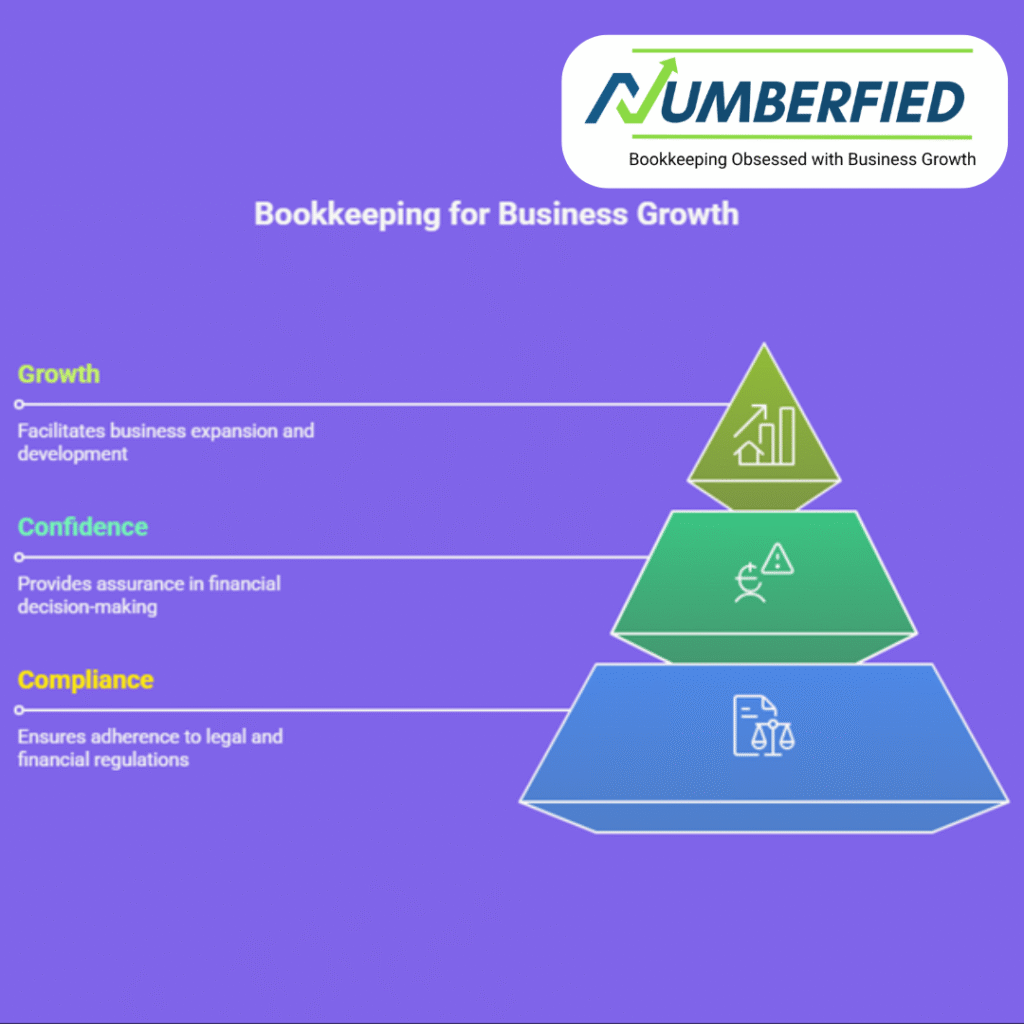
Small business bookkeeping is a strategic asset that supports compliance, clarity, and growth. By applying bookkeeping 101 principles, avoiding common bookkeeping mistakes, utilizing the right accounting software, and considering expert bookkeeping services when needed, business owners can spend more time leading and less time managing records. At Numberfied, we deliver tailored small business bookkeeping services that align with your business needs and goals. Let us handle the details so you can focus on what you do best.
Ready to streamline your small business bookkeeping? Contact Numberfied today for a consultation and discover how our expert bookkeeping services can support your business.
Frequently Asked Questions
What is small business bookkeeping, and why is it important?
Small business bookkeeping is the process of recording, organizing, and maintaining financial transactions for a business. It is important because it provides accurate financial information for decision-making, tax compliance, and assessing business performance.
How often should I perform small business bookkeeping tasks?
Bookkeeping tasks should be performed regularly: daily for recording transactions if volume is high, weekly for categorizing and reconciling, and monthly for closing books and reviewing reports. Regular routines prevent backlogs and errors.
Can I use free accounting software for small business bookkeeping?
Free accounting software can be suitable for simple businesses with low transaction volumes. As complexity grows, you may need more advanced features or integrations. Choose software that matches your bookkeeping needs and consider scalability.
When should I hire a bookkeeper for my small business?
Hire a bookkeeper when bookkeeping tasks consume too much of your time, records are inconsistent, or your business needs reliable financial reports for growth or financing. A bookkeeper brings expertise, efficiency, and peace of mind.
What bookkeeping mistakes should small business owners avoid?
Common bookkeeping mistakes to avoid include mixing personal and business finances, failing to reconcile accounts, neglecting documentation, misclassifying transactions, and inconsistent bookkeeping routines.
How does bookkeeping help with tax preparation?
Accurate bookkeeping ensures that income and deductible expenses are documented and organized, simplifying tax filing and reducing the risk of missed deductions or errors that could trigger an audit.
What reports should I expect from a bookkeeping service?
Key reports from a bookkeeping service include the profit and loss statement, balance sheet, cash flow statement, and aged receivables and payables. Customized reports can highlight performance by product, location, or customer segment.
How do I reconcile accounts effectively in my bookkeeping process?
Reconcile accounts by comparing your bookkeeping records to bank and credit card statements, matching transactions, and investigating discrepancies. Perform reconciliations monthly and document adjustments for transparency.
Can bookkeeping services help with payroll and compliance?
Yes. Many bookkeeping services offer payroll support and ensure compliance with payroll tax requirements, record-keeping, and reporting. Professional services can coordinate with payroll providers or manage payroll directly.
How can Numberfied help with my small business bookkeeping?
Numberfied offers tailored small business bookkeeping services that include transaction recording, reconciliation, payroll support, tax-ready reports, and strategic financial insights. Contact our team to learn how we can align bookkeeping with your business needs and goals.