

Effective bookkeeping services for real estate investors and agents transform financial chaos into clarity. This guide explains benefits, challenges, US compliance, tools, tax prep, onboarding, ROI, and how to select the right provider. Learn practical steps and why Numberfied is a smart contact when you’re ready to streamline operations.
Quick Takeaways
- Bookkeeping services for real estate investors and agents reduce costs and free time for deal-making.
- Expect improved accuracy, GAAP and IRS compliance, and smoother tax preparation.
- Choose providers that specialize in real estate, use QuickBooks or Xero, and offer secure integrations.
- Onboard with clear documentation, a phased approach, and measurable KPIs for ROI.
Why Specialized Bookkeeping Matters
Complex cash flows in property businesses
Real estate operations generate rent, security deposits, vendor payments, loan service, capital expenditures, and management fees. Bookkeeping services for real estate investors and agents ensure each cash flow stream is directed into the appropriate accounts and reporting lines for accurate financials.
Industry-specific revenue recognition
Correct revenue recognition matters for investors and agents who track commissions, management fees, and development milestones. Using bookkeeping services for real estate investors and agents helps apply consistent recognition policies aligned with GAAP and investor expectations.
Separate entity and investor accounting
Many property owners run SPVs, partnerships, or LLCs. Bookkeeping services for real estate investors and agents set up entity-specific charts of accounts, partner capital ledgers, and distribution schedules to keep equity and loan transactions clean.
Core Benefits of Outsourced Bookkeeping
Cost savings and predictable pricing
Outsourcing bookkeeping typically costs less than hiring full-time staff when benefits, payroll taxes, and turnover are included. Bookkeeping services for real estate investors and agents offer scalable pricing models for seasonal volume and property portfolios.
Access to expertise
Specialized providers understand cost segregation, allowable expenses, and capitalization rules. Bookkeeping services for real estate investors and agents provide expertise that reduces misclassification risks and audit exposure.
Focus on core business activities
Delegating bookkeeping gives principals time to source deals, manage tenants, and negotiate contracts. Bookkeeping services for real estate investors and agents provide free leadership to focus on revenue-generating tasks rather than transactional recordkeeping.
Common Challenges and How to Manage Them
Privacy and data security
Property businesses handle sensitive tenant and financial data. Select bookkeeping services for real estate investors and agents that use encrypted file transfer, role-based access, and SOC-compliant environments to protect confidentiality.
System integration and data flow
Integrating property management software, bank feeds, and loan servicers can be complex. Bookkeeping services for real estate investors and agents should document integration points, automate bank reconciliations, and validate data feeds regularly.
Maintaining oversight
Outsourcing does not remove responsibility. Implement review controls, monthly financial meetings, and exception reporting when using bookkeeping services for real estate investors and agents to retain governance and transparency.
US Compliance: IRS Rules and GAAP Considerations
IRS reporting obligations
Bookkeeping services for real estate investors and agents prepare records for Schedule E, partnership returns, and 1099 filings. Proper categorization of rental income, deductible expenses, and passive activity rules reduces IRS risk.
GAAP vs tax accounting
Financial statements for investors often require GAAP presentation, while tax returns use IRC rules. Bookkeeping services for real estate investors and agents can maintain dual ledgers or adjusting entries to reconcile GAAP reports with taxable income.
Depreciation and cost recovery
Depreciation methods, useful lives, and Section 179 or bonus depreciation choices affect taxable income and book reporting. Bookkeeping services for real estate investors and agents coordinate with tax advisors to apply consistent policies and document elections.
Selecting a Provider: Questions to Ask
Real estate experience and references
Ask for client case studies and references in real estate. Providers with portfolio, brokerage, or development experience understand nuances. Seek bookkeeping services for real estate investors and agents that can demonstrate relevant work and outcomes.
Technology stack and integrations
Confirm supported platforms (e.g., QuickBooks Online, Xero, MRI, Yardi) and integration capabilities. Bookkeeping services for real estate investors and agents should automate bank feeds, rent rolls, and vendor payments to minimize manual entry.
Security and continuity plans
Request details on encryption, backups, disaster recovery, and staffing redundancy. Top bookkeeping services for real estate investors and agents provide documented SLAs and contingency plans to ensure service continuity.
Best-in-Class Tools: QuickBooks, Xero, and Property Systems
QuickBooks Online for landlords and agents
QuickBooks Online is widely used for small-to-medium-sized property portfolios. Bookkeeping services for real estate investors and agents integrate QBO with bank feeds, merchant processors, and payroll to produce timely statements and reconciliations.
Xero’s strengths for multi-entity setups
Xero offers strong multi-currency and multi-entity workflows. Bookkeeping services for real estate investors and agents leverage Xero for scalable entity management, automated bank rules, and clean audit trails.
Property management software integrations
Connectors for AppFolio, Buildium, Yardi, and Rent Manager centralize rent rolls and tenancy records. Bookkeeping services for real estate investors and agents synchronize rent postings, late fees, and security deposits to maintain accurate tenant accounting.
Tax Preparation and Year-End Close
Organized records for tax efficiency
Timely bookkeeping reduces tax surprises. Bookkeeping services for real estate investors and agents maintain categorized expense reports, capital expenditure schedules, and loan amortization details to streamline tax preparation.
Coordination with tax professionals
A collaborative workflow between bookkeepers and CPAs ensures tax elections and returns reflect accurate books. Bookkeeping services for real estate investors and agents prepare supporting schedules and provide audit-ready documentation.
Proactive tax planning
Good providers offer quarterly reviews to identify tax planning opportunities like 1031 exchanges, depreciation strategies, and entity restructuring. Bookkeeping services for real estate investors and agents support planning by delivering timely financial insights.
Onboarding Process: From Setup to First Close
Discovery and mapping
Onboarding begins with a discovery of accounting systems, bank accounts, vendor lists, tenant ledgers, and loan documents. Bookkeeping services for real estate investors and agents map current processes and design a future-state chart of accounts.
Data migration and cleanup
Providers import bank histories, reconcile opening balances, and correct historical misclassifications. Effective bookkeeping services for real estate investors and agents complete a migration audit to ensure accurate starting balances.
Training, reviews, and SOPs
After migration, providers supply SOPs for expense approvals, receipt capture, and monthly close calendars. Bookkeeping services for real estate investors and agents typically include an initial training period and defined review checkpoints.
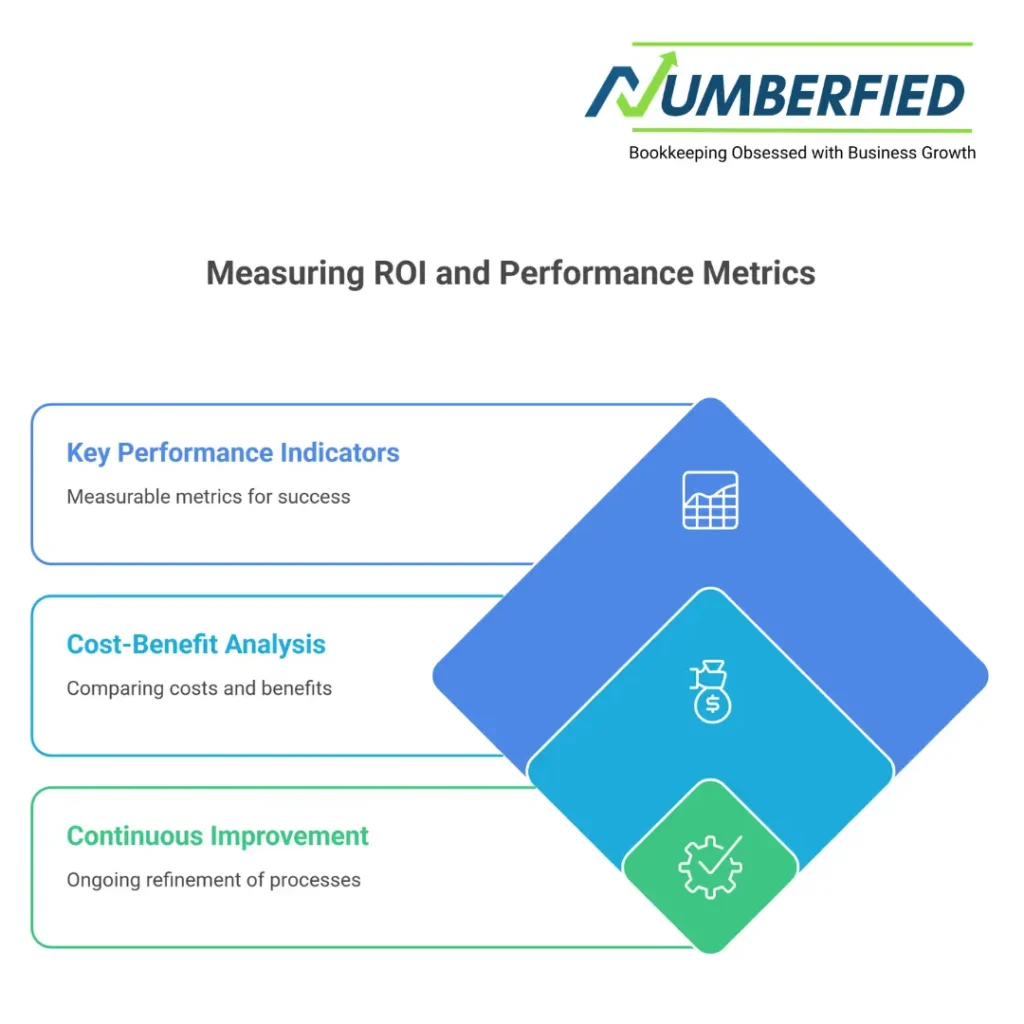
Measuring ROI and Performance Metrics
Key performance indicators
Track KPIs such as time-to-close month, reconciliation accuracy, variance to budget, and days to produce financial statements. Bookkeeping services for real estate investors and agents should provide dashboards reflecting these metrics.
Cost-benefit analysis
Compare the internal cost of staff, error rates, and opportunity cost of missed deals against outsourcing fees. Bookkeeping services for real estate investors and agents often show ROI via reduced errors, faster reporting, and improved decision-making.
Continuous improvement
Top bookkeeping vendors perform quarterly reviews to refine workflows and reduce cycle time. Bookkeeping services for real estate investors and agents that commit to continuous improvement yield better long-term value.
Actionable Tips for Immediate Improvement
Standardize the chart of accounts
Implement a property-focused chart of accounts across entities to enable comparability and consolidated reporting. Use the same categories when working with bookkeeping services for real estate investors and agents to simplify consolidation.
Automate receipt and invoice capture
Adopt tools that extract vendor data and match receipts to transactions. Bookkeeping services for real estate investors and agents that use automation reduce manual entry and improve accuracy.
Schedule monthly close routines
Define and document monthly close tasks with owners accountable for rent roll reviews, bank reconciliations, and variance explanations. Bookkeeping services for real estate investors and agents should adhere to that calendar to produce consistent reports.
Why Consider Numberfied
Real estate bookkeeping specialization
Numberfied focuses on scalable bookkeeping services for real estate investors and agents, delivering tailored charts of accounts and integrations with property systems.
Security and reliable processes
Numberfied uses secure data handling, tested migration playbooks, and a defined onboarding approach that minimizes disruption during transitions to outsourced bookkeeping services for real estate investors and agents.
Transparent ROI and support
With measurable KPIs, regular review meetings, and transparent pricing, Numberfied aims to show the tangible benefits of bookkeeping services for real estate investors and agents and support ongoing growth.
Conclusion
Bookkeeping services for real estate investors and agents provide measurable benefits: cost savings, expertise, compliance, and scalability. Address challenges through secure providers, strong integrations, and governance. Use the right tools, adopt a clear onboarding plan, and measure ROI. When you are ready to streamline accounting, consider contacting Numberfied to discuss a tailored bookkeeping services for real estate investors and agents solution that aligns with your portfolio and goals.
Frequently Asked Questions
What exactly do bookkeeping services for real estate investors and agents include?
Services typically include bank reconciliations, accounts payable/receivable, rent roll posting, owner distributions, loan amortization schedules, and financial statement preparation tailored to property operations.
How do bookkeeping services for real estate investors and agents help with taxes?
They organize expense categories, track capital expenditures and depreciation, produce supporting schedules, and coordinate with CPAs to reduce surprises and streamline tax filing.
Can bookkeeping services for real estate investors and agents handle multi-entity portfolios?
Yes. Providers set up consolidated and entity-level reporting, maintain intercompany records, and manage partner equity schedules for multi-entity ownership structures.
What tools do bookkeeping services for real estate investors and agents commonly use?
Popular tools include QuickBooks Online, Xero, property management systems like Yardi or AppFolio, and receipt automation platforms. Integration capability is a key selection factor.
How long does onboarding typically take with bookkeeping services for real estate investors and agents?
Onboarding time varies by portfolio size and data quality. Small portfolios may onboard in 2–4 weeks; larger or complex portfolios can take 6–12 weeks for complete migration and cleanup.
How do these services maintain tenant privacy and data security?
Reputable providers use encrypted transfers, role-based access controls, and secure storage. Ask for security documentation, backup policies, and compliance certifications.
What costs should I expect for bookkeeping services for real estate investors and agents?
Costs depend on transaction volume, number of entities, and required reporting complexity. Pricing models include fixed monthly fees or per-transaction pricing; get a detailed quote based on your needs.
Will outsourcing bookkeeping reduce errors?
Yes, specialized providers implement controls, automation, and trained staff, which typically reduces misclassifications and reconciliation issues compared to ad hoc internal processes.
How do bookkeeping services for real estate investors and agents support investor reporting?
They prepare timely financial statements, cash flow reports, capital call schedules, and customized investor packages to ensure transparency and meet reporting deadlines.
How should I evaluate potential bookkeeping partners?
Look for real estate experience, technology integrations, security practices, clear SLAs, client references, and transparent pricing. Request a pilot or proof-of-concept to assess fit.
Contact Numberfied to learn how bookkeeping services for real estate investors and agents can be tailored to your portfolio. Schedule a consultation to evaluate needs, review pricing, and start an efficient onboarding plan.
Read Also: Why Do Accountants Charge So Much? Exploring Accounting Firm CFO Services