

Introduction
Startup founders face competing priorities: product development, customer acquisition, and capital management. Outsourced bookkeeping for startups delivers steady, expert financial recordkeeping so founders can focus on growth with confidence. This article explains benefits, challenges, compliance considerations, provider selection criteria, tools, tax preparation, onboarding, and how to measure ROI.
Quick takeaways
- Outsourced bookkeeping for startups reduces overhead and converts fixed payroll into variable costs.
- It provides access to experienced accountants, scalable workflows, and cloud accounting tools like QuickBooks and Xero.
- Careful vendor selection, data security controls, and clear SLAs mitigate privacy and integration risks.
- Proper onboarding and monthly financial reviews accelerate ROI and improve tax readiness.
Why startups choose outsourced bookkeeping for startups
Cost savings and predictable budgeting
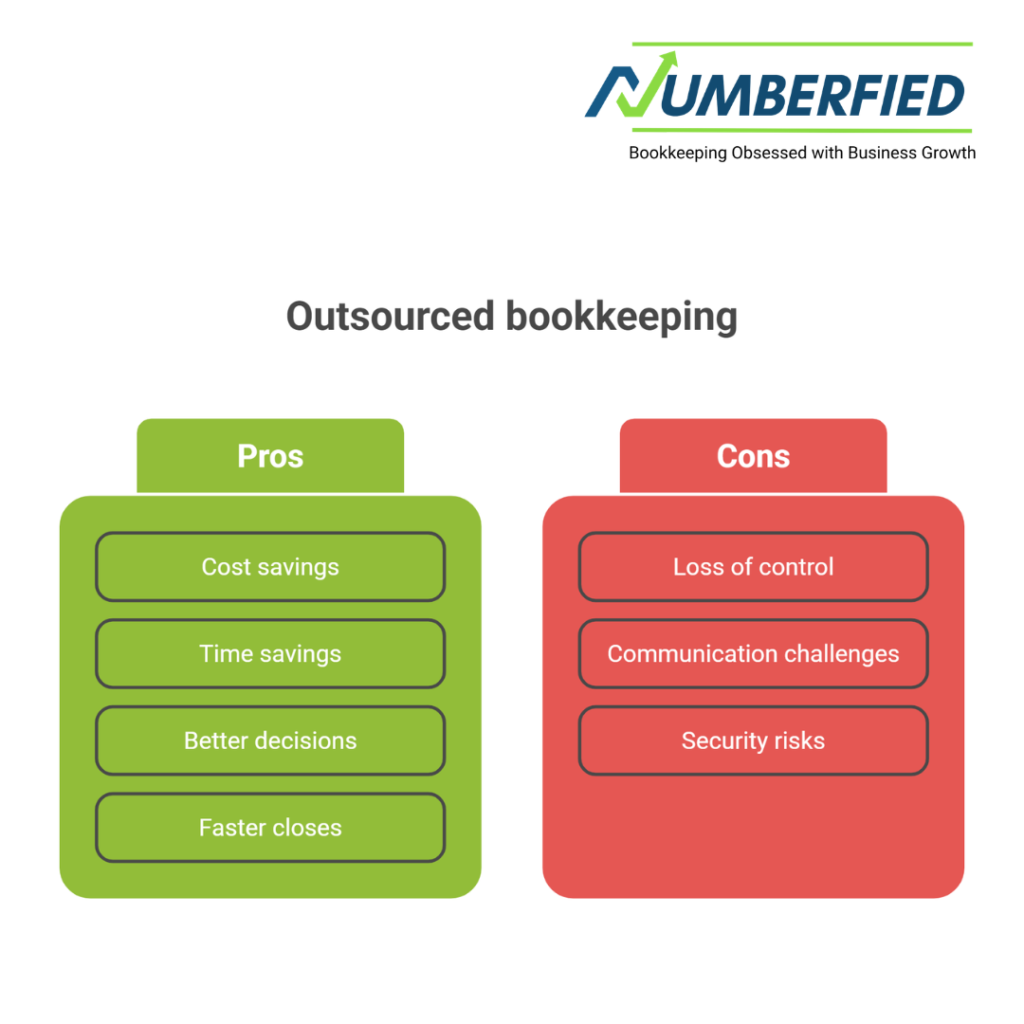
Outsourced bookkeeping for startups typically costs less than hiring full-time staff once benefits, payroll taxes, and software are considered. Fixed salary commitments are replaced with predictable monthly fees, which is critical for early-stage cash flow management.
Access to expertise and compliance knowledge
Providers specializing in bookkeeping for startups bring experience with GAAP, IRS reporting, invoicing workflows, and startup-specific transactions such as equity issuances or convertible notes.
Scalability without hiring lag
As transaction volume increases, bookkeeping for startups scales capacity quickly through workflows and automation, avoiding recruitment delays that can harm financial accuracy.
Key benefits: detailed breakdown
Improved financial visibility
Outsourced bookkeeping for startups produces regular, reconciled ledgers and management-ready reports so founders make timely cash and growth decisions backed by data.
Operational efficiency
Outsourced bookkeeping for startups uses standardized processes and automation to reduce manual entry, reconcile faster, and shorten month-end close cycles.
Focus on the core product and customers
Outsourcing routine accounting tasks to a bookkeeping service frees founders’ time to refine product-market fit and scale teams.
Challenges and how to mitigate them
Data privacy and security
When you engage an outsourced bookkeeping provider for startups, ensure the provider uses encryption, role-based access controls, secure backups, and written confidentiality agreements to protect sensitive financial and payroll data.
System integration and data flow
Outsourced bookkeeping for startups requires smooth connections between banking, payroll, payment processors, and accounting software. Verify the provider’s integration experience and map data flows during onboarding.
Maintaining oversight and control
Even with bookkeeping for startups, governance is essential. Implement approval thresholds, periodic audits, and a clear escalation path for exceptions.
US compliance: IRS, GAAP, and state requirements
IRS reporting and employer obligations
Outsourced bookkeeping for startups must correctly handle payroll tax withholding, filing of Forms 941 and W-2, and timely deposits to avoid penalties. Confirm the provider’s payroll competency and IRS compliance track record.
GAAP-based financial statements
Many startups need GAAP-compliant bookkeeping for investor reporting and audits. Choose bookkeeping for startups that can prepare accrual-based reconciliations and support audit requests.
Sales tax and state filings
Outsourced bookkeeping for startups should manage nexus considerations, sales tax collection, and periodic state filings. Detail state-level responsibilities in the service agreement.
How to select an outsourced bookkeeping provider
Evaluate industry experience and references
Look for providers that have served similar startups and can supply references demonstrating accuracy, timeliness, and thoughtful financial advice when unusual transactions occur.
Technology stack and integrations
Confirm the provider’s expertise with your preferred tools. Providers with experience in QuickBooks and Xero typically deliver faster setups and fewer integration issues when providing bookkeeping for startups.
Service levels, pricing, and SLAs
Compare monthly pricing models, deliverables, and turnaround times. A clear SLA for bookkeeping for startups should include monthly reconciliations, timeliness guarantees, and defined deliverables for tax season.
Accounting tools and automation for startups
QuickBooks and QuickBooks Online
QuickBooks Online is widely used for outsourced bookkeeping for startups due to its ubiquity, app ecosystem, and bank connectivity. Ensure the provider can optimize the chart of accounts and automate recurring entries.
Xero and cloud-based alternatives
Xero offers strong multi-currency handling and a clean interface. Many outsourced bookkeeping providers for startups support both Xero and QuickBooks, helping you choose the best fit for your workflow.
Expense management and receipt capture
Tools such as Expensify, Bill.com, or Hubdoc integrate with the accounting platform to streamline outsourced bookkeeping for startups by automating expense capture and vendor payments.
Tax preparation and year-round readiness
Quarterly tax estimates and planning
Outsourced bookkeeping for startups should calculate quarterly tax estimates, project cash tax liabilities, and advise on timing to minimize surprises at year-end.
Preparing for tax season
Accurate, reconciled books from outsourced bookkeeping for startups reduce accountant fees and risk of missed deductions. A coordinated approach with your tax preparer avoids last-minute document collection.
Equity transactions and cap table coordination
When startups issue stock or stock options, outsourced bookkeeping for startups must coordinate with legal and cap table managers to correctly record equity and related tax implications.
Onboarding: step-by-step actionable tips
Define scope and responsibilities
Before engagement, document which accounts, reports, and approvals are included in outsourced bookkeeping for startups. Clear responsibilities prevent duplicate work and missed tasks.
Provide access and mapping documents
Grant secure read/write access to bank feeds, payroll, and payment platforms. Supply a chart of accounts preferences and a mapping file so outsourced bookkeeping for startups begins with accurate classification.
Set reporting cadence and KPIs
Agree on monthly close timing, KPIs such as burn rate and gross margin, and a communication plan. This establishes expectations for outsourced bookkeeping for startups and ensures timely decision-making.
Measuring ROI from outsourced bookkeeping
Cost comparison vs. in-house
Compare the total cost of employment (salary, benefits, software) for an in-house bookkeeper to the monthly fees for outsourced bookkeeping for startups. Factor in reduced error-related costs and faster closes.
Time reallocation for founders
Estimate hours reclaimed by leadership and product teams when outsourced bookkeeping for startups handles routine tasks. Multiply reclaimed hours by the expected revenue impact of improved focus.
Improved decision-making and funding readiness
Accurate reporting from outsourced bookkeeping for startups shortens due diligence timelines and improves investor confidence, often accelerating funding rounds or enabling better terms.
Vendor management and ongoing relationship
Regular reviews and feedback loops
Schedule monthly or quarterly reviews to discuss financials, process improvements, and evolving needs. Ongoing communication is central to success with outsourced bookkeeping for startups.
Audit support and documentation retention
Ensure the provider maintains organized backups and can support audits or investor requests. Proper documentation reduces friction during reviews tied to outsourced bookkeeping for startups.
Scaling services as the company grows
Plan for transitions from basic bookkeeping to controller-level services or fractional CFO support. The best outsourced bookkeeping for startups providers offer paths to deeper financial advisory.
Transition checklist: practical steps
Close prior accounting periods
Before transfer, reconcile prior months and document any open items. A clean handoff accelerates the new provider’s deployment of outsourced bookkeeping for startups.
Create a runbook of recurring tasks
Document month-end close steps, approval workflows, and contacts. A runbook ensures consistency when outsourced bookkeeping for startups handles periodic processes.
Establish emergency contacts and escalation paths
Define who to contact for urgent issues like payroll errors or unexpected audits. Clear escalation reduces risk when relying on outsourced bookkeeping for startups.
Case examples and expected timelines
Early-stage subscription startup
A subscription business implementing outsourced bookkeeping for startups can expect a two- to four-week setup for bank connections and a first reconciled month. After setup, monthly reporting stabilizes, and the burn rate becomes visible.
Pre-seed hardware startup
Companies with inventory and capital expenditures benefit from outsourced bookkeeping for startups that can track COGS and fixed assets; setup may take four to six weeks to align inventory accounting.
Scaling SaaS with complex billing
A SaaS company with multi-tier billing needs outsourced bookkeeping for startup providers that handle deferred revenue and subscription recognition; initial implementation often includes a revenue recognition schedule and two to three month-end iterations.
Conclusion
Outsourced bookkeeping for startups delivers measurable benefits: cost savings, expert compliance with IRS and GAAP conventions, faster month-ends, and the flexibility to scale. Addressing challenges in security, integrations, and governance through clear contracts, technology alignment, and regular reviews protects founders and investors. To evaluate whether outsourced bookkeeping for startups suits your company, request a scope review, vendor references, and a pilot month to measure impact. For tailored guidance and a proven onboarding process, contact Numberfied to discuss how outsourced bookkeeping for startups can support your growth.
Frequently asked questions
What is outsourced bookkeeping for startups, and when should I consider it?
Outsourced bookkeeping for startups is the practice of hiring an external provider to manage day-to-day accounting tasks. Consider it when bookkeeping consumes founder time, accuracy suffers, or when you want a predictable monthly cost and professional recordkeeping.
How does outsourced bookkeeping for startups save money?
It reduces fixed payroll costs, lowers recruitment and training expenses, and often leads to fewer accounting errors. Providers also automate tasks, reducing time spent on reconciliations and month-end close.
Can outsourced bookkeeping for startups handle payroll and tax filings?
Yes, many providers either manage payroll directly or integrate with payroll platforms. Verify that the provider handles required IRS filings and state tax obligations as part of the service agreement.
What security controls should I require from a provider?
Require encryption of data in transit and at rest, role-based access controls, SOC 2 reports if available, secure backups, and a signed confidentiality agreement to protect financial and payroll data.
Which accounting systems work best for outsourced bookkeeping for startups?
QuickBooks Online and Xero are the most common platforms. The best choice depends on your business model, multi-currency needs, and integration requirements; confirm provider expertise with your selected system.
How long does onboarding typically take?
Simple setups can take two to four weeks. More complex businesses with inventory, complex revenue recognition, or legacy data may require four to eight weeks for a complete transition when engaging outsourced bookkeeping for startups.
Will outsourced bookkeeping for startups support investor reporting and audits?
Yes, reputable providers prepare GAAP-compliant reconciliations and support audit requests. Ensure the scope includes audit support and timely access to supporting documentation.
How do I maintain control while outsourcing bookkeeping?
Maintain control through defined approval processes, monthly reviews, access logs, and by retaining ultimate signatory authority on bank accounts and vendor payments while leveraging outsourced bookkeeping for startups for execution.
What pricing models are common for outsourced bookkeeping for startups?
Common models include fixed monthly fees based on transaction volume, hours-based billing, or tiered service packages. Choose a model that aligns incentives and provides predictable budgeting.
How do I measure success after switching to outsourced bookkeeping for startups?
Measure success by improved timeliness of monthly closes, reduced accounting errors, predictable cash forecasts, reclaimed founder hours, and positive impacts on fundraising or financial decision-making.
Read Also: How Bookkeeping & Accounting Services Can Transform Your Business Growth