

Introduction
The accounting industry is facing a quiet crisis that is reshaped how firms manage workflows and build teams. Across the globe, businesses are struggling with a severe shortage of qualified financial professionals. The gap between the demand for financial expertise and the supply of qualified professionals continues to widen, making talent attraction and retention a top priority for forward-thinking firms.
To successfully navigate this landscape, firms must understand why this talent drain is happening and deploy modern solutions to combat it. This deep dive explores the root causes of the staffing crunch and offers actionable strategies to make your business a magnet for skilled professionals.
Understanding the Root Causes of the Accountant Shortage
The ongoing staffing challenge is not a temporary blip. It is the result of shifting demographics, evolving career expectations, and institutional barriers to entry that have accumulated over several decades. According to industry research published by Karbon, the American Institute of Certified Public Accountants (AICPA) estimated that 75% of its members reached retirement age by 2020. This massive wave of retirements has left a significant void at the senior and leadership levels of many firms.
At the same time, the pipeline of incoming talent is shrinking. The number of students pursuing degrees in the field has seen the sharpest single-year decline since 1995. Young professionals are increasingly looking at alternative career paths in tech, finance, and data analytics. Several specific factors contribute to this decline in interest:
- The 150-Hour Rule: The academic requirement for university graduates to complete 150 credit hours to obtain a CPA license adds an extra year of tuition and delayed earning potential, creating a significant financial barrier.
- Starting Salary Disparities: Initial compensation for entry-level roles has historically lagged behind other professional service sectors, such as management consulting, software engineering, or investment banking.
- The Reputation for Burnout: The traditional culture of working eighty-hour weeks during peak compliance seasons has turned away younger generations who prioritize workplace flexibility and well-being.
When a firm lacks a steady influx of new professionals, current staff must absorb the extra workload. This cycle leads to burnout, lower morale, and higher client turnover, which further complicates long-term business growth.
Modern Frameworks for Talent Attraction
Attracting high-caliber professionals in a hyper-competitive market requires more than just posting a job opening on a traditional career site. Firms must rethink their Employee Value Proposition (EVP) and create an environment where young professionals want to build their careers.
Modern talent attraction relies heavily on showing candidates that your firm operates on the cutting edge of the industry. Young professionals do not want to spend their days stuck in manual data entry or hunting down physical paperwork. They want to be part of a digital transformation where they can leverage advanced platforms to solve complex business problems.
To build a compelling recruitment framework, focus on these core areas:
Revamping Compensation and Benefits
While culture matters, fair pay remains an essential baseline. Data from the Karbon resource indicates that 47% of incoming professionals state a higher starting salary would convince them to remain in the profession long-term. Reviewing entry-level packages and tying bonuses to performance rather than billable hours can make a firm instantly more competitive.
Showcasing a Modern Tech Stack
During the interview process, show candidates the actual tools they will use daily. If your firm leverages advanced practice management tools, artificial intelligence, and automated cloud workflows, highlight it. A modern workspace signals that you value your team’s time and are invested in reducing unnecessary administrative burdens.
Strategic Retention Initiatives That Work
Winning the race for talent is only half the battle; keeping your best professionals long-term is where real operational stability is achieved. High employee turnover is incredibly costly, disrupting client relationships and draining internal resources. Retention in the modern era requires a shift away from rigid, legacy structures toward a supportive, people-first culture.
Firms succeeding in retention look at the entire lifecycle of an employee. They ensure that daily tasks are engaging, growth paths are visible, and the work environment respects personal time.
Eliminating Low-Value Administrative Tasks
Nothing drains professional morale faster than spending hours copying data between spreadsheets or manually sending email reminders to clients. By using advanced practice management software, firms can automate repetitive tasks. This frees up your team to focus on strategic advisory work, which is far more rewarding and intellectually engaging.
Providing Clear, Transparent Career Paths
Professionals stay when they can see a clear future for themselves within an organization. Map out specific milestones required to move from an associate to a manager, and ultimately to a partner. Provide the mentorship, continuing education, and skill development needed to reach those goals.
Leveraging Automation to Bridge the Labor Gap
When firms cannot find enough staff locally, technology must step in to fill the operational void. Modern software solutions do not replace human insight; instead, they amplify the capabilities of your existing team, allowing a smaller group to manage a substantial workload without burning out.
Using intelligent workflows allows firms to maintain exceptional service standards even when running lean. According to case studies highlighted in the Karbon analysis, firms using integrated practice management platforms can save upwards of 18.5 hours per employee each week through task automation and streamlined communication.
Standardizing Processes with Work Templates
Reinventing the wheel for every client engagement wastes massive amounts of time. Utilizing standardized digital templates for routine compliance, onboarding, and advisory cycles ensures consistency across the firm. This organization allows new hires to get up to speed quickly and reduces the room for human error.
Centralizing Client Communication
When client emails, documents, and task lists are scattered across different personal inboxes and physical folders, confusion follows. Centralizing all communication into a single secure platform ensures that any team member can step in and understand the status of a project instantly. This transparency reduces stress and eliminates bottlenecks.
For firms looking to streamline their infrastructure even further, platforms like Numberfied specialize in helping businesses optimize their numeric workflows, reporting systems, and administrative processes. By integrating smart data management solutions, Numberfied helps firms reduce manual overhead, making daily operations seamless for every accountant on staff.
Exploring Global and Alternative Sourcing Models
Relying solely on local, full-time commuter talent is no longer a viable long-term strategy for growing firms. The modern workforce is decentralized, and progressive businesses are looking beyond their local geographic borders to find the specialized skills they need to thrive.
The Rise of Offshoring and Outsourcing
Offshoring has quickly shifted from an experimental tactic to a mainstream business strategy. Industry benchmarks show that 52% of top-performing firms plan to offshore specific workflows to talent hubs like India and the Philippines. This approach offers lower labor costs for routine bookkeeping and data entry, while giving access to highly qualified international professionals. This allows your local team to focus entirely on high-value, client-facing advisory services.
Embracing Borderless Remote Hiring
Cloud-based systems make it entirely possible to collaborate seamlessly across different time zones. By removing geographical boundaries from your hiring process, you open up a massive global talent pool. Remote work arrangements are a powerful tool for talent attraction, as many professionals actively seek roles that eliminate long daily commutes and offer better work-life integration.
Utilizing On-Demand Gig Workers
The gig economy provides a flexible release valve for handling seasonal surges, such as end-of-financial-year reporting. Hiring specialized contractors for specific projects allows firms to scale their workforce up or down dynamically without incurring the fixed overhead costs associated with permanent, full-time salaries.
Conclusion: Crafting a Resilient Path Forward
The global shortage of qualified professionals is a complex challenge, but it also serves as a powerful catalyst for positive change. Firms that cling to outdated hiring models and rigid workplace cultures will continue to experience staffing challenges and client churn. Conversely, firms that view this shortage as an opportunity to modernize will build a sustainable competitive advantage.
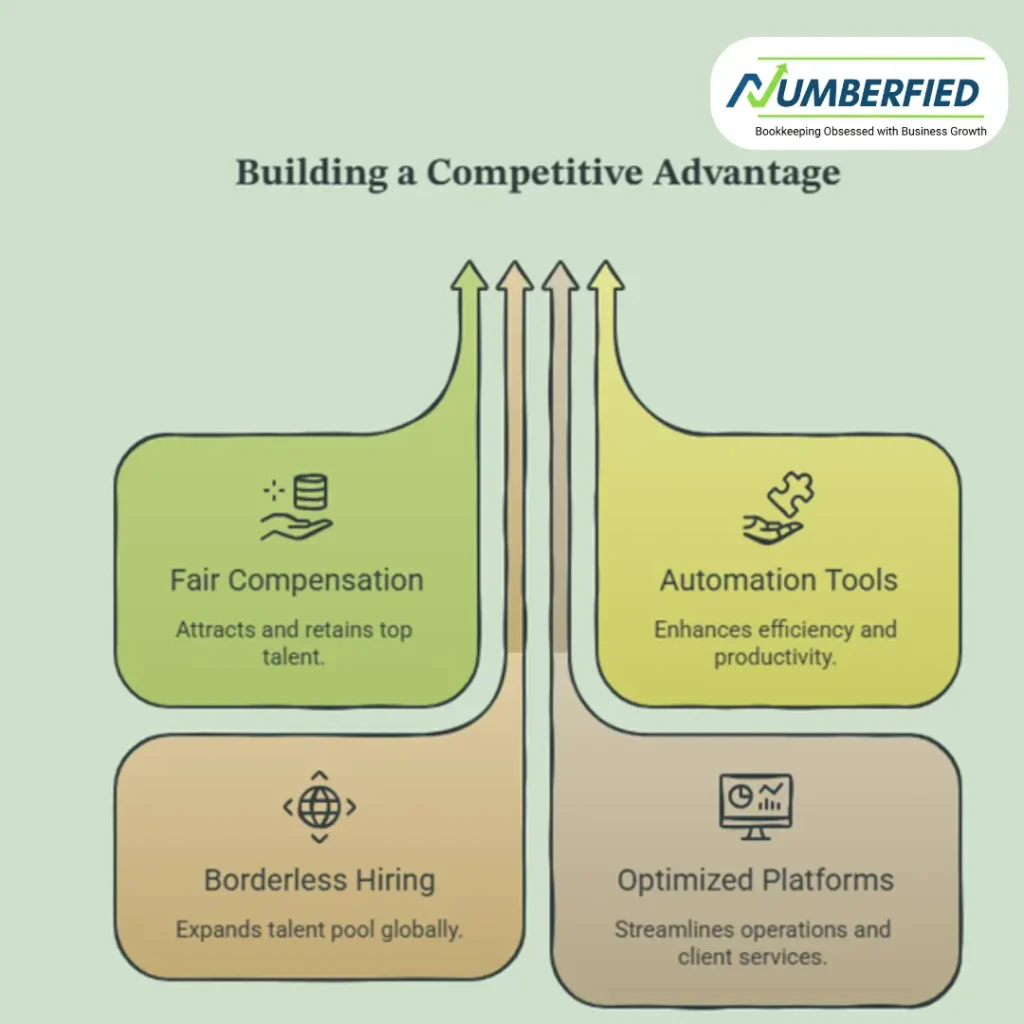
By combining fair compensation with robust automation tools, borderless hiring strategies, and optimized operational platforms like Numberfied, you can build a resilient firm. Embracing these modern frameworks ensures your firm remains a top destination for talent, ready to thrive in an evolving financial landscape.
Book a FREE strategy call with Numberfied today.
Read Also: The Future of Finance: Why Cloud-Based Accounting is Non-Negotiable
Frequently Asked Questions
What is causing the current global accountant shortage?
The shortage is driven by a combination of massive baby-boomer retirements, a significant drop in university enrollment for financial degrees, the financial burden of the 150-hour CPA rule, and a general industry reputation for long hours and low starting pay compared to fields like tech.
How much time can automation save an accountant each week?
According to data from the Karbon resource link, utilizing an integrated practice management platform can save an employee an average of 18.5 hours per week by automating repetitive, low-value administrative tasks.
What is the difference between offshoring and outsourcing?
Outsourcing involves contracting specific business tasks to an external third-party provider regardless of where they are located. Offshoring refers explicitly to establishing your own internal team members or dedicated roles in foreign countries to optimize labor costs and tap into global talent pools.
How does a modern tech stack help with talent attraction?
Younger professionals want to focus on strategic, meaningful work. Demonstrating that your firm uses advanced cloud tools, automated workflows, and artificial intelligence proves that you value their time and won’t weigh them down with tedious manual entry.
Why are accounting enrollment numbers dropping at universities?
Many students are deterred by the high cost and time commitment of completing the required 150 credit hours for certification, especially when starting salaries in other sectors like technology or data analytics are often higher out of the gate.
Can smaller firms compete with large corporations for top talent?
Yes. Smaller firms can successfully compete by offering superior workplace flexibility, fully remote or hybrid options, clearer and faster paths to partnership, and a healthier overall work-life balance that larger corporate environments often struggle to provide.
How does Numberfied assist firms facing a staffing shortage?
Numberfied helps firms streamline their data management, numerical workflows, and reporting systems. By optimizing these digital processes, businesses can significantly reduce manual administrative work, allowing their existing team to handle larger client portfolios efficiently.
What percentage of accounting firms utilize offshoring solutions?
Industry data indicates that approximately 52% of top-performing firms are actively integrating or planning to integrate offshoring models into their business operations to manage routine work and access qualified global talent.
Is remote work effective for maintaining team productivity?
Yes. Studies show that remote workers using cloud-based collaborative software are often just as productive, if not more so, than their office-bound peers. Remote work options also significantly boost employee morale and retention rates.
How can a firm reduce burnout during peak compliance seasons?
Firms can minimize peak-season burnout by using standardized digital templates to speed up workflows, deploying automation for client reminders, and utilizing temporary gig workers or offshore teams to absorb excess workloads.