
Introduction
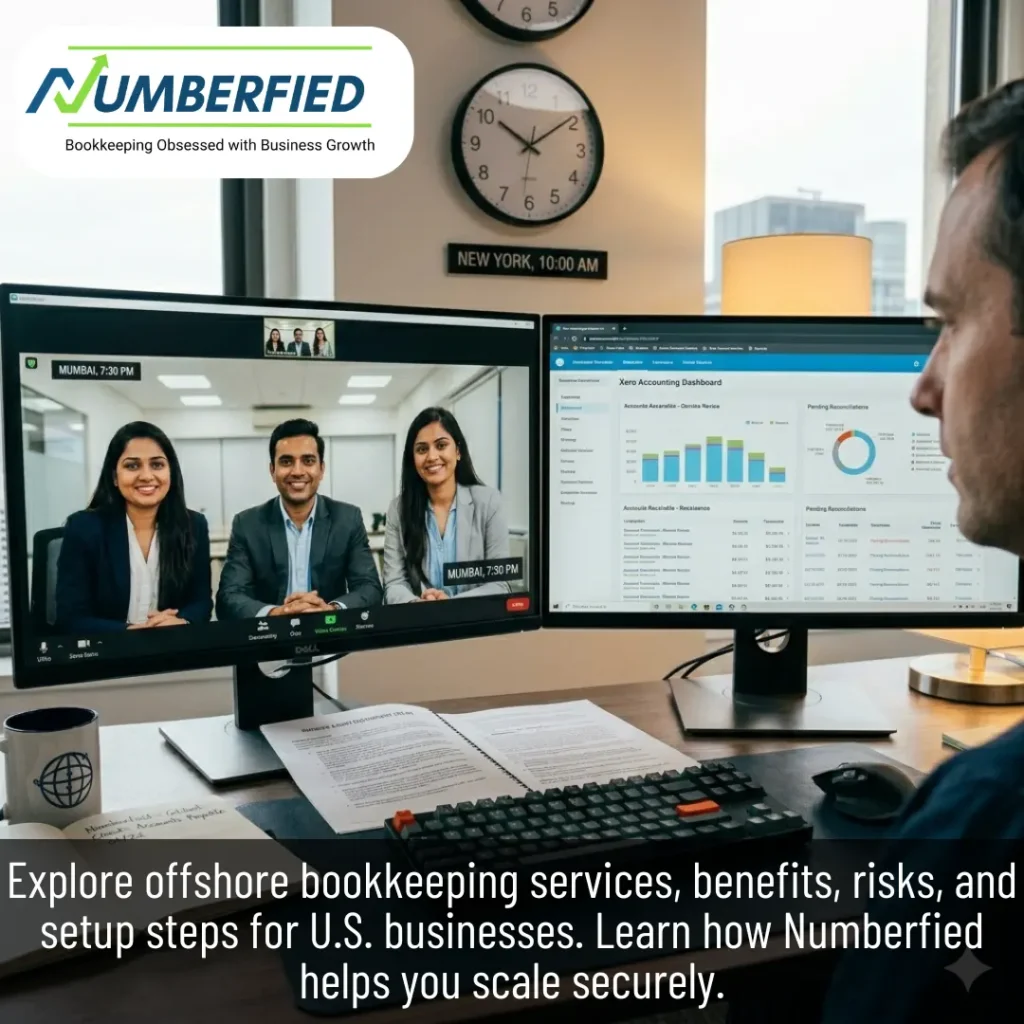
Welcome, we are the Numberfied team, and in this guide, we explain how offshore bookkeeping services can transform financial operations for U.S. businesses. We cover benefits, risks, implementation steps, and real-world tips so you can make informed decisions and act decisively. Choosing offshore bookkeeping services is a strategic decision for many U.S. companies seeking accuracy, efficiency, and scalable support. This article explains what offshore bookkeeping services are, how they differ from onshore options, and how Numberfied helps companies transition smoothly while maintaining compliance and control.
Key takeaways
- Offshore bookkeeping services provide scalable, cost-effective accounting support with skilled professionals.
- Success depends on process design, secure technology, and clear communication.
- Numberfied offers tailored onboarding, compliance controls, and continuous performance oversight.
Why Consider Offshore Bookkeeping Services?
Access to specialized talent
Offshore bookkeeping services give U.S. businesses access to trained accountants and bookkeepers with diverse industry experience. This pool often includes professionals skilled in cloud accounting platforms, reconciliations, and financial reporting.
Scalability and flexibility
As workflows grow, offshore bookkeeping services let you scale hours and team size quickly without long-term hiring commitments. This flexibility supports seasonal cycles, rapid growth, and project-based needs.
Focus on strategic work
By delegating transactional work to bookkeeping services, your internal finance team can focus on strategy, forecasting, and analysis that drive business outcomes.
How Offshore Bookkeeping Services Work
Client intake and process mapping
Effective bookkeeping services begin with a detailed intake: charting workflows, data sources, and reporting needs to establish clear responsibilities and timelines.
Technology and security stack
A strong technology base is crucial. Bookkeeping services rely on cloud accounting tools, secure file transfer, role-based access, and regular backups to protect financial data.
Quality control and reporting
Top-tier bookkeeping services implement reconciliation routines, internal reviews, and standardized reporting formats to ensure accuracy and consistency for decision-makers.
Benefits for U.S. Businesses
Cost predictability
Offshore bookkeeping services provide predictable engagement models. With defined scopes and service levels, organizations can plan budgets with fewer surprises.
Enhanced turnaround times
Dedicated bookkeeping services often deliver faster cycle times for month-end closes, accounts payable processing, and bank reconciliations through focused teams and streamlined processes.
Improved operational resilience
Using bookkeeping services distributes workload and reduces single points of failure in your finance function, improving business continuity and risk management.
Risks and How to Mitigate Them
Data security concerns
Data protection is a top concern for companies exploring bookkeeping services. Mitigation involves encrypted transmissions, strict access controls, and compliance audits to ensure data safety.
Communication gaps
Time zone differences and cultural expectations can create miscommunication. Offshore bookkeeping services succeed when processes include regular check-ins, documented SLAs, and clear escalation paths.
Compliance and regulatory issues
Regulatory requirements vary by jurisdiction. Reliable bookkeeping services maintain knowledge of local and international compliance requirements, document retention policies, and audit-ready records.
Choosing the Right Offshore Bookkeeping Services Provider
Evaluate expertise and track record
Ask prospective providers about industry experience, platform certifications, and client references. Offshore bookkeeping services with a demonstrated track record are better positioned to meet complex needs.
Inspect security and compliance frameworks
Confirm that bookkeeping services follow recognized security standards, conduct regular vulnerability testing, and have transparent incident response plans.
Assess cultural fit and communication style
Because finance work requires collaboration, evaluate how the provider communicates, reports progress, and integrates with your team’s routines to ensure a productive partnership.
Onboarding and Transition Best Practices
Define a clear scope and milestones
Establish precise deliverables, timelines, and acceptance criteria before work begins. Offshore bookkeeping services perform best with detailed scopes and measurable milestones.
Use phased transitions
Phased handovers reduce risk: start with simple tasks, validate processes, then scale responsibilities. Offshore bookkeeping services that accept phased approaches typically deliver smoother transitions.
Train and document thoroughly
Comprehensive documentation and training materials ensure continuity. Offshore bookkeeping services should provide procedural guides, video walkthroughs, and role checklists to preserve tribal knowledge.
Technology and Tools for Successful Bookkeeping Services
Cloud accounting platforms
Reliable bookkeeping services leverage mainstream cloud accounting systems that support multi-user access, audit trails, and integration capabilities for financial systems.
Secure collaboration tools
File sharing, task management, and communication platforms with encryption are essential for bookkeeping services to maintain productivity and confidentiality.
Automation and integrations
Automation reduces manual entry and error. Bookkeeping services that use integrations for bank feeds, expense management, and invoicing increase accuracy and speed.
Pricing Models and Contracts
Fixed-scope engagements
Fixed-scope pricing is suitable for defined projects. Bookkeeping services often offer packages for month-end close, payroll support, or reconciliation projects with set fees.
Monthly subscription models
Subscription pricing for ongoing services provides predictability. Offshore bookkeeping services can offer tiered plans based on transaction volume and reporting complexity.
Time-and-materials options
Flexible engagements based on hourly work suit evolving needs. Bookkeeping services using time-and-materials models should provide transparent timesheets and progress reports.
Measuring Performance and ROI
Key performance indicators
Use reconciliation accuracy rates, cycle times, and turnaround as primary metrics when evaluating bookkeeping services. These KPIs reveal operational improvements and consistency.
Business outcomes
Beyond KPIs, assess the impact of bookkeeping services on decision-making speed, audit readiness, and CFO time freed for strategic planning.
Continuous improvement
Good bookkeeping services include periodic reviews and process optimization plans to enhance value over time and adapt to changing business needs.
Actionable Steps to Start with Offshore Bookkeeping Services
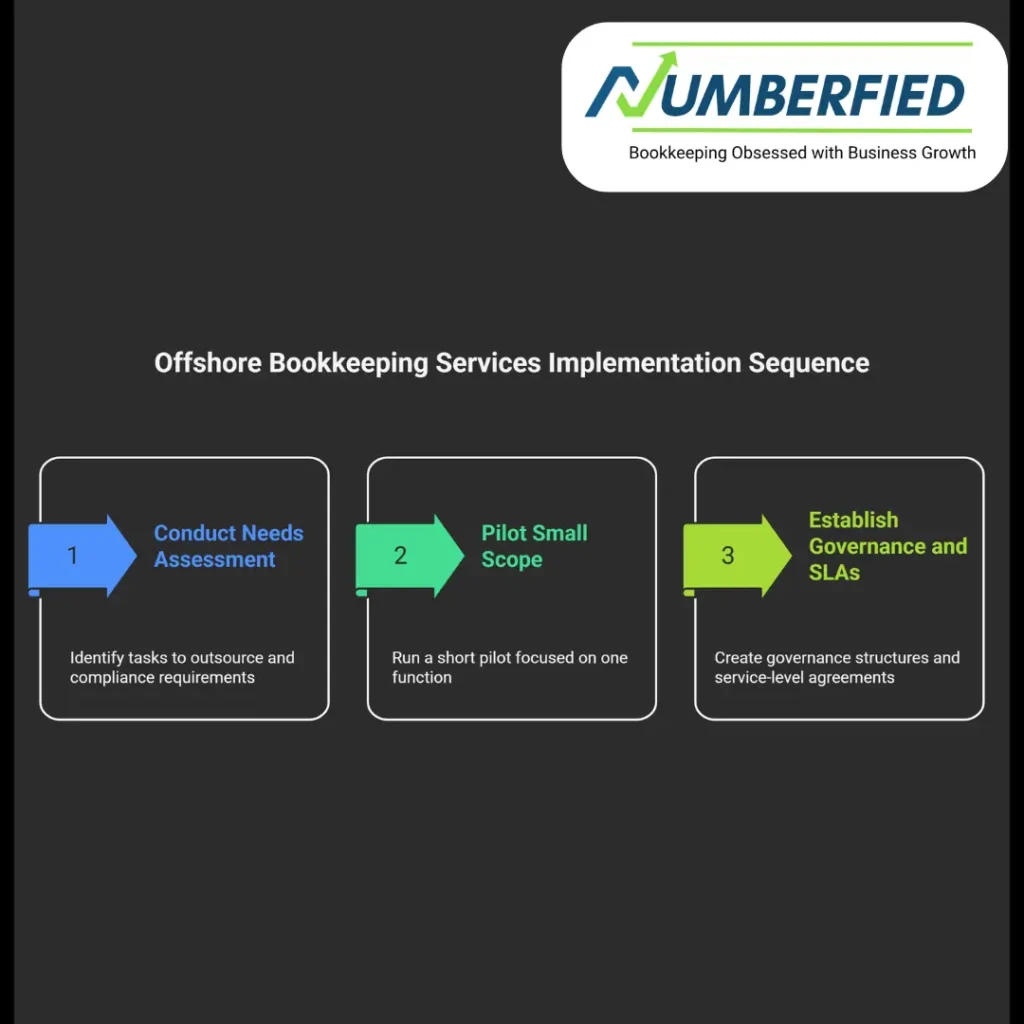
Step 1: Conduct a needs assessment
Identify tasks to outsource, internal dependencies, and compliance requirements. Clarify which functions bookkeeping services will handle and which will remain in-house.
Step 2: Pilot a small scope
Run a short pilot focused on one function, such as bank reconciliations or accounts payable. Evaluate quality, communication, and security before scaling bookkeeping services.
Step 3: Establish governance and SLAs
Create governance structures, escalation procedures, and service-level agreements. Offshore bookkeeping services must meet these standards to ensure accountability and consistent delivery.
Case Scenarios: Common Use Cases
Startups and scaling businesses
Early-stage companies benefit from offshore bookkeeping services by obtaining accurate financial records without the need for heavy hiring. This supports fundraising and rapid growth with a lean internal team.
Established companies seeking efficiency
Mature organizations adopt bookkeeping services to optimize back-office operations, reallocate internal resources, and standardize reporting across divisions.
Seasonal and project-driven firms
Businesses with variable workloads use bookkeeping services during peak periods and for special projects, without long-term staffing commitments, thereby maintaining responsiveness and cost control.
Why Numberfied for Offshore Bookkeeping Services
Experienced, U.S. focused support
At Numberfied, our bookkeeping services are designed for U.S. businesses with attention to domestic accounting standards, timely reporting, and proactive communication.
Secure, transparent operations
We combine robust security protocols with clear performance metrics so you can rely on our bookkeeping services for audit-ready results and predictable delivery.
Customized onboarding and continuous improvement
Numberfied builds tailored workflows and improvement plans to ensure that our bookkeeping services deliver measurable value and integrate seamlessly with your finance function.
Common Questions When Considering Offshore Bookkeeping Services
How do you ensure data confidentiality?
We implement encryption, role-based access, and strict vendor controls so bookkeeping services operate within a secure framework that protects sensitive financial data.
What happens during onboarding?
Onboarding includes workflow mapping, technology setup, sample work validation, and phased handover so bookkeeping services begin delivering with minimal disruption.
How quickly can we scale services?
Our model allows rapid scaling within service tiers. Offshore bookkeeping services can expand capacity as needs grow, with predictable timelines for additional resources.
Conclusion
Offshore bookkeeping services can be a strategic advantage for U.S. businesses seeking accuracy, scalability, and operational resilience. Numberfied delivers secure, compliant, and tailored bookkeeping services designed for measurable impact. Ready to optimize your finance function? Contact the Numberfied team and visit https://numberfied.com/ to get started.
Frequently Asked Questions
What exactly are offshore bookkeeping services, and how do they differ from onshore services?
Offshore bookkeeping services are outsourced accounting and bookkeeping functions performed by teams in a different country. The main differences from onshore services often include access to a broader talent pool, flexible staffing models, and potentially different cost structures. However, high-quality offshore bookkeeping services adhere to the same standards of accuracy, timely reporting, and compliance as domestic providers, with an additional emphasis on secure communication and technology integration.
Are offshore bookkeeping services secure for U.S. company financial data?
When provided responsibly, offshore bookkeeping services are secure. Providers implement encryption, secure file transfer protocols, and strict user access controls to protect data. Reputable offshore bookkeeping services also maintain audit logs and provide transparency into data-handling practices, enabling U.S. companies to meet compliance obligations and reduce risk.
How does a company transition to offshore bookkeeping services without disrupting operations?
Successful transitions follow a phased approach. Start with a clear scope, pilot simple tasks, and validate quality before scaling. Offshore bookkeeping services that use documentation, checklists, and parallel processing during the handover minimize disruption and ensure continuity in day-to-day finance operations.
Which finance functions are best suited for offshore bookkeeping services?
Functions with repetitive, rules-based tasks are excellent candidates: bank reconciliations, accounts payable, transaction entry, and routine reporting. Offshore bookkeeping services can also handle payroll support, month-end close tasks, and prepare schedules, freeing internal teams for strategic finance activities.
How do service-level agreements work with offshore bookkeeping services?
Service-level agreements define deliverables, turnaround times, quality expectations, and escalation procedures. When engaging offshore bookkeeping services, SLAs set clear performance targets and reporting requirements, enabling both parties to measure success, resolve issues promptly, and maintain consistent delivery.
What should I look for when evaluating offshore bookkeeping providers?
Assess experience with U.S. accounting standards, security certifications, and client references. Look for transparent pricing, documented processes, and a track record of meeting deadlines. Providers of offshore bookkeeping services should demonstrate strong communication practices and a commitment to continuous improvement.
Can offshore bookkeeping services integrate with our existing accounting software?
Yes. Modern offshore bookkeeping services use cloud accounting platforms and APIs to integrate with bank feeds, payment processors, and ERP systems. This integration reduces manual entry and enables seamless workflows, ensuring offshore bookkeeping services integrate seamlessly with your existing tech ecosystem without duplication.
How do we maintain control and oversight when using offshore bookkeeping services?
Maintain control through role-based access, regular reporting, and scheduled reviews. Offshore bookkeeping services should provide dashboards, exception reports, and clear escalation procedures so your finance leaders can monitor performance and intervene when needed while preserving operational efficiency.
What are the common mistakes companies make when adopting offshore bookkeeping services?
Common mistakes include under-documenting processes, skipping a pilot phase, and failing to set clear SLAs. Companies that rush the transition without governance or expect immediate perfection often encounter friction. Using a structured onboarding process and regular feedback loops helps offshore bookkeeping services deliver consistent, high-quality results.
How do I get started with Numberfied for offshore bookkeeping services?
Begin by reaching out to our team to discuss your needs. We conduct a needs assessment, propose a phased onboarding plan, and establish SLAs tailored to your business. Our offshore bookkeeping services focus on secure operations, clear communication, and measurable outcomes to support your finance goals. Visit https://numberfied.com/ to contact us and start the conversation.
Read Also: Why Do Accountants Charge So Much? Exploring Accounting Firm CFO Services